How did Queen Hatshepsut become pharaoh of Egypt?

Queen Hatshepsut was the fifth pharaoh of the Eighteenth Dynasty of Egypt. A principal wife of Thutmose II, Hatshepsut is considered by many as one of ancient Egypt’s greatest rulers. She accomplished many feats, including sanctioning a massive expedition to the Kingdom of Punt
Ever wondered why most paintings or sculptures of the Egyptian queen Hatshepsut depict her as a male pharaoh with broad shoulders and a beard? Well, legend claims much of Hatshepsut’s reign was a journey to reinvent herself. But was it?
Queen Hatshepsut’s rise to power as a pharaoh is a fascinating tale of ambition, political acumen, and strategic maneuvering in the context of ancient Egypt’s complex dynastic traditions.
To understand how Hatshepsut became pharaoh, it is essential to delve into her familial background, the political landscape of the time, and the steps she took to secure her position as one of Egypt’s few female rulers.
Early Life and Background
Hatshepsut was born around 1507 BC as the daughter of Pharaoh Thutmose I and his principal wife, Ahmose. Her royal lineage and upbringing in the palace exposed her to the political and religious intricacies of the Egyptian court from an early age. Her father, Thutmose I, was a successful ruler who expanded Egypt’s boundaries and solidified its power, and Hatshepsut was well-versed in the responsibilities and authority that came with the pharaoh’s role.
Hatshepsut’s early life was marked by her advantageous position as a royal princess. Her education included not only traditional subjects but also the administrative and religious duties of the kingdom. This training was crucial in preparing her for the roles she would later assume.
Marriage and Early Reign
To strengthen her claim to the throne, Hatshepsut married her half-brother, Thutmose II, following the death of Thutmose I. Marriages within the royal family were a common practice in ancient Egypt, aimed at preserving the purity of the royal bloodline and consolidating power. Thutmose II’s reign, however, was relatively short and less illustrious compared to his predecessors. During his reign, Hatshepsut likely held significant influence as the Great Royal Wife, leveraging her royal lineage and political acumen.
Thutmose II’s premature death left a power vacuum. His heir, Thutmose III, was still a young child, the son of a secondary wife named Isis. As was customary in such situations, Hatshepsut initially assumed the role of regent for the young Thutmose III, managing the affairs of state until he came of age. This period as regent allowed Hatshepsut to establish her authority and build a network of loyal officials and supporters.

Hatshepsut’s ascent to the throne as pharaoh was a complex and multifaceted process involving political strategy, religious legitimization, and careful manipulation of traditional symbols of power. Her ability to navigate the intricacies of Egyptian politics and present herself as a legitimate and capable ruler allowed her to become one of the few female pharaohs in ancient Egypt’s history. Image: Head of a statue of ancient Egyptian pharaoh Queen Hatshepsut with her fake royal beard.
Assumption of the Throne
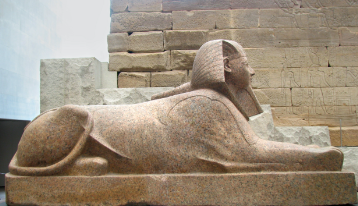
Hatshepsut was one of the most successful pharaohs of ancient Egypt and one of the few women to hold the title of pharaoh. She ruled during the 18th Dynasty (approximately 1478–1458 BC). Image: Sphinx of ancient Egyptian pharaoh Hatshepsut
Hatshepsut’s transition from regent to pharaoh did not happen overnight but was a calculated and gradual process. Over time, she began to take on more responsibilities and adopt the regalia and symbols of pharaonic power. By the seventh year of her regency, Hatshepsut made the unprecedented decision to declare herself pharaoh, co-ruling with Thutmose III, who remained a secondary figure during her reign.

Hatshepsut’s reign, marked by prosperity and monumental achievements, left an indelible mark on the history of ancient Egypt, demonstrating that effective leadership transcends gender. Image: Mortuary Temple of Hatshepsut
Several factors contributed to Hatshepsut’s successful assumption of the throne:
- Political Strategy: Hatshepsut’s political acumen was evident in her ability to secure the loyalty of key officials and the priesthood. She appointed loyalists to crucial positions, ensuring that her authority was respected and unchallenged. By surrounding herself with trusted advisors and capable administrators, Hatshepsut was able to consolidate her power effectively.
- Religious Legitimacy: Ancient Egyptian pharaohs were considered divine representatives on Earth, and their legitimacy was often tied to religious endorsement. Hatshepsut skillfully utilized religious propaganda to legitimize her rule. She emphasized her divine birth, claiming that the god Amun had fathered her with her mother, Ahmose. This divine endorsement was portrayed in reliefs and inscriptions, reinforcing her right to rule as a divinely chosen leader.
- Symbolism and Imagery: Hatshepsut’s self-presentation was a blend of traditional male pharaonic imagery and subtle acknowledgments of her female identity. She often depicted herself in male attire, including the false beard and kilt, traditional symbols of pharaonic authority. This visual portrayal helped mitigate potential opposition to her rule as a female pharaoh. However, in some instances, she also emphasized her femininity, using titles such as “Daughter of Re” and incorporating feminine pronouns in her inscriptions.
- Building Projects: Hatshepsut’s reign was marked by ambitious building projects that showcased her power and reinforced her legitimacy. The construction of her mortuary temple at Deir el-Bahri, an architectural masterpiece, served as a testament to her reign and divine favor. These projects not only displayed her capability as a ruler but also provided employment and economic stability, further bolstering her popularity.

Hatshepsut started off as a regent to her stepson when her husband, Thutmose II, died. She however turned out to be a scheming stepmother who proclaimed herself pharaoh within a few years. Image: Relief of Thutmose II in Karnak Temple complex. Thutmose II was the father of Thutmose III.
Co-Regency with Thutmose III
Hatshepsut’s reign was characterized by a unique co-regency with Thutmose III. While she held the primary authority, Thutmose III remained in the background, gradually gaining experience and preparing for his eventual sole rule. This arrangement allowed Hatshepsut to maintain stability and continuity in governance while ensuring that her stepson was groomed for leadership.
Despite the potential for conflict, the co-regency appears to have been relatively harmonious. Hatshepsut’s decision to elevate herself to pharaoh did not result in immediate backlash or civil strife, indicating that her consolidation of power was carefully managed and broadly accepted. Thutmose III, although sidelined during her reign, was likely aware of the necessity of Hatshepsut’s rule to maintain the stability of the kingdom.
Legacy and Erasure

Despite attempts to erase her from history, Hatshepsut’s legacy has been rediscovered and celebrated, highlighting her extraordinary contributions to the civilization she ruled. Image: An example of damnatio memoriae: Hatshepsut’s cartouches at Deir el-Bahari were defaced, while Thutmose III’s remained intact, likely by Amenhotep II’s orders.
Hatshepsut’s reign lasted for about 22 years, during which Egypt experienced peace, prosperity, and significant architectural achievements. However, following her death around 1458 BC, Thutmose III began a systematic campaign to erase her memory and legacy. Her images and cartouches were chiseled off monuments, and her statues were defaced or removed. This act of damnatio memoriae, the deliberate obliteration of a person’s memory, was likely an attempt to restore the traditional male line of succession and reclaim Thutmose III’s sole authority.
Despite these efforts, Hatshepsut’s legacy endured through her architectural and cultural contributions. Her mortuary temple at Deir el-Bahri remains one of the most iconic structures of ancient Egypt, and modern archaeological discoveries have shed light on her remarkable reign.

Some historians opine that Hatshepsut’s ascension to the throne was a way to secure her stepson’s kingship. Whatever the case, Thutmose III detested Hatshepsut so much that after her death, he went on a violent cause of removing or disfiguring her images from all national assets. Image: Painted relief depicting Thutmose III (sixth pharaoh of the 18th Dynasty) in the Luxor Museum.
Frequently Asked Questions about Queen Hatshepsut

Hatshepsut was an enigmatic ancient force who broke the glass ceiling and defied all attempts to erase her from history. Image: Head of an Osiride Statue of Queen Hatshepsut
Hatshepsut was the daughter of Thutmose I and became queen after marrying her half-brother Thutmose II. After his death, she initially served as regent for her stepson, Thutmose III, but eventually declared herself pharaoh.
Here are some frequently asked questions about Queen Hatshepsut:
What were Hatshepsut’s major accomplishments?
Hatshepsut is known for her extensive building projects, including her mortuary temple at Deir el-Bahri, and for promoting trade expeditions, notably to the land of Punt. Her reign was marked by peace and prosperity.
How did Hatshepsut portray herself as pharaoh?
Hatshepsut often depicted herself in traditional male pharaoh attire, including the false beard and kilt, to legitimize her rule. She was sometimes shown with feminine features but used male pronouns and titles.
What was the significance of Hatshepsut’s expedition to Punt?
The expedition to Punt was a major trading venture that brought back valuable goods such as myrrh, incense, gold, ebony, and exotic animals. This expedition is well-documented in the reliefs of her mortuary temple.
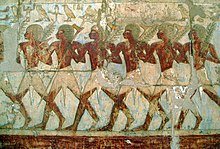
Hatshepsut’s reign was peaceful, focusing on trade over war. She prioritized restoration and construction, initiating extensive building programs. Key projects included enhancing the temples of Amon-Re, expanding the Karnak temple complex, and constructing her funerary monument, the Dayr al-Baḥrī temple. Image: Hatshepsut’s trading expedition to the Land of Punt.
How did Hatshepsut’s reign end?
Hatshepsut’s reign ended with her death around 1458 BC. The cause of her death is uncertain, but it is speculated to be from natural causes. After her death, Thutmose III became the sole ruler of Egypt.
Why did Hatshepsut’s successors try to erase her legacy?
Thutmose III, her stepson, and successor, attempted to erase Hatshepsut’s legacy by defacing her monuments and removing her name from historical records. The reasons for this are debated, but it may have been an attempt to restore traditional male succession or to reclaim his authority.

Hatshepsut, daughter of Thutmose I, married her half-brother Thutmose II and had a daughter, Neferure. After Thutmose II’s death, she became regent and later co-ruler with Thutmose III, his son by another queen. Image: A stone statue of Queen Hatshepsut of the New Kingdom.
How was Hatshepsut’s legacy rediscovered?
Hatshepsut’s legacy was rediscovered in the 19th century by archaeologists and Egyptologists. Her mortuary temple at Deir el-Bahri and other monuments provided insights into her reign and contributions.
Where is Hatshepsut buried?
Hatshepsut was buried in the Valley of the Kings, in tomb KV20, which she initially prepared for her father, Thutmose I. Her mummy was identified in 2007 in a separate tomb, KV60.

Hatshepsut is significant for being one of the few female pharaohs and for her successful reign, which contributed to Egypt’s prosperity and architectural heritage. She is often regarded as one of ancient Egypt’s most effective and innovative rulers. Image: Osirian statues of Hatshepsut at her tomb, one stood at each pillar of the extensive structure, note the mummification shroud enclosing the lower body and legs as well as the crook and flail associated with Osiris—Deir el-Bahri.