The Battle of Chaeronea, fought in 338 BC near the city of Chaeronea in Boeotia, was a decisive and transformative event in ancient Greek history. It marked the culmination of years of conflict between Macedonia and an alliance of Greek city-states and set the stage for the end of Greek city-state autonomy and the rise of Macedonian hegemony.
Historical Background
By the mid-4th century BC, Greece was a fragmented region composed of fiercely independent city-states. The Peloponnesian War (431–404 BC) and subsequent conflicts had weakened the major powers like Athens and Sparta, leaving a power vacuum in the region. Macedonia, under King Philip II, emerged as a growing force. By uniting the Macedonian tribes and reforming the military, Philip had transformed his kingdom into a dominant power in the Greek world.
Philip had already demonstrated his military and diplomatic prowess by concluding the Third Sacred War in 346 BC. His interventions in central Greece expanded his influence and established him as a major player in Greek affairs. Through the Peace of Philocrates, Athens and Macedonia formalized a truce. However, mistrust and dissatisfaction with Macedonian dominance lingered, particularly in Athens, where the orator Demosthenes became a vocal critic of Philip, accusing him of undermining Greek freedom.
Major Causes of the Battle
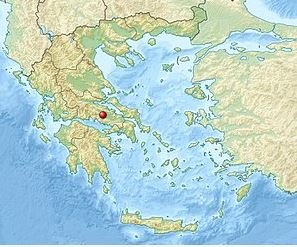
The Battle of Chaeronea was a defining moment in ancient Greek history, bringing an end to the independence of the city-states and ushering in a new era of Macedonian hegemony. Image: A map showing the exact location of the battle.
Macedonian Expansion and Greek Resistance
Philip’s territorial and political ambitions alarmed many Greek city-states. Athens and Thebes, historically rivals, set aside their differences to oppose the growing Macedonian influence.
Athens resented the loss of its dominance in the Aegean and sought to preserve its autonomy. Thebes, too, resisted Philip’s efforts to control central Greece.
Violation of the Peace of Philocrates
In 340 BC, Athens allied with the Achaemenid Empire against Macedonia and supported Philip’s enemies during his siege of Byzantium. These actions violated the terms of the Peace of Philocrates, effectively reigniting hostilities.
Formation of a Greek Coalition
Athens and Thebes, along with smaller allies, formed a coalition to counter Macedonian advances. This alliance represented a rare moment of unity among Greek city-states, highlighting the perceived threat of Philip’s dominance.
Philip’s Campaign in Central Greece
In 339 BC, Philip launched a campaign into southern Greece, ostensibly to secure Macedonian interests. His movements threatened the independence of Athens and Thebes, compelling them to confront him militarily.
The Campaign Leading to the Battle
In the summer of 338 BC, Philip marched into Boeotia, aiming to challenge the Greek coalition directly. The allied forces, consisting of troops from Athens, Thebes, and their allies, established a defensive position near the city of Chaeronea, blocking Philip’s path. The Macedonian army, while similar in size to the Greek forces, was superior in discipline, cohesion, and strategy.
Philip’s army included his famed phalanx, which used long sarissas (pikes), and a highly trained cavalry commanded by his young son, Alexander. The allies relied on traditional hoplite tactics, with the Theban Sacred Band serving as an elite unit.
The Battle
Details of the battle are limited, but it is widely regarded as a masterpiece of military strategy.
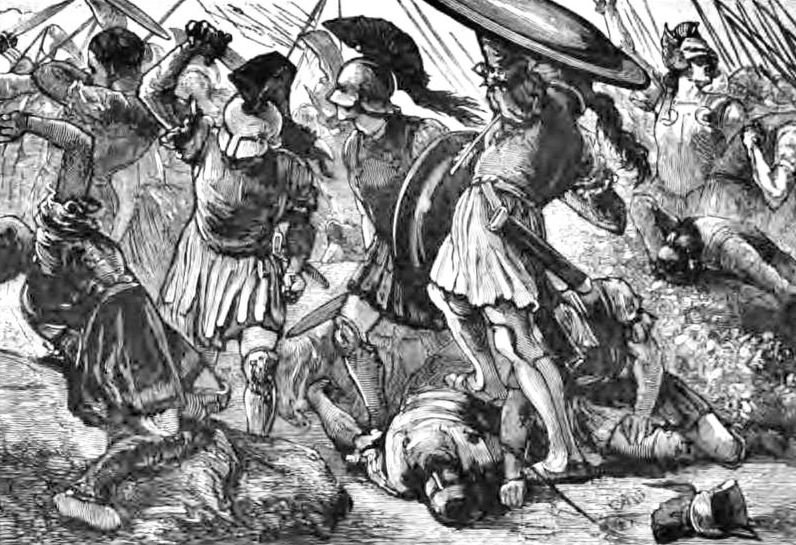
Image: A depiction of the Battle of Chaeronea, created in 1882.
Opening Movements
Philip commanded one wing of the Macedonian army, while Alexander led the cavalry on the opposite flank. Philip employed feigned retreats and other deceptive tactics to draw the allied forces out of position.
Key Engagements
Alexander launched a decisive attack on the Theban Sacred Band, breaking through the Greek line. The Sacred Band fought valiantly but was ultimately annihilated, a testament to the superior tactics and discipline of the Macedonian forces.
On the other flank, Philip’s maneuvers created gaps in the allied line, leading to a complete rout of the Greek forces.
Aftermath of the Battle
The allied army was destroyed, with heavy casualties on the Athenian and Theban sides. The Sacred Band’s annihilation became symbolic of the battle’s intensity and the shift in power.
Consequences of the Battle
End of Greek City-State Autonomy
The defeat at Chaeronea marked the end of the era of independent city-states. Thebes and Athens were subdued, and their ability to resist Macedonian influence was effectively destroyed.
Formation of the League of Corinth
In the aftermath of the battle, Philip established the League of Corinth, a coalition of Greek states allied with Macedonia. The league guaranteed peace among its members and formalized Philip’s leadership as the “hegemon” (leader) of Greece.
Macedonian Hegemony
The battle solidified Macedonian dominance over Greece, with Philip as its ruler. This marked the beginning of a centralized Greek political structure under Macedonian control.
Preparation for the Persian Campaign
The League of Corinth authorized a pan-Hellenic campaign against the Achaemenid Empire, a long-standing goal of Philip. Although he did not live to see it, this campaign was later carried out by his son, Alexander the Great.
Decline of Thebes and Athens
Thebes, once a dominant power, suffered significant losses and was forced to accept Macedonian control. Athens retained some autonomy but lost much of its influence and military strength.
Legacy of the Battle
Strategic and Tactical Innovations
The Battle of Chaeronea showcased Philip’s military genius and introduced innovative tactics that would influence warfare for generations. The use of the oblique phalanx and coordinated cavalry attacks became hallmarks of Macedonian military strategy.
Alexander’s Rise
The battle highlighted the military prowess of Alexander, who played a key role in the Macedonian victory. His leadership at Chaeronea foreshadowed his future conquests and solidified his reputation as a brilliant tactician.
Philip II of Macedon’s strategic brilliance and Alexander the Great’s emerging leadership reshaped the political and military landscape of Greece.
Turning Point in Greek History
Chaeronea marked the transition from the classical era of city-states to the Hellenistic period, characterized by Macedonian rule and the spread of Greek culture across a vast empire.
Symbol of Unity and Resistance
Despite their defeat, the Greek coalition at Chaeronea represented a rare moment of unity among city-states. The battle became a symbol of resistance against foreign domination and the enduring spirit of Greek independence.