Camulodunum: The First Capital of Roman Britain
Camulodunum, known today as Colchester in Essex, is a site rich with history, beginning long before Roman intervention. Its original name, “Camulodunon,” translates to the “stronghold of Camulos,” the Celtic god of war. This name reflects its importance as a fortified settlement in the Iron Age.
Pre-Roman Camulodunum was a center of power for the Trinovantes tribe, whose leaders constructed earthworks and dykes, including Grym’s Dyke, to fortify the area. These overgrown remnants and the faint outline of Cunobelin’s farmstead, visible only in crop marks, are among the few tangible traces of its early history.

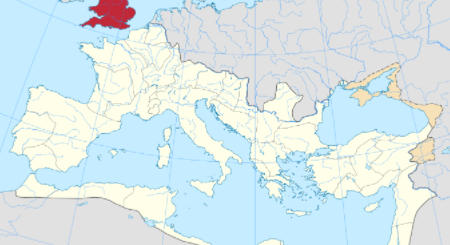
Location of Camulodunum in Roman Britain
READ MORE: What was life like in Iron Age Britain?
The Trinovantes played a central role in southeastern Britain’s power dynamics. In the mid-first century BC, their territory became embroiled in conflict with the neighboring Catuvellauni tribe under King Cassivellaunus. The Trinovantian king was killed, and his son Mandubracius fled to seek Roman assistance. This provided Julius Caesar with the pretext he needed to launch his campaigns in Britain in 55 and 54 BC. Though brief and inconclusive, these expeditions positioned Camulodunum as a political and military focal point. The eventual transfer of the area to Catuvellaunian control is uncertain, but coins minted under their king, Tasciovanus (circa 25–15 BC), mark the emergence of the region as a hub of power.

Caesar was motivated to embark on expeditins to Britain in 55 and 54 BC due to an appeal from Mandubracius, the exiled Trinovantian prince, to assist against the invading Catuvellauni under King Cassivellaunus. Image: Landing of Julius Caesar in the middle of the 1st century BC
By 10 CE, Cunobelin, nephew of Cassivellaunus, had consolidated his control over the region. Under his leadership, Camulodunum flourished as a political and economic center. Coins bearing Cunobelin’s name and symbols of Roman influence, such as those featuring the Emperor Augustus, highlight the settlement’s connection to broader trade networks and its growing significance in southeastern Britain.

Cunobelin was a king of the Catuvellauni and the nephew of Cassivellaunus. By 10 CE, he had established dominance over the region, cementing Camulodunum’s importance as a power center. Image: Coin of the Catuvellauni king Cunobelinus minted at Camulodunon
The Roman Conquest of Camulodunum
In 43 CE, Emperor Claudius initiated the conquest of Britain, marking a turning point in Camulodunum’s history. Claudius exploited a plea for assistance from Verica, a king of the Atrebates displaced by Cunobelin’s successor, Caratacus, to justify Roman intervention.

Caratacus before the Emperor Claudius at Rome 18th-century print, artist unknown (British Museum).
Aulus Plautius, the Roman general in charge, led four legions across the Channel, landing at Richborough. After defeating British forces at the River Medway, the Romans pursued Caratacus to his stronghold at Camulodunum. Claudius personally joined the campaign, accompanied by reinforcements that included war elephants, symbolizing Rome’s might.

Illustration depicts Aulus Plautius’s home, created by Piotr Stachiewicz for the novel Quo Vadis.
The Roman assault on Camulodunum was swift and decisive. Following the battle, Caratacus fled, continuing resistance in Wales, but his departure left the settlement firmly in Roman hands. To consolidate their victory, the Romans established a legionary fortress at Camulodunum. This marked the beginning of its transformation into a Roman administrative and military center.
The First Roman Colony in Britain
Camulodunum became the first Roman colonia in Britain, a settlement for retired Roman soldiers. Its official name, Colonia Claudia Victricensis (“Colony of Claudius’ Victory”), celebrated the emperor’s triumph. The fortress’s grid pattern was repurposed for the new city, with military barracks converted into houses. This deliberate urban planning introduced Roman civilization to Britain, as the colonia served as a model of Roman governance and culture.

A Roman mosaic from Middleborough House, Colchester, is now displayed at Colchester Castle Museum.
Prominent structures within the city emphasized its importance. A triumphal arch commemorating Claudius’s conquest was erected at the western gate of the former fortress, later integrated into the Balkerne Gate.
The Temple of Claudius served as a religious and administrative center, symbolizing Roman authority and hosting the imperial cult.
The city also housed Britain’s earliest known chariot circus and the monumental Temple of Claudius, dedicated to the imperial cult. Built on the annex of the former fortress, the temple precinct showcased Roman architectural grandeur, reflecting the city’s dual role as a religious and administrative hub.
The Boudican Revolt and the Destruction of Camulodunum
Despite its prominence, Camulodunum became a target of resentment among the local population. The financial burdens imposed by the temple cult, coupled with the arrogance of Roman settlers, fueled tensions.
In 60/61 CE, these and many other grievances culminated in the Boudican revolt. Led by Queen Boudica of the Iceni and supported by the Trinovantes, the rebellion sought to expel the Roman oppressors.

“Camulodunum” means “stronghold of Camulos,” referring to the Celtic war god, highlighting its significance as a fortified settlement. Image: Statue of Queen Boudica with her daughters riding her chariot; near Westminster Pier, London
Tacitus records that Camulodunum lacked defensive walls, as Roman commanders prioritized amenities over fortifications. This oversight proved catastrophic. The rebels overwhelmed the settlement, burning it to the ground and killing its inhabitants. Survivors sought refuge in the Temple of Claudius, only to perish when it was set ablaze.
Archaeological evidence, including a blackened layer of ash, charred furniture, and carbonized food such as dates and plums, attests to the scale of the destruction.
Interestingly, human remains linked to the revolt are scarce. While some scholars speculate that many victims were massacred elsewhere, others suggest a thorough cleanup operation followed the revolt. Excavations at the Balkerne Gate revealed skulls and skeletal remains with evidence of violent injuries, possibly linked to the conflict.
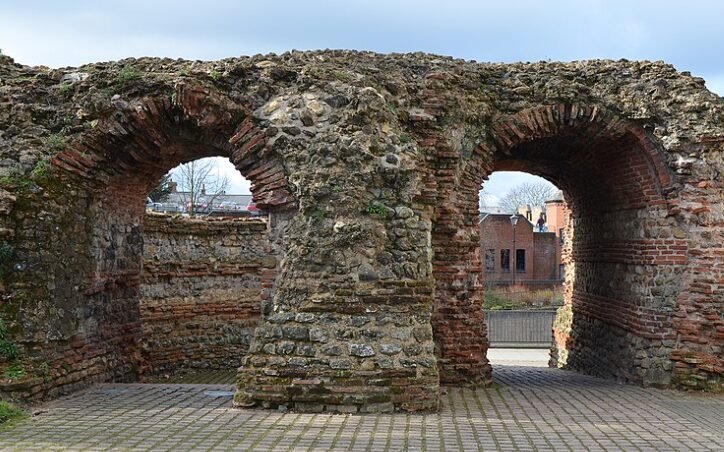
Camulodunum featured Britain’s first town walls, a chariot circus, temples, and theatres. The city likely housed 30,000 people at its peak. Image: The remains of the Balkerne Gate, which straddled the main road from London.
Rebuilding and Prosperity
The devastation of Camulodunum was short-lived. By 65 CE, the city had been rebuilt with new defensive walls, becoming a symbol of Rome’s resilience. However, administrative priorities shifted to Londinium, which replaced Camulodunum as the provincial capital. Despite this, the city retained its Roman infrastructure, including its grid layout and public buildings.
In the second and third centuries, Camulodunum flourished as a modestly prosperous town. Well-appointed houses, mosaics, and pottery reflect a thriving urban life. The Temple of Claudius remained a focal point, while industries such as pottery production contributed to the local economy. The city’s walls, the first of their kind in Britain, symbolized its enduring importance.
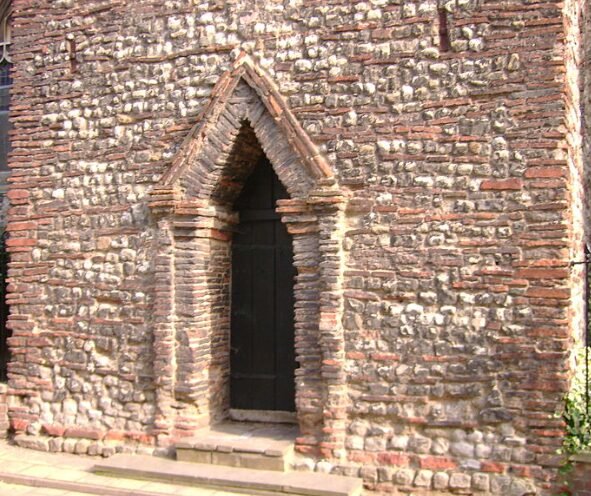
Destroyed during the Iceni rebellion in AD 60/61, the city of Camulodunum was rebuilt and thrived in the 2nd-3rd centuries. Image: Saxon doorway of Holy Trinity Church built using Roman tiles for its construction.
Decline and Adaptation in the Late Roman Period
By the fourth century, Roman influence across Britain began to wane. Civic responsibilities faltered, and many inhabitants retreated to rural villas or fortified settlements. Camulodunum, like other towns, experienced a decline in urban life. However, its strategic location and existing infrastructure allowed it to adapt to changing circumstances.
The city’s walls and some Roman structures were repurposed during the Saxon period. Early settlers built simple wooden huts atop Roman ruins, maintaining the Roman street plan. Colchester’s High Street, for example, still follows the line of the Via Praetoria from the Roman fortress. Artifacts from this period, including pottery and coins, suggest a continuity of occupation and cultural exchange.
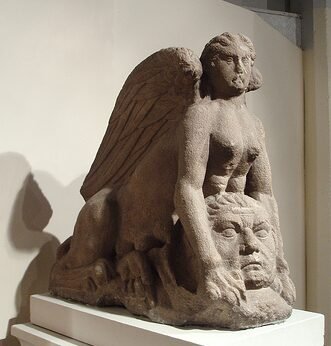
By 65 CE, the city of Camulodunum was rebuilt with new walls and retained Roman infrastructure, including a grid layout, becoming modestly prosperous by the second century CE. Image: Roman sphinx sculpture, from a tomb found in Colchester in 1821. Colchester Castle Museum.
Medieval Continuity and the Legacy of Camulodunum
The Norman Conquest brought new developments to Camulodunum’s landscape. Colchester Castle, constructed in the 11th century, was built atop the foundations of the Temple of Claudius. This deliberate reuse of Roman materials underscores the site’s enduring legacy. Roman stones were similarly employed in the construction of Holy Trinity Church and other medieval structures, linking the town’s Roman past to its medieval present.
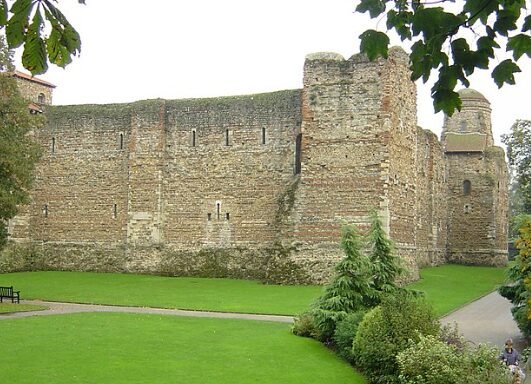
Colchester Castle, built in the 11th century, was constructed atop the foundations of the Temple of Claudius, symbolizing the continuity and reuse of Roman structures through subsequent eras.
The archaeological record of Camulodunum offers a window into its historical trajectory. From Iron Age burial goods to Roman urban designs and Saxon adaptations, the site reflects a continuous thread of occupation and transformation. Its strategic location, cultural syncretism, and enduring physical remnants highlight its role as a nexus of power, resistance, and adaptation across centuries.
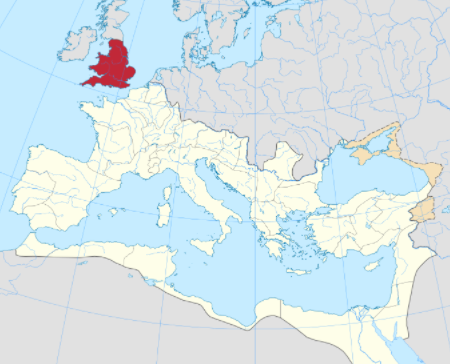
Roman rule in Britain ended in the 5th century AD
Conclusion
Camulodunum’s history embodies the interplay between conquest, resilience, and cultural integration. As the first capital of Roman Britain, it served as a gateway for Roman civilization, influencing the development of urban life across the province. Its destruction during the Boudican revolt and subsequent rebuilding illustrate the challenges of empire and the enduring strength of Roman infrastructure.
Today, the legacy of Camulodunum endures in Colchester’s streets, buildings, and archaeological sites. The city’s evolution from a Celtic stronghold to a Roman colony and later a Saxon settlement underscores its significance in British history.
Frequently Asked Questions

Camulodunum, now Colchester in Essex, was a key Roman Britain city and the first provincial capital. Originating as the Brythonic-Celtic oppidum of Camulodunon, it became a Roman base after Emperor Claudius’s conquest in the AD 40s. Image: Colchester’s Roman town walls
What does the name “Camulodunum” mean?
The name “Camulodunum” is derived from its Celtic form “Camulodunon,” meaning “stronghold of Camulos,” the Celtic war god.
What is the modern name of the site known as Camulodunum?
Camulodunum is now modern-day Colchester in Essex, England.
Which Celtic tribe made Camulodunum a power center in the early first century AD?
The Catuvellauni tribe, under King Cunobelin, established Camulodunum as a prominent power center.
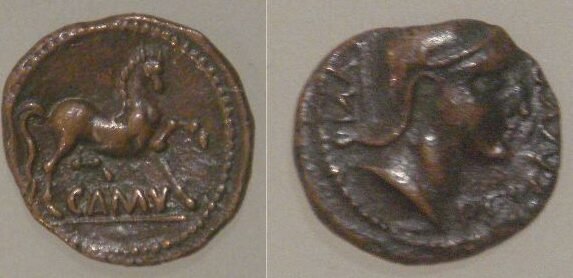
Camulodunum remains a testament to the enduring impact of Roman rule and the resilience of the communities that shaped its story. Image: Bronze coin of Cunobelin
What evidence exists of Camulodunum’s importance before Roman rule?
Coins minted at Camulodunon attest to its significance and its connections to continental trade networks.
What was Camulodunum renamed after the Roman conquest?
After Emperor Claudius’s conquest in AD 43, it was renamed Colonia Claudia Victricensis, or “Colony of Claudius’ Victory.”

Under Emperor Claudius, Roman forces led by Aulus Plautius conquered Camulodunum, culminating in Claudius’s personal involvement and the deployment of war elephants. Image: The head of an equestrian statue of Claudius, likely taken during Boudica’s revolt, resides in the British Museum.
What significant Roman structures were built in Camulodunum?
Notable Roman structures included the Temple of Claudius, Britain’s earliest known chariot circus, and extensive town walls.
What major event disrupted Camulodunum in AD 60/61?
The Iceni rebellion, led by Boudica, resulted in the destruction of Camulodunum, leaving behind a layer of ash and debris.
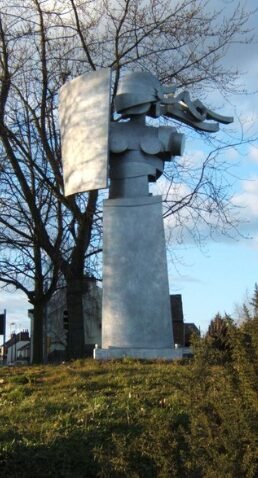
The revolt in 60/61 CE, led by Queen Boudica, targeted Camulodunum as a symbol of Roman oppression. The city was destroyed, with survivors perishing in the burning temple. Image: A stylized statue of Boudica in Colchester honors her role in sacking the Roman settlement.
How did Camulodunum recover after the rebellion?
The town was rebuilt and flourished in the second and third centuries with sophisticated urban planning, public architecture, and economic activity.

Camulodunum transitioned from a military fortress into a colonia—a settlement for retired Roman soldiers—introducing Roman urban planning to Britain. Image: The location of Camulodunum within the Late Roman Empire, c. 400
What happened to Camulodunum after the Roman rule ended?
After Roman rule ended in the fifth century, the town, renamed Colchester, retained its significance. Roman structures were repurposed during the Saxon and medieval periods.
Why is Camulodunum significant in British history?
Camulodunum is significant as Britain’s oldest recorded settlement, reflecting its strategic location, historical legacy, and cultural integration during the Roman and post-Roman eras.

The Trinovantes tribe controlled Camulodunum before it was overtaken by the Catuvellauni.