Ma Yuan of the Han Dynasty
Ma Yuan (c. 14 BC – 49 AD), whose courtesy name was Wenyuan, rose to prominence during the Eastern Han dynasty through his remarkable military and political service. Often referred...

Ma Yuan (c. 14 BC – 49 AD), whose courtesy name was Wenyuan, rose to prominence during the Eastern Han dynasty through his remarkable military and political service. Often referred...

The end of the Han Dynasty (189–220 CE) marked a transformative period in Chinese history, transitioning from a united imperial state to the fragmented and war-torn Three Kingdoms era (220–280...
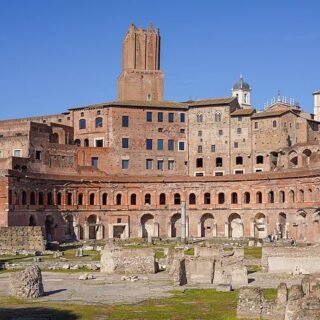
Trajan’s Market, a complex of ancient Roman ruins located in Rome, Italy, is often considered one of the earliest examples of a shopping mall. Constructed between 107-110 AD under Emperor...

Amenemhat I, also spelled Amenemhet I, was the inaugural ruler of the Twelfth Dynasty in ancient Egypt’s Middle Kingdom. Rising from non-royal lineage, he established a fresh political order, relocated...
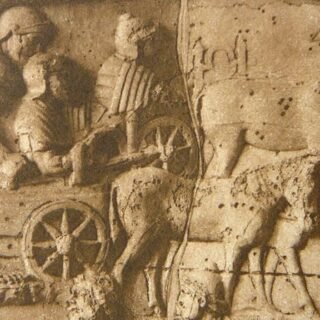
Roman artillery was a crucial component of Roman military engineering, helping to shape the empire’s military dominance. The Romans were skilled at adopting and improving upon the technologies of other...

The Roman games, or “ludi,” were a significant part of Roman culture, serving not only as entertainment but also as a method of uniting and controlling the populace. The games...

The Ara Pacis Augustae, or Altar of Augustan Peace, is one of the most significant monuments from ancient Rome, symbolizing peace, power, and the prosperity ushered in during the reign of...
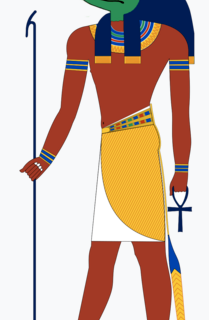
Kek is an ancient Egyptian deity representing the concept of primordial darkness within the Ogdoad cosmogony centered in Hermopolis. This cosmogony featured four male-female pairs of gods, each embodying a...

Emperor Gaozu of Han (256–195 BC), born Liu Bang, is a seminal figure in Chinese history, celebrated as the founder of the Han dynasty. His ascent from a humble peasant...

The Yellow Turban Rebellion, alternatively known as the Yellow Scarves Rebellion, was a pivotal peasant uprising during the late Eastern Han dynasty of ancient China. It began in 184 CE...

Clytemnestra, a central figure in Greek mythology, is remembered for her complex role as the wife of Agamemnon, the king of Mycenae, and as the half-sister of Helen of Sparta...
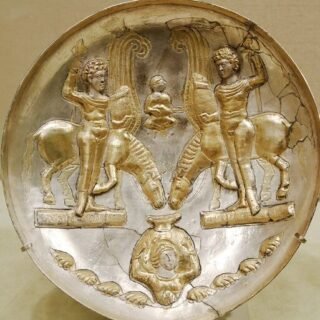
Castor and Pollux, the famed Dioscuri, are notable in Greek and Roman mythology for their mixed parentage. Castor was the mortal son of Tyndareus, the Spartan king, while Pollux was...

The Temple of Mars Ultor, located in Rome, stands as an iconic monument to the ancient god Mars, symbolizing both the power and the reverence Romans held for the deity...
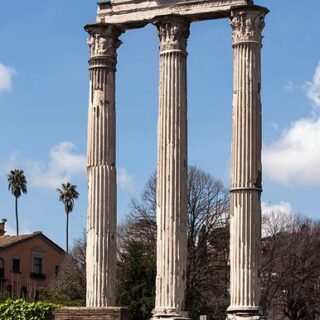
The Temple of Castor and Pollux, located in the Roman Forum, holds significant historical and architectural value as one of Rome’s iconic ancient monuments. Though only three Corinthian columns remain...
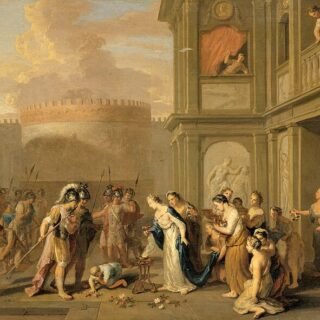
Cleophis, known in Sanskrit as Kripa, was a prominent queen of the Assacani people. She played a crucial role during Alexander the Great‘s invasion in 326 BCE. As the mother...





