Roman Emperor Galerius
Galerius (full name: Galerius Valerius Maximianus) was a Roman emperor from 305 to 311, known for his military campaigns, opposition to Christianity, and eventual issuance of the Edict of Toleration...

Galerius (full name: Galerius Valerius Maximianus) was a Roman emperor from 305 to 311, known for his military campaigns, opposition to Christianity, and eventual issuance of the Edict of Toleration...
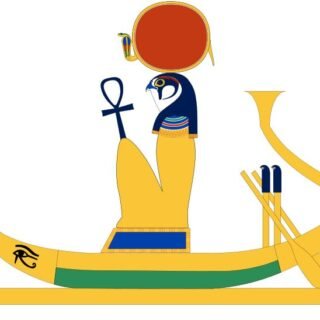
Ancient Egypt, a civilization intimately tied to the Nile and its waterways, regarded ships as sacred vessels not only for earthly navigation but also for divine journeys. In Egyptian mythology,...
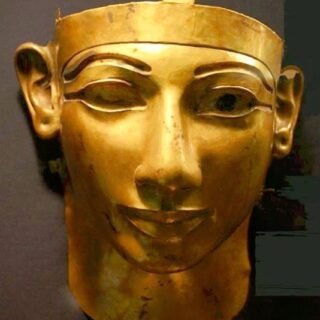
Shoshenq II was a pharaoh of the Twenty-second Dynasty of Egypt, notable for being the only ruler of this dynasty whose tomb was discovered intact. Summary Heqakheperre Shoshenq II, also...

Seker, also spelled Sokar, was a significant deity in ancient Egyptian religion, particularly associated with the city of Memphis. Revered as a god of the dead, he also had ties...

Roman Emperor Maxentius (r. 306–312 AD) ruled Italy and North Africa amid political turmoil. Known for his architectural projects and opposition to Constantine, he met his end at the Battle...

Pre-Socratic philosophy, also known as Early Greek Philosophy, refers to the body of philosophical thought that emerged before the time of Socrates in the ancient Greek world. These philosophers primarily...

Hesiod was one of the earliest known Greek poets. He is often mentioned alongside Homer as a foundational figure in Western literature. Active between 750 and 650 BC, Hesiod’s works...
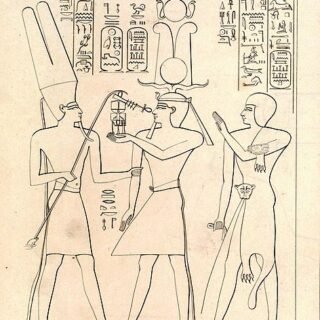
The history of Ancient Egypt is often characterized by a delicate balance between religious authority and political power. The relationship between the temple and the crown—represented by the priesthood and...

Agnodice is a legendary figure in the history of medicine, traditionally regarded as the first female midwife or physician in ancient Athens. Her story, originating from the Roman author Gaius...

Mitanni was a powerful Hurrian-speaking kingdom that existed in northern Syria and southeastern Anatolia (modern-day Turkiye) between approximately 1550 and 1262 BC. It was known in Babylonian texts as Ḫabigalbat,...
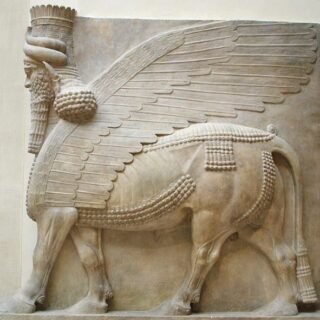
Dur-Sharrukin, known as “Fortress of Sargon” in Neo-Assyrian Akkadian, was a grand capital city built under the reign of Sargon II of Assyria. Situated in present-day Khorsabad, northern Iraq, approximately...

The Northern Wei (386–535) was a Chinese imperial dynasty ruled by the Tuoba (Tabgach) clan of the Xianbei. It was the first of the Northern dynasties, unifying northern China in...

China’s history is marked by the rise of great cities that served as centers of politics, economy, culture, and technological innovation. These cities played pivotal roles in shaping Chinese civilization...

The Roman Empire, known for its vast military conquests and advanced engineering, also excelled in shipbuilding and maritime navigation. Rome’s naval dominance was crucial in securing its Mediterranean trade networks,...
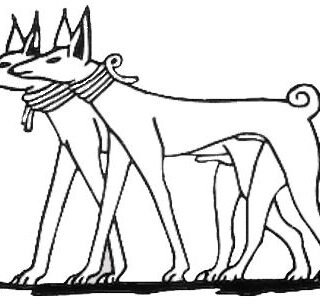
Dogs played a significant role in ancient Egyptian society, fulfilling various functions as hunting companions, guards, pets, and even spiritual entities. Their presence is well-documented in art, literature, and archaeological...





