Category: Gobekli Tepe

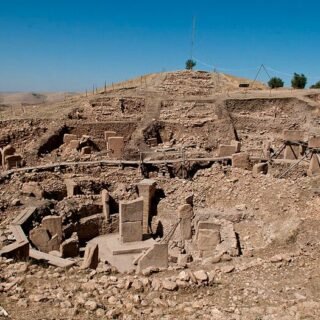
Göbekli Tepe is an ancient archaeological site in southeastern Turkey, known for its massive stone pillars arranged in circles, predating Stonehenge by over 6,000 years.

Here are some frequently asked questions about it:
  1. How old is Göbekli Tepe?
    • Radiocarbon dating indicates that the site was constructed during the Pre-Pottery Neolithic period, around 9600–7000 BCE, making it over 11,000 years old.
  2. Who built Göbekli Tepe?
    • The specific culture or people responsible for building Göbekli Tepe remains unknown, but they were likely hunter-gatherers who had not yet adopted agriculture.
  3. What was the purpose of Göbekli Tepe?
    • The exact purpose remains a subject of research and debate. Given the lack of residential structures and the site’s intricate carvings, it’s believed to have served religious or ritualistic functions.
  4. What makes Göbekli Tepe unique?
    • Its age and complexity challenge traditional theories about the evolution of civilization. The monumental architecture predates the invention of pottery, metal tools, and the onset of agriculture.
  5. How was the site discovered?
    • Göbekli Tepe was first noted in a survey in the 1960s, but its significance wasn’t recognized until Klaus Schmidt of the German Archaeological Institute began excavations in 1995.
  6. What do the carvings on the pillars represent?
    • The T-shaped pillars feature carvings of various animals and symbols. The meaning of these carvings is not definitively known but may represent mythological beings, constellations, or totemic symbols.
  7. How were the massive stones moved and constructed?
    • The means by which pre-agricultural people moved and erected the pillars, some weighing up to 20 tons, remains a mystery and a subject of study.
  8. Is Göbekli Tepe open to the public?
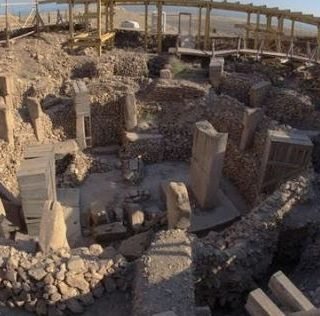
    • Yes, the site has been developed as an archaeological park, and visitors can explore it. A protective canopy has been erected over parts of the site to prevent damage.
  9. What is the site’s significance for our understanding of early human societies?
  • Göbekli Tepe challenges traditional timelines of the rise of civilization, suggesting that large-scale communal projects and spiritual or ritualistic sites may have preceded and even catalyzed the development of agriculture and settled life.

What is Göbekli Tepe?

Göbekli Tepe is one of the most significant and enigmatic archaeological discoveries of modern times. Situated in southeastern Turkey, this ancient site dates back to the 10th millennium BCE, predating...
Gobekli Tepe – History and Significance

For centuries, archeologists and historians alike reasoned that the origins of human civilization and settlement communities started primarily with the birth of agriculture and animal husbandry. However, this idea got...
