Dialogue between a Man and His God
“The Dialogue between a Man and His God” is a pivotal Akkadian text that delves into the ancient discourse on theodicy—the justification of divine allowance of evil and suffering. As one of the earliest known literary works addressing human suffering and divine justice, its history and origin offer valuable insights into Babylonian religious and philosophical thought.
Discovery and Acquisition
The text was discovered on a single clay cuneiform tablet, an artifact that encapsulates ancient Mesopotamian literary tradition. Acquired by the Louvre Museum in 1906, the tablet entered the collection through an antiquities dealer, rendering its precise archaeological provenance unknown. This acquisition reflects the early 20th-century practices of collecting Near Eastern artifacts, often without detailed provenance records.
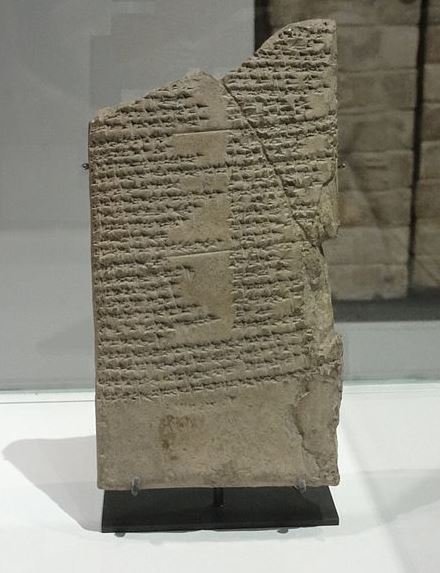
“The Dialogue between a Man and His God” is the earliest known theodicy, examining why a deity permits evil and reflecting on human suffering.
Dating and Historical Context
Scholars date “The Dialogue between a Man and His God” to the latter part of the Old Babylonian period, approximately during the reign of King Ammi-Ditana (1683–1640s BCE). This era was marked by significant cultural and literary developments in Babylon, where Akkadian was the lingua franca. The period was characterized by extensive building projects, administrative advancements, and a flourishing of literary production, including wisdom literature and religious texts.
Authorship and Attribution
The tablet is attributed to an individual named Kalbanum, mentioned in the final line. Little is known about Kalbanum, suggesting he was likely a scribe or a person of some standing involved in the creation or preservation of the text. The attribution highlights the role of scribes in ancient Mesopotamia as preservers of literary and religious knowledge, often inscribing texts that conveyed cultural and theological values.
Physical Description
The work is inscribed on a single clay tablet using the cuneiform script, which was prevalent in Mesopotamian writing. The tablet comprises sixty-nine lines divided into ten strophes, each separated by horizontal lines. This structured format facilitates the depiction of dialogue, a common literary device in wisdom literature to explore complex themes through conversational exchanges.
Linguistic and Literary Context
Written in Akkadian, the lingua franca of the Old Babylonian period, the text exemplifies the sophisticated literary traditions of ancient Mesopotamia. Akkadian literature often employed dialogues and poetic structures to explore philosophical and theological questions. “The Dialogue between a Man and His God” aligns with this tradition, utilizing a conversational format to delve into themes of suffering, divine justice, and human introspection.
Similar Works and Influences
The text shares stylistic and thematic similarities with earlier Sumerian works, particularly “Man and His God,” a penitential prayer from the Ur III period. This connection underscores the continuity and evolution of Mesopotamian literary traditions, where later Akkadian texts built upon and expanded the themes and structures of their Sumerian predecessors. Such intertextuality highlights the shared cultural and religious frameworks within Mesopotamian civilization.
Scholarly Analysis
Scholars like Jean Nougayrol, W. von Soden, and W. G. Lambert have extensively analyzed the text, examining its linguistic features, thematic elements, and literary structure. Their studies reveal the text’s role in the discourse on theodicy, exploring why suffering exists and how humans can seek solace through divine dialogue. The fragmentary nature of the middle sections has sparked debates on its precise meaning, with interpretations varying based on linguistic and contextual analyses.
Cultural Significance
“The Dialogue between a Man and His God” holds significant cultural importance as it reflects the ancient Mesopotamian understanding of suffering and divine interaction. It portrays a personal struggle with faith and divine justice, mirroring universal human concerns that resonate across cultures and epochs. The text provides a window into how ancient Babylonians grappled with existential questions, offering insights into their religious beliefs and philosophical inquiries.
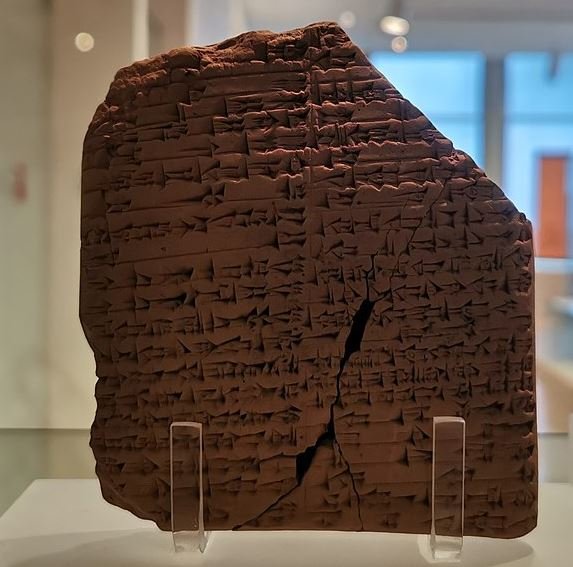
Dated to the late Old Babylonian period (circa 1683–1640 BC) under Ammi-Ditana’s reign, “The Dialogue between a Man and His God” resides in the Louvre Museum (accession AO4462). Image: A tablet associated with King Ammi-Ditana, housed in the Hecht Museum in Israel.
Preservation and Current Location
Today, the tablet resides in the Louvre Museum, cataloged under accession number AO 4462. Its preservation in a major museum ensures that it remains accessible for ongoing scholarly research and public education. The museum’s role in safeguarding such artifacts is crucial for maintaining the legacy of ancient civilizations and facilitating their study by future generations.
Impact on Modern Understanding
“The Dialogue between a Man and His God” significantly contributes to contemporary understanding of ancient Mesopotamian religion and literature. It exemplifies early attempts to rationalize suffering and divine will, concepts that continue to be explored in modern theology and philosophy. By studying this text, scholars gain deeper insights into the cognitive and cultural frameworks of ancient societies, enriching the broader narrative of human intellectual history.
Conclusion
The history and origin of “The Dialogue between a Man and His God” reveal its foundational role in ancient literature and theological discourse. From its discovery and acquisition to its scholarly analysis and cultural significance, the text embodies the enduring human quest to understand suffering and seek divine meaning.
Frequently Asked Questions
How is the text structured?
The text is divided into ten strophes, each separated by horizontal lines, and comprises sixty-nine lines arranged to form a dialogue between two individuals.
Who is the main speaker in the dialogue?
A young man who has lost favor with his earthly lord and personal deity, leading to intense suffering from an unspecified illness.
What is the central theme of the work?
Theodicy—the exploration of why a god permits evil and human suffering, reflecting on the reasons behind personal misfortune and divine justice.
How does the man express his suffering?
He weeps, laments his condition, denies any wrongdoing, and earnestly implores his god for deliverance, embodying the archetype of a sufferer seeking divine intervention.
What challenges do scholars face in interpreting the text?
The text is difficult and fragmentary, especially in the middle sections, leading to debates about its precise meaning and intended purpose.
How does the narrative shift in the latter strophes?
It moves from the man’s lament to divine intervention, where the god responds by providing sustenance, protection, and promises of eternal life, contrasting the earlier despair.
What moral actions does the deity encourage?
The god calls for righteous actions such as feeding the hungry, assisting the thirsty, and condemning sorcery, promoting moral conduct as a pathway to divine favor.
Who is Kalbanum in the context of the text?
Kalbanum is likely the scribe or individual associated with the tablet, mentioned in the final line of the work.
What is the significance of this work in ancient literature?
It represents an early exploration of theodicy, addressing fundamental questions about suffering and divine justice, and is foundational in the study of ancient religious and philosophical thought.





