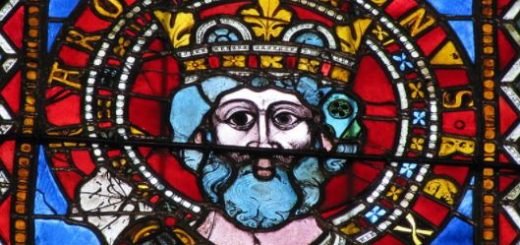
Early Middle Ages
So, picture this: it’s the late 400s, and the Roman Empire—this giant, powerful, seemingly invincible force that had shaped so much of the Western world—is crumbling. The roads are still there (kind of), the aqueducts still carry water in some places, but the order that held everything together? It’s falling apart. Welcome to the Early Middle Ages, a time of huge change, survival, adaptation, and yes—some chaos too.
This era, stretching roughly from the late 5th to the 10th century, has often (and controversially) been dubbed the “Dark Ages.” But let’s clear something up: while it’s true that there was a drop in big cultural productions and written records, that label oversimplifies things. This wasn’t just a dark, gloomy intermission between Roman glory and medieval majesty. It was a messy, fascinating transition where new worlds were being built from the ruins of the old.
Rome Falls, But the World Doesn’t End
When we talk about the fall of the Western Roman Empire, we’re not talking about a single dramatic event, like the curtains coming down at the end of a play. It was more of a long, slow unraveling. Urban centers emptied out. Trade networks faltered. Population dipped hard—some places lost more than 18% of their people, possibly thanks to a colder climate and food shortages.
By the late 4th century, things really start to buckle under pressure. The empire is hit hard by Germanic tribes like the Visigoths and Ostrogoths, who were themselves being pushed westward by the terrifying Huns. And when the Huns show up, it’s a whole new level of drama.
These groups weren’t just showing up with swords and bad attitudes—they were often running from even worse trouble, like dominoes falling. The Romans tried to deal with this through negotiation, bribery, and sometimes brute force. But their resources, especially their once-legendary armies, were stretched thin. By 476, the last Roman emperor in the West, Romulus Augustulus, was deposed. And just like that, the Western Roman Empire was gone.
The Age of Invasions: A New Cast of Characters
After Rome’s fall, Europe didn’t just sit idle. Nope. It filled up with new power players. You had the Franks in what’s now France and Germany, the Lombards in Italy, the Visigoths in Spain, and the Anglo-Saxons in England. These so-called “barbarians” weren’t just mindless destroyers—they were forming kingdoms, drawing from Roman traditions, and even converting to Christianity (often the Arian version first, but eventually mainstream Catholicism).
Of course, the transitions weren’t always smooth. One big moment was the Battle of Adrianople in 378, when the Romans got utterly crushed by Gothic forces. Their emperor, Valens, was killed, and the core of Rome’s Eastern army was wiped out. That sent shockwaves through the Empire—it was a wake-up call, if ever there was one.

An early 7th-century Anglo-Saxon helmet known as Sutton Hoo.
Life After Rome: What Changed?
Daily life shifted massively. With the collapse of central authority, people started living more locally. Trade routes dried up, and people had to rely on what they could grow or craft nearby. That fancy pottery from North Africa? Gone. Literacy? Took a nosedive. Most elites couldn’t read, and education became the domain of monks holed up in monasteries, copying manuscripts by candlelight.
The cities shrank dramatically. Take Rome—it went from a bustling metropolis of 450,000 to a quiet town of over 18,000 people. Vegetation crept into the ruins, and wolves probably roamed what had once been marble-paved forums. But again, that doesn’t mean everyone gave up. People adapted.
Enter the Franks and the Birth of Medieval Europe
In the midst of this transformation, the Franks began to rise. Clovis, a savvy and brutal leader, united the Frankish tribes and converted to Christianity around 496. That was a big deal—not just for religious reasons, but politically. It aligned the Franks with the powerful Roman Church, laying the groundwork for a strong alliance that would define European politics for centuries.
Fast forward to Charlemagne (crowned Emperor in 800), and we’re looking at a full-on revival. He built a vast empire covering much of Western Europe and kickstarted what we call the Carolingian Renaissance—a burst of learning, art, and culture focused around monastic and courtly centers.
Were the Middle Ages that Dark as some historians often describe the period?
Eastern Roman Empire: The Byzantines Keep the Torch Burning
Meanwhile, in the East, the Roman Empire didn’t fall—it evolved. The Byzantines (as we call them now, though they still called themselves Romans) continued on for another thousand years, with Constantinople as their stunning, fortified capital.
Justinian I (527–565) was a game-changer. He reconquered parts of the old empire (including Italy and North Africa), codified Roman law into a lasting legal system, and commissioned the Hagia Sophia, which still dazzles today. But his reign was also marred by the Plague of Justinian, a pandemic that killed millions—including, almost, the emperor himself.
The Eastern Empire held firm, despite relentless pressure from Persians, Slavs, and eventually Arab Muslim armies. They adapted their military and administrative systems to stay afloat, creating the “theme system” where generals governed provinces. This decentralized power but kept the empire flexible.
Who were the greatest military generals of the Byzantine Empire?
The Rise of Islam: A Game-Changer for the Mediterranean
Now let’s switch gears. In the 7th century, a new power burst onto the scene: Islam. Muhammad’s message spread quickly across the Arabian Peninsula, and within decades, Muslim armies conquered vast swaths of the Byzantine and Persian territories.
Under the Umayyad Caliphate, Muslim control spread from Spain to Central Asia. By 750, the Islamic world was vast, sophisticated, and incredibly influential. Cities like Baghdad and Córdoba became beacons of learning, trade, and science—far ahead of most European cities in terms of urbanization and culture.
Europeans, especially in Spain and Sicily, came into contact with Muslim scholars and translated key texts into Latin. This slow transmission of knowledge would later fuel the European renaissance—but at this point, it was just beginning.
READ ALSO: History of Islam: How and When Did Islam Begin?
Britain: From Rome’s Frontier to Anglo-Saxon Kingdoms
Back in Britain, things were shifting dramatically. After the Romans left in the early 400s, the island faced waves of Germanic settlers—Angles, Saxons, and Jutes—who gradually carved out their own kingdoms. Christianity, which had arrived under Roman rule, faded for a while but was reintroduced by missionaries like Augustine of Canterbury in 597.
The British Isles became a patchwork of competing kingdoms. Northumbria, Mercia, Wessex—each had its moment in the spotlight. By the 9th century, the Vikings had arrived, raiding monasteries and eventually settling in large parts of England. Alfred the Great of Wessex fought back, laying the foundations for what would eventually become the Kingdom of England.
Feudalism and Farming: A New Way of Life
One of the most defining features of this era was the rise of feudalism. Without strong central governments, local lords became the big fish in small ponds. They offered protection in exchange for service or labor, and that system created a whole social hierarchy based on land ownership, loyalty, and duty.
Agriculture also evolved. The old Roman two-field system was gradually replaced by the more efficient three-field system, which boosted food production. The heavy plough, padded horse collar, and water mills all improved farming life. These innovations may not seem flashy, but they laid the groundwork for population growth and urban revival later on.
Vikings: Traders, Raiders, and Settlers
Let’s not forget the Vikings. These seafaring Norsemen from Scandinavia were more than just axe-wielding raiders. Sure, they plundered monasteries and terrorized coastal towns, but they also established trade routes stretching from the Baltic to Baghdad.
Some settled in Normandy (which literally means “land of the Northmen”), others founded cities like Dublin, and a few even sailed to North America. The Viking impact on politics, trade, and culture was huge, especially in Britain and Eastern Europe.
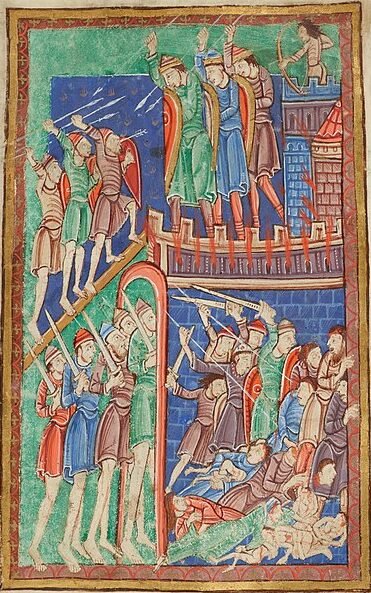
A depiction of Viking warriors attacking a town
Eastern Europe and the Slavic World
As Germanic tribes settled in the West, Slavic tribes filled in the gaps to the East and South. These groups—Czechs, Slovaks, Poles, Serbs, Croats—began forming their own early states. Christian missionaries from both Rome and Constantinople competed to win them over, and the results still shape Eastern Europe’s religious divisions today.
The Kievan Rus’, founded by Scandinavian rulers in Slavic lands, became a major player. Under rulers like Vladimir the Great, who converted to Christianity around 988, they linked their culture to Byzantium, laying the foundation for what would become Russia and Ukraine.
A Flourishing Byzantium and a Growing Divide
Despite challenges, the Byzantine Empire was still a cultural and economic powerhouse. During the Macedonian Renaissance (9th–11th centuries), classical learning enjoyed a revival. Byzantines preserved and transmitted ancient Greek texts, while developing impressive administrative and legal systems.
But the divide between the Latin West and Greek East was growing. Differences in language, liturgy, and authority (especially the role of the pope) widened. Though the formal split—the Great Schism—would come later in 1054, the seeds were already planted in the Early Middle Ages.
READ ALSO: 10 Most Influential Catholic Popes from the Middle Ages
Learning Lives On: Monks, Manuscripts, and the Carolingian Renaissance
So, was learning really dead during the “Dark Ages”? Not quite. While urban schools faded, monasteries kept the flame alive. Monks copied texts—both religious and classical—in scriptoriums, preserving them for future generations.
Charlemagne’s reign saw a concerted effort to revive education. Under Alcuin of York, scholars promoted the liberal arts and standardized writing (hello, lowercase letters!). This Carolingian Renaissance was modest but meaningful—it helped restore a sense of intellectual continuity with the past.
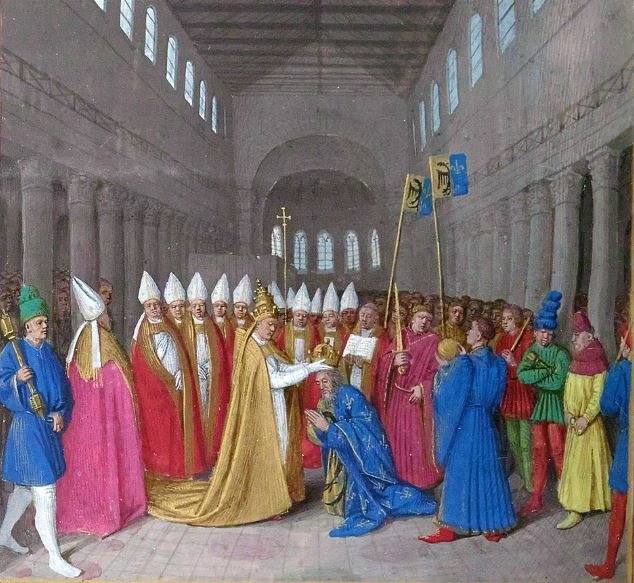
Pope Leo III crowned Charlemagne emperor on December 25, 800.
Islamic Golden Age: The Other Center of Knowledge
Meanwhile, in the Islamic world, learning was thriving. Muslim scholars in Baghdad, Córdoba, and elsewhere translated Greek works, made breakthroughs in math, medicine, and astronomy, and preserved knowledge that would eventually trickle back to Europe.
Algebra, chemistry, and even the concept of zero came through Arabic translations. Monks in Europe would later study these texts and integrate them into the Christian worldview, blending faith with reason.
A Shifting Religious Landscape
Christianity was changing, too. Early medieval Christians inherited a fairly stable set of beliefs, but church organization was still evolving. The pope’s authority was growing, especially in the West. Monasteries like Cluny gained prestige, emphasizing purity and reform.
The East had its own theological struggles, like Iconoclasm (debates over religious images), while the West was solidifying papal power. Missionaries traveled far and wide, converting pagans from Ireland to Iceland. By the year 1000, Christianity had taken root across most of Europe—though pockets of paganism remained in the north and east.
Wrapping Up the Early Middle Ages: Europe in 1000
By the turn of the first millennium, Europe looked very different than it had five hundred years earlier. The Western Roman Empire was long gone, but new kingdoms and cultures had emerged. The feudal system shaped everyday life, and agriculture supported growing populations. Towns began to rebound, trade slowly resumed, and cathedrals began to rise again.
Despite early setbacks, Europe was finding its footing. The seeds planted during the Early Middle Ages—monastic learning, feudal loyalty, religious transformation, agricultural innovation—would all bloom in the centuries ahead. The so-called “Dark Ages” weren’t just about decline; they were about survival and transformation.
So while it may have seemed like the lights had gone out for a while, under the surface, the embers of a new world were glowing—ready to ignite the High Middle Ages.
Timeline of the Early Middle Ages

Gold coin of Romulus Augustulus
-
476 – Fall of the Western Roman Empire; Romulus Augustulus is deposed.
-
493 – Ostrogothic Kingdom established in Italy under Theoderic the Great.
-
527–565 – Reign of Justinian I in Byzantium; legal codification and Hagia Sophia built.
-
541 – Plague of Justinian begins, decimating the population of the Eastern Roman Empire.
-
568 – Lombards invade and settle in northern Italy, forming their own kingdom.
-
590 – Gregory I becomes Pope; strengthens papal authority and missions.
-
622 – Hijra: Muhammad migrates to Medina, marking the start of the Islamic calendar.
-
632–750 – Rashidun and Umayyad Caliphates expand across the Middle East, North Africa, and Iberia.
-
680 – Battle of Ongal; First Bulgarian Empire emerges.
-
711 – Muslim forces begin conquest of Visigothic Spain.
-
732 – Charles Martel defeats Muslim forces at the Battle of Tours.
-
800 – Charlemagne crowned Emperor of the Romans by Pope Leo III.
-
864 – Bulgaria adopts Christianity from Byzantium.
-
871–899 – Reign of Alfred the Great; defense against Viking invasions in England.
-
988 – Kievan Rus’ adopts Christianity under Vladimir I.
-
1000 – Christianization of Hungary and Iceland; growing stability in Europe.
Frequently asked questions about the Early Middle Ages
What marked the beginning of the Early Middle Ages?
The Early Middle Ages began after the fall of the Western Roman Empire in 476 CE, ushering in a time of political fragmentation and transformation across Europe.
Why is this period sometimes called the “Dark Ages”?
It’s called the “Dark Ages” due to the perceived decline in cultural and economic activity and the scarcity of written records—but modern historians generally avoid the term due to its oversimplification.
What happened to Roman cities and infrastructure after the empire collapsed?
Many Roman cities shrank or were abandoned, trade routes broke down, and infrastructure like roads and aqueducts deteriorated without central maintenance.
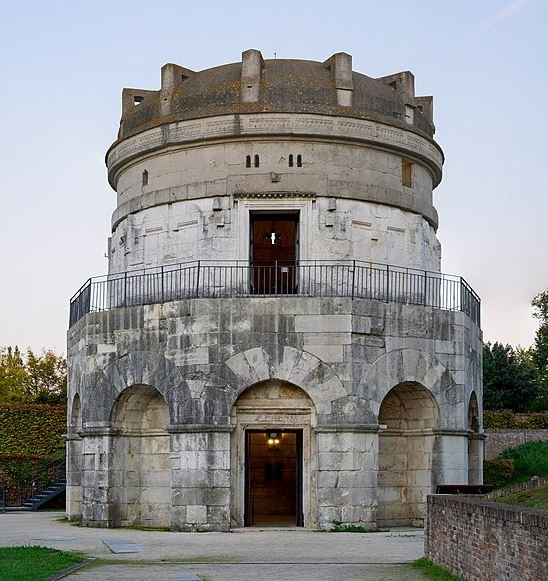
Situated on the outskirts of Ravenna, Italy, the Mausoleum of Theodoric stands as a historic structure dating back to AD 520. Commissioned by Theodoric the Great, ruler of the Ostrogoths, this monument was designed to serve as his final resting place.
How did the Eastern Roman (Byzantine) Empire survive?
The Byzantines maintained strong administration, military reforms, and urban centers like Constantinople, preserving Roman traditions while adapting to new threats.
What role did Christianity play during this period?
Christianity spread widely, unifying various kingdoms. Monasteries preserved knowledge, and the Church increasingly influenced political and cultural life.
Who was Charlemagne, and why was he important?
Charlemagne was the Frankish king crowned emperor in 800 CE. He united much of Western Europe and sparked the Carolingian Renaissance in learning and governance.
How did feudalism shape medieval society?
Feudalism created a system of mutual obligations—lords offered protection in exchange for service—leading to decentralized power and a focus on local life.
What impact did the Vikings have on Europe?
Vikings raided, traded, and settled across Europe, influencing politics, culture, and commerce, especially in Britain, Ireland, and parts of France and Eastern Europe.
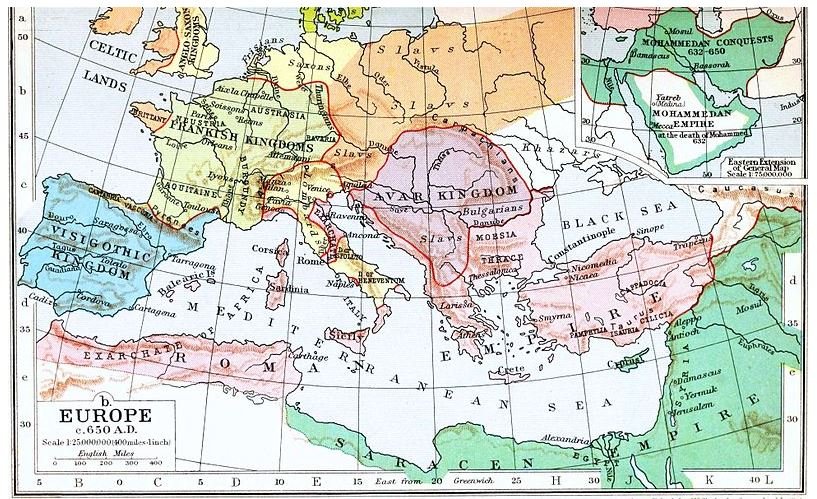
Map of Europe circa AD 650.
How did Islam influence the Early Middle Ages?
Islamic conquests reshaped the Mediterranean world, brought new scientific knowledge to Europe, and challenged Byzantine and Christian territories.
What was the Carolingian Renaissance?
It was a revival of learning under Charlemagne, focused on classical texts, Latin literacy, and monastic education, laying foundations for medieval scholarship.
How did agriculture evolve during this period?
Innovations like the three-field system, heavy plough, and padded horse collar boosted food production and supported population growth.
How did Eastern Europe develop in this era?
Slavic states emerged, Christianized through missions from both Rome and Constantinople, with powers like Bulgaria and Kievan Rus’ shaping regional politics.