Emancipation Proclamation
The Emancipation Proclamation was a presidential proclamation and executive order issued by Abraham Lincoln on January 1, 1863, declaring all enslaved people in Confederate states to be free.
Summary
The Emancipation Proclamation, officially designated as Proclamation 95, was a groundbreaking executive order issued by President Abraham Lincoln on January 1, 1863, during the American Civil War. This proclamation altered the legal status of more than 3.4 million enslaved African Americans in the Confederate states, effectively declaring them free. By allowing freed slaves to join the Union Army, it bolstered the North’s manpower and fundamentally shifted the war’s objectives. Though its immediate effects were limited, the Emancipation Proclamation played a crucial role in the abolition of slavery in the United States.
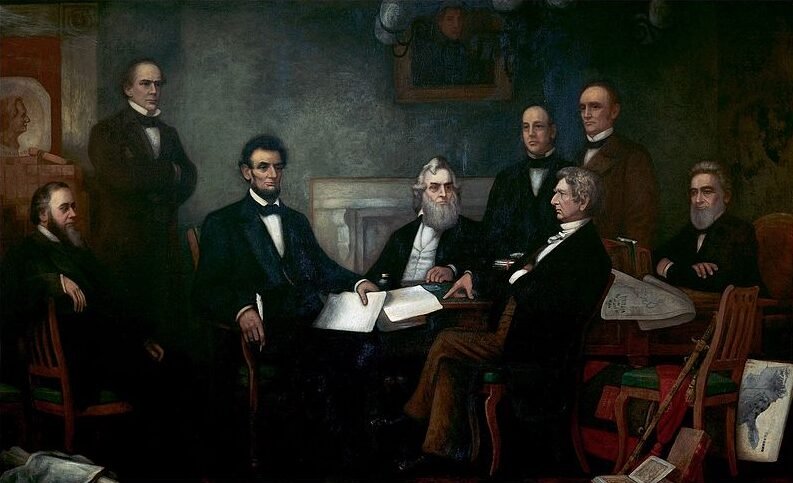
President Lincoln reading the Emancipation Proclamation. Artwork by American painter Francis Bicknell Carpenter.
Background and Context
Slavery was deeply entrenched in the United States since its colonial days. While the Northern states gradually abolished slavery between 1777 and 1804, the Southern states continued to rely on enslaved labor for their agricultural economy.
The Civil War began in April 1861, primarily over the issue of states’ rights and the expansion of slavery. Lincoln initially aimed to preserve the Union rather than abolish slavery. However, as the war progressed, it became clear that slavery was both a moral and military issue that needed to be addressed.
The Preliminary Emancipation Proclamation
Following the Union victory at the Battle of Antietam in September 1862, Lincoln saw an opportunity to issue the Preliminary Emancipation Proclamation. Released on September 22, 1862, this declaration warned Confederate states that if they did not return to the Union by January 1, 1863, their enslaved people would be freed. The announcement signaled a turning point, reinforcing the moral cause of the war and laying the groundwork for the final proclamation.
The Final Emancipation Proclamation
On January 1, 1863, Lincoln issued the final Emancipation Proclamation, which specifically targeted the Confederate states still in rebellion. It declared that “all persons held as slaves within said designated States, and parts of States, are, and henceforward shall be free.” The order also authorized the recruitment of African Americans into the Union Army, providing them with a direct role in securing their own freedom.
The Emancipation Proclamation was a bold and decisive move by President Abraham Lincoln that reshaped the United States.
Scope and Limitations
The Emancipation Proclamation was limited in scope. It did not free enslaved individuals in the border states (Missouri, Kentucky, Maryland, and Delaware) or in Union-controlled areas of Confederate states such as parts of Louisiana and Virginia.
The proclamation was a war measure, issued under Lincoln’s authority as Commander-in-Chief, meaning it depended on Union military success for enforcement. It did not make slavery illegal nationwide—that required the passage of the Thirteenth Amendment in 1865.
Reactions and Impact
The Proclamation had immediate and long-term effects. It was met with resistance in the South, where many white Southerners viewed it as an attack on their way of life. However, it was celebrated by abolitionists and African Americans, who saw it as a step toward true freedom. The Proclamation also changed the nature of the Civil War, redefining it as a fight against slavery rather than merely a conflict to restore the Union.
Internationally, the Emancipation Proclamation had significant diplomatic consequences. Britain and France, which had been considering recognizing the Confederacy, refrained from doing so after Lincoln made the war explicitly about ending slavery. This helped prevent European intervention on behalf of the South.
Enforcement and Military Implications
The Proclamation’s enforcement depended on Union military advances. As federal troops moved into Confederate territories, they enforced the order by freeing enslaved individuals. Many newly freed people joined the Union Army, with approximately 210,000 African Americans serving by the end of the war. Their participation was instrumental in tipping the balance toward Union victory.
The Road to the Thirteenth Amendment
While the Emancipation Proclamation was a crucial step, it did not legally end slavery nationwide. To ensure complete abolition, Lincoln pushed for the passage of the Thirteenth Amendment. Congress approved the amendment in January 1865, and it was ratified by the states on December 6, 1865, permanently abolishing slavery in the United States.
What were the sociocultural effects of the American Civil War?
Legacy and Historical Significance
The Emancipation Proclamation remains one of the most significant documents in American history. It transformed the Civil War into a struggle for human rights and laid the foundation for future civil rights movements. The proclamation’s principles were echoed during the Civil Rights Movement of the 1960s, with leaders such as Martin Luther King Jr. referencing it as a symbol of America’s commitment to freedom and equality.
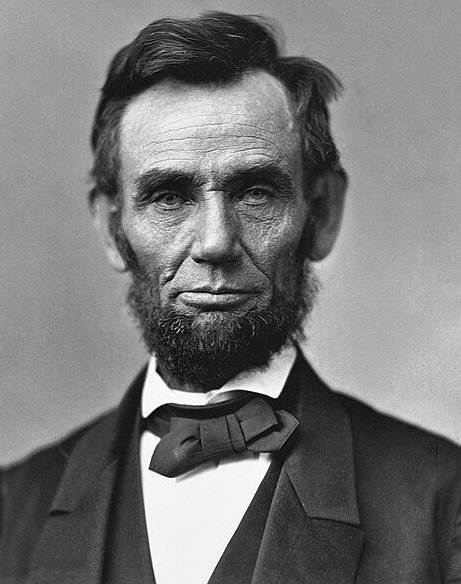
A picture of Abraham Lincoln in 1863.
Timeline
-
September 22, 1862 – President Abraham Lincoln issues the Preliminary Emancipation Proclamation, warning that enslaved people in Confederate states would be freed if the rebellion continued.
-
January 1, 1863 – Lincoln signs the final Emancipation Proclamation, declaring enslaved individuals in rebelling states “forever free” and allowing them to join the Union Army.
-
1863–1865 – The proclamation weakens the Confederacy by encouraging enslaved people to escape and enlist in the Union military.
-
November 8, 1864 – Lincoln’s re-election ensures the commitment to abolition.
-
January 31, 1865 – Congress passes the Thirteenth Amendment to abolish slavery nationwide.
-
April 9, 1865 – The Civil War ends with Confederate surrender.
-
December 6, 1865 – The Thirteenth Amendment is ratified, legally ending slavery in the United States.
Frequently Asked Questions
Did the Emancipation Proclamation free all enslaved people in the U.S.?
No, it applied only to enslaved people in Confederate states in rebellion, not to those in border states or Union-controlled areas.

A painting by German artist Thomas Nast, entitled “Emancipation: The Past and the Future”
Why did Lincoln issue the Emancipation Proclamation?
It was a strategic war measure to weaken the Confederacy by depriving it of enslaved labor and to redefine the Civil War as a fight against slavery.
When was the preliminary Emancipation Proclamation issued?
On September 22, 1862, after the Union victory at the Battle of Antietam, giving the Confederacy 100 days to surrender before it took effect.
How did the Proclamation affect African Americans?
It encouraged enslaved people to escape to Union lines, allowed Black men to join the Union Army, and boosted morale among abolitionists.
Why was the Proclamation not challenged in court?
Since it was issued under Lincoln’s war powers as commander-in-chief, there was no legal challenge during the war.
How did the Proclamation impact the Civil War?
It shifted the Union’s goal from just preserving the Union to also ending slavery, preventing European nations from supporting the Confederacy.
What was the response to the Emancipation Proclamation in the Confederacy?
It was met with outrage and fear of slave revolts, strengthening Confederate resolve to continue fighting.
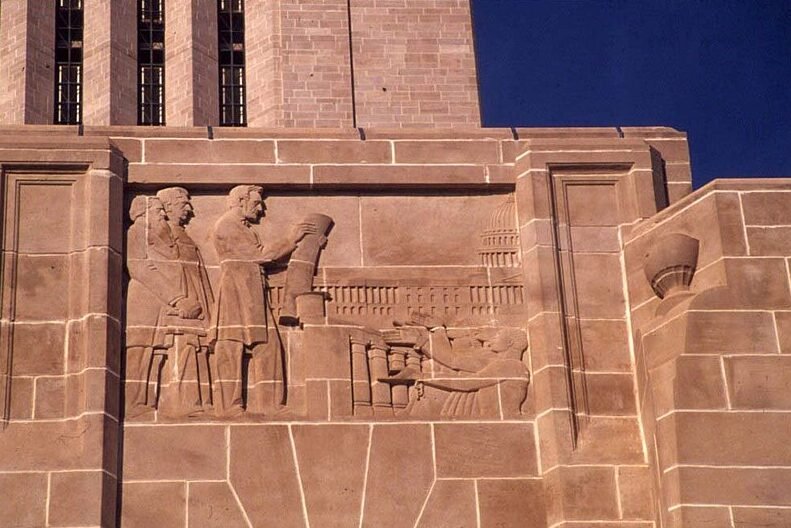
A relief, at Lincoln, Nebraska, depicting the signing of the Emancipation Proclamation. Artwork by American artist Lee Lawrie.
How did the Proclamation influence international relations?
It gained support for the Union from abolitionist nations like Britain and France, discouraging them from aiding the Confederacy.
Did the Emancipation Proclamation make slavery illegal?
No, it was a temporary war measure; slavery was fully abolished with the 13th Amendment in 1865.
What role did African Americans play in the Union Army after the Proclamation?
Nearly 210,000 Black men, many of them former slaves, joined the Union Army, significantly contributing to the war effort.
How did Lincoln ensure slavery’s permanent abolition?
He pushed for the 13th Amendment, which was ratified on December 6, 1865, making slavery illegal throughout the U.S.
How is the Emancipation Proclamation remembered today?
It is considered a landmark in American history, celebrated as a major step toward racial justice and civil rights.





