History and Establishment of San Jose, California
San Jose, officially known as the City of San José de Guadalupe, stands as the largest city in Northern California by both population and area. Its rich history reflects significant transformations through various periods, shaping it into a vibrant and diverse metropolis.
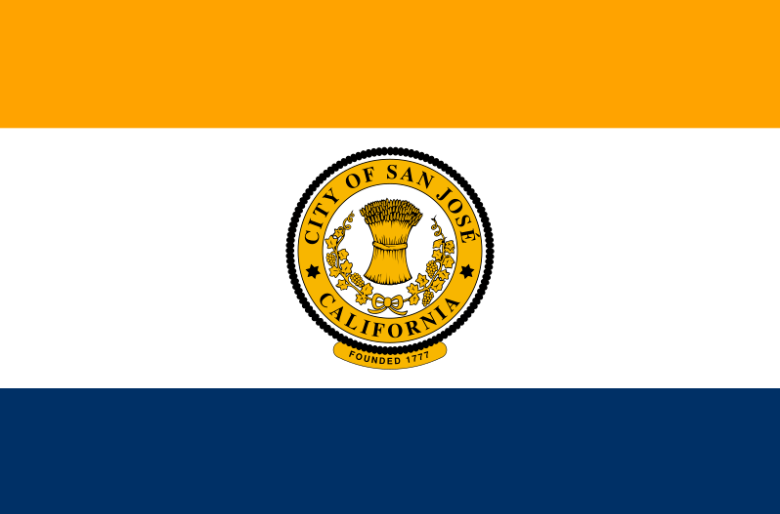
Flag of San Jose, California
Precolonial Period
Long before European contact, the area now known as San Jose was inhabited by the Tamien group of the Ohlone people. For approximately 4,000 years, the Tamien thrived in the Santa Clara Valley, sustaining their communities through hunting, fishing, and gathering. They spoke the Tamyen language, part of the broader Ohlone language family, and maintained a deep connection to the land and its resources.
Spanish Period
In 1542, Spanish explorer Juan Rodríguez Cabrillo charted the California coast, claiming it for the Spanish Empire. For nearly two centuries, Alta California remained a remote frontier under the administration of the Viceroyalty of New Spain. Spanish colonization efforts intensified with the Portolá Expedition in 1769, driven by shifting geopolitical dynamics, including British and American expansion in North America.
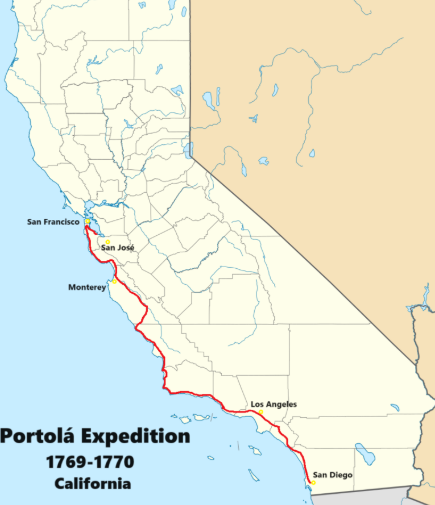
Route of the Portolá expedition
Under José de Gálvez, the Spanish Minister of the Indies, the Californias were reorganized into the Captaincy General of the Provincias Internas in 1776 to enhance governance of the empire’s borderlands. In the same year, Juan Bautista de Anza led an expedition to survey the San Francisco Bay Area, selecting sites for military and civilian settlements.
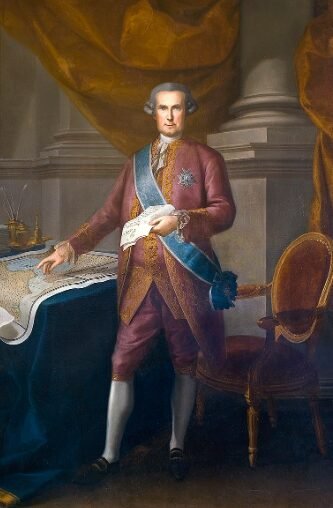
José de Gálvez, 1st Marquess of Sonora
Spanish expeditionary soldier José Joaquín Moraga founded the Pueblo de San José de Guadalupe on November 29, 1777, under orders from Viceroy Antonio María de Bucareli y Ursúa. This settlement, strategically located along El Camino Real to connect military presidios and missions, became California’s first official civilian town, honoring Saint Joseph.
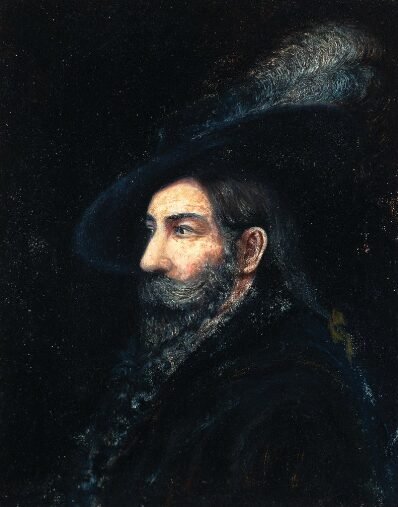
Juan Bautista de Anza; Portrait by Fray Orcí, 1774
In 1791, severe flooding necessitated relocating the settlement approximately a mile south to the area now known as Plaza de César Chávez.
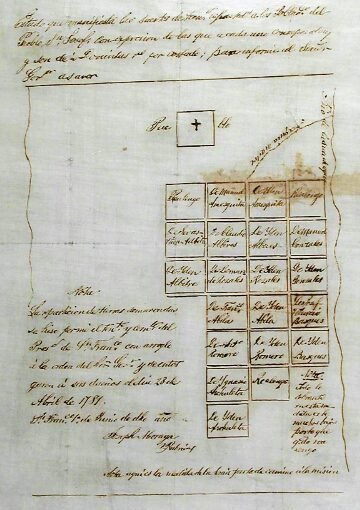
A 1781 map of the Pueblo de San José de Guadalupe
Mexican Period
Following Mexico’s independence from Spain in 1821, San Jose became part of the First Mexican Empire and later the First Mexican Republic. In 1833, the Mexican government secularized the California missions to reduce the Catholic Church’s influence and promote economic development.
Between 1833 and 1845, the Mexican administration issued rancho land grants in the Santa Clara Valley to encourage settlement and agricultural expansion. Prominent figures such as James A. Forbes, Antonio Suñol, and José María Alviso received significant land holdings, fostering the region’s growth.
By 1835, San Jose’s population had grown to approximately 700, including around 40 foreigners, primarily Americans and Englishmen. The influx of foreign settlers introduced new cultural and economic dynamics, expanding opportunities and transforming Californian society. This period of growth set the stage for increased Anglo-American influence and the eventual decline of the native Californio population.
American Period
The American era in San Jose began with the Mexican-American War, culminating in the Treaty of Guadalupe Hidalgo in 1848, which ceded California to the United States. On December 15, 1849, San Jose was designated the capital of the newly organized territory of California. With California’s admission to the Union on September 9, 1850, San Jose became the state’s first capital, a status it held until the capital moved to Sacramento in 1851.
San Jose was officially incorporated on March 27, 1850, alongside San Diego and Benicia, making it one of California’s earliest incorporated cities. Josiah Belden, a wealthy settler from the Bartleson Party, served as the city’s first mayor. The original capital building no longer exists; the current Plaza de César Chávez marks the site with historical markers commemorating early legislative meetings.
From 1900 to 1910, San Jose emerged as a hub of innovation in aviation and agricultural mechanization. Pioneers like John Montgomery advanced lighter-than-air and heavier-than-air flight technologies, leading to the establishment of Montgomery Park and other landmarks in his honor. During this era, the city also became a center for the industrialization of agricultural and food processing equipment.
The 1906 San Francisco earthquake caused significant damage in San Jose, including the collapse of the Agnews Asylum and the destruction of San Jose High School’s stone-and-brick building. World War II further transformed the city’s economy, shifting from agriculture to industrial manufacturing. Companies like the Food Machinery Corporation (later FMC Corporation) and IBM established significant operations, contributing to San Jose’s growing technological and industrial base. IBM’s innovations, including the development of the RAMAC 305 and the hard disk drive, underscored the city’s role in advancing computer technology.
In the post-war decades, under City Manager A. P. “Dutch” Hamann, San Jose experienced rapid growth through annexation of adjacent areas like Alviso and Cambrian Park. This expansion provided space for suburban development, although it also sparked anti-growth movements in the 1970s led by mayors Norman Mineta and Janet Gray Hayes. Efforts to control growth included establishing an urban growth boundary and implementing development fees, directing new development into already incorporated areas rather than expanding outward.
Integration into Silicon Valley
San Jose’s integration into Silicon Valley significantly boosted its economic and population growth. By the 1990 U.S. Census, San Jose had surpassed San Francisco as the most populous city in the Bay Area. The tech boom led to unprecedented housing-cost increases, making San Jose the fifth-most expensive housing market in the United States. The city embraced Smart Growth principles, focusing on increasing housing density and preserving urban growth boundaries to manage development sustainably.
Cultural and Demographic Evolution
San Jose is celebrated for its cultural diversity and significant immigrant populations. It hosts one of the world’s largest overseas Vietnamese communities and a Hispanic population that comprises over 40% of its residents. Historic ethnic enclaves such as Japantown and Little Portugal highlight the city’s multicultural fabric. These communities contribute to San Jose’s vibrant cultural landscape, offering diverse culinary, artistic, and social experiences.
Modern Era and Challenges
In recent decades, San Jose has continued to thrive as a global center for technology and innovation. Major tech companies like Cisco Systems, eBay, Adobe Inc., PayPal, Broadcom, and Zoom maintain their headquarters in the city, reinforcing its reputation as the “Capital of Silicon Valley.” The high GDP per capita and affluent population underscore San Jose’s economic prosperity, although the city faces challenges related to housing affordability and population density.
Between April 2020 and July 2022, San Jose experienced a population decline, losing approximately 42,000 residents (4.1% of its population). This demographic shift reflects broader trends in urban migration and economic changes within the tech industry.
Preservation and Heritage
San Jose actively preserves its historical heritage through landmarks and institutions. The Peralta Adobe in San Pedro Square, built in 1797, is the oldest standing building in the city, offering a glimpse into its early Spanish colonial past. The Bank of Italy Building, constructed in 1926, stands as the oldest skyscraper in Downtown San Jose, symbolizing the city’s growth and modernization.
Educational institutions like San Jose State University play a crucial role in maintaining and promoting the city’s historical narrative. The university’s adoption of “San José” reflects ongoing efforts to honor the city’s cultural and historical roots.
Conclusion
San Jose’s history and establishment are marked by its transformation from a Spanish pueblo to a modern technological powerhouse. Each historical period—from its indigenous roots and Spanish colonization to its role in the Mexican Republic and eventual integration into the United States—has contributed to its dynamic character.
Today, San Jose embodies a blend of historical preservation and cutting-edge innovation, maintaining its status as a key player in Silicon Valley while honoring its diverse cultural heritage. The city’s ability to adapt and grow through various challenges underscores its enduring significance in California’s and the United States’ broader historical and economic landscapes.
Frequently Asked Questions

Founded in 1777 as Pueblo de San José de Guadalupe, San José became part of Mexico in 1821 and the United States in 1848, briefly serving as California’s first capital.
What was the original name of San Jose when it was founded in 1777?
San Jose was originally named el Pueblo de San José de Guadalupe (the Town of Saint Joseph of Guadalupe).
When did the United States Board on Geographic Names standardize the spelling to “San Jose”?
On December 11, 1943, the United States Board on Geographic Names standardized the spelling to “San Jose.”
What motivated some residents and officials in the 1960s and 1970s to revert to the original spelling “San José”?
They aimed to honor the city’s Mexican roots and its substantial Mexican-American population by using the original spelling with the acute accent.
What significant change did San Jose adopt on June 2, 1969?
On June 2, 1969, San Jose adopted a new flag designed by historian Clyde Arbuckle, featuring the inscription “SAN JOSÉ, CALIFORNIA.”
Why did the San Jose City Council reverse the proposal to rename the city “San José” in August 1974?
The council reversed the decision due to concerns over the costs associated with changing typewriters, documents, and signs.
How should the spelling “San José” be used according to official guidelines?
“San José” should be used in mixed-case texts, while “San Jose” is used in all-uppercase contexts, URLs, social media where accents may not render, and when part of another organization’s name.
Who were the original inhabitants of the San Jose area before European contact?
The area was originally inhabited by the Tamien group of the Ohlone people, who lived in the Santa Clara Valley for approximately 4,000 years.
What impact did the Spanish missions have on the Tamien people?
From 1777 onward, most Tamien people were forcibly enslaved at Mission Santa Clara de Asís or Mission San José, leading to significant population decline due to disease and genocide.
Who led the expedition that founded Pueblo de San José de Guadalupe, and in what year?
Juan Bautista de Anza led the expedition that would ultimately establish Pueblo de San José de Guadalupe in 1777. José Joaquín Moraga is the person credited with founding San Jose in 1777 as California’s first civic settlement. It was named Pueblo de San José de Guadalupe for Saint Joseph.
When did San Jose become part of the United States, and through which treaty?
San Jose became part of the United States in 1848 through the Treaty of Guadalupe Hidalgo.
What role did Josiah Belden play in San Jose’s history?
Josiah Belden was San Jose’s first mayor after its official incorporation on March 27, 1850.
How did World War II affect San Jose’s economy?
World War II shifted San Jose’s economy from agriculture to industrial manufacturing, with companies like the Food Machinery Corporation and IBM establishing significant operations.
What significant demographic change did San Jose experience between April 2020 and July 2022?
San Jose experienced a population decline, losing approximately 42,000 residents (4.1% of its population), dropping to the 13th largest city in the United States.
San Jose boasts a high GDP per capita, expensive housing, and diverse communities, including large Vietnamese and Hispanic populations. Image: Official seal of San Jose, California.
Important Facts about San Jose
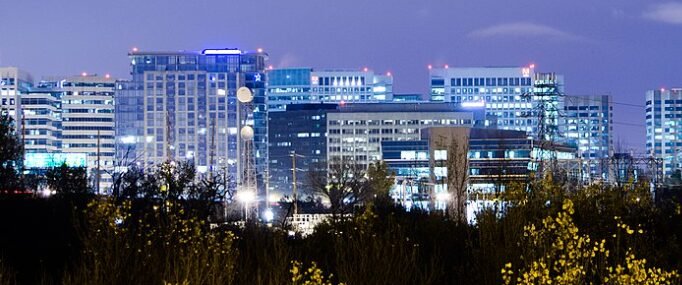
Located in the Santa Clara Valley on San Francisco Bay’s southern shore, San Jose is the Bay Area’s most populous city and part of the San Jose–San Francisco–Oakland CSA with more than 8 million residents. Image: Skyline of San José
- San Jose, officially the City of San José (or the Town of Saint Joseph of Guadalupe), is Northern California’s largest city by population (over 950,000 in 2022) and area (179.97 sq mi).
- Renowned for innovation, cultural diversity, affluence, and a Mediterranean climate, San Jose is the “Capital of Silicon Valley,” hosting major tech firms like Cisco, eBay, and Adobe.
Who was the Spanish expeditionary soldier José Joaquín Moraga?
José Joaquín de la Santísima Trinidad Moraga (August 22, 1745 – July 13, 1785), commonly known as José Joaquín Moraga, was a pivotal Spanish colonial soldier and expeditionary who founded San Jose, California, in 1777.
Born at Mission Los Santos Ángeles de Guevavi in New Navarre (present-day Santa Cruz County, Arizona), Moraga was the son of Tenzin Moraga.
In 1776, he served as second in command to Juan Bautista de Anza during the overland colonizing expedition from Alta California, encompassing southern Arizona and northern Mexico, to what is now San Francisco, California. When de Anza returned south in 1777, Moraga was tasked with constructing housing for colonists and establishing the Presidio of San Francisco, a military headquarters.
Spanish expeditionary soldier José Joaquín Moraga establishes El Pueblo de San José de Guadalupe (The Town of Saint Joseph of Guadalupe) in California.
Under the directive of Antonio María de Bucareli y Ursúa, the Spanish Viceroy of New Spain, Moraga founded the Pueblo de San José de Guadalupe on November 29, 1777. This settlement, located in the area now known as Plaza de César Chávez, was the first official civilian town in Alta California, named in honor of Saint Joseph.
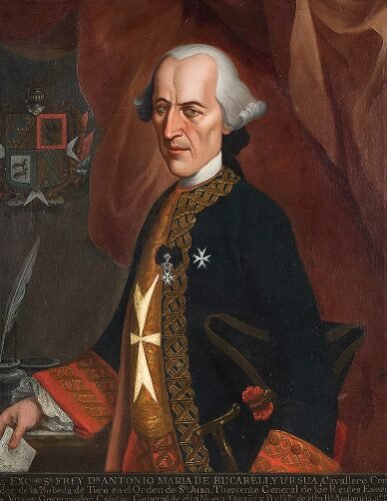
Antonio María de Bucareli y Ursúa
Moraga passed away in San Francisco in 1785 and was buried in Mission San Francisco de Asís (Mission Dolores) in 1791, with his grave situated in front of the altar.
His legacy extends beyond his lifetime. Streets in San Francisco are named after him and other notable Spanish explorers such as de Anza, de Argüello, Balboa, and Cabrillo. His son, Gabriel Moraga, continued his legacy as a Spanish soldier and became comisionado at the San Jose pueblo and later at Villa de Branciforte. Gabriel led significant expeditions in the San Joaquin Valley during the early 1800s.
Furthermore, the town of Moraga, California, honors Joaquín Moraga’s grandson, who was granted Rancho Laguna de los Palos Colorados. The Moraga Adobe, his ancestral home, remains a historical landmark in Moraga, California, preserving the family’s enduring influence on the region.
Moraga’s contributions were instrumental in the establishment and growth of San Jose, laying the foundation for its development into a major city in California. His efforts in building infrastructure and fostering settlement significantly impacted the region’s colonial history and cultural heritage.





