Sistine Chapel
The Sistine Chapel, located within the Apostolic Palace in Vatican City, is one of the most significant cultural and religious landmarks in the world. Originally known as the Cappella Magna (‘Great Chapel’), it was commissioned by Pope Sixtus IV and constructed between 1473 and 1481. The chapel is renowned for its frescoes, particularly Michelangelo’s masterpieces on the ceiling and The Last Judgment on the altar wall. Beyond its artistic significance, the Sistine Chapel serves as the venue for papal conclaves, where new popes are elected.

Aerial view of the Sistine Chapel.
Historical Background
The Sistine Chapel was designed by Baccio Pontelli and built under the supervision of Giovannino de Dolci. It replaced the earlier Cappella Maggiore, which had fallen into disrepair. On August 15, 1483, Pope Sixtus IV celebrated the first Mass in the chapel, dedicating it to the Virgin Mary. The structure was intended to serve as the Pope’s private chapel and a gathering place for the Papal Court.
During the reign of Sixtus IV, leading Renaissance artists, including Sandro Botticelli, Pietro Perugino, Pinturicchio, Domenico Ghirlandaio, and Cosimo Rosselli, were commissioned to decorate the walls with frescoes depicting the Life of Moses and Life of Christ. The chapel’s function evolved over time, becoming a central venue for major papal ceremonies and gatherings.
READ ALSO: Most Famous Paintings by Sandro Botticelli
Michelangelo’s Contribution
In 1508, Pope Julius II commissioned Michelangelo to paint the ceiling of the Sistine Chapel, a task that took four years to complete. Michelangelo’s frescoes depict scenes from the Book of Genesis, including The Creation of Adam, The Separation of Light from Darkness, and The Great Flood. These works revolutionized Western art with their intricate composition, dynamic figures, and unparalleled use of perspective and anatomy.
In 1535, Michelangelo returned to the Sistine Chapel under Pope Clement VII and later Pope Paul III to create The Last Judgment, a massive fresco covering the altar wall. Completed in 1541, this work portrays the Second Coming of Christ and the final judgment of souls, featuring hundreds of figures in dramatic poses. Due to its explicit nudity, the fresco sparked controversy, leading to later modifications by artist Daniele da Volterra, who added drapery to conceal certain figures.
Papal Conclaves in the Sistine Chapel
Since 1492, the Sistine Chapel has been the venue for papal conclaves, the secretive process by which new popes are elected. During a conclave, cardinals gather in seclusion, and votes are cast until a candidate receives a two-thirds majority. The election results are signaled by smoke rising from the chapel’s chimney—black for an inconclusive vote and white for the election of a new pope.
The 1492 papal conclave was the first to be held in the Sistine Chapel, which has been the site of all conclaves since 1878.
Historically, conclaves were lengthy affairs, often lasting weeks or months due to political influences. Today, conclaves are more structured, with cardinals residing in the Domus Sanctae Marthae during the process. Despite these changes, the Sistine Chapel remains the spiritual and ceremonial heart of papal elections.
Since 1996, members of the College of Cardinals (i.e. electors) stay in Domus Sanctae Marthae in Vatican City but vote in the Sistine Chapel.
Architectural Features
The Sistine Chapel’s architecture follows precise mathematical proportions, measuring approximately 40 meters long, 14 meters wide, and 20 meters high. Its unadorned exterior contrasts with the opulent interior, reflecting the Renaissance emphasis on proportional harmony. Large buttresses reinforce the walls, ensuring structural stability.
The interior features a marble transenna (screen) that divides the space into two sections: one for the clergy and one for the laity. Above the transenna, the walls are adorned with frescoes and papal portraits. The original blue ceiling, decorated with gold stars, was replaced by Michelangelo’s frescoes.
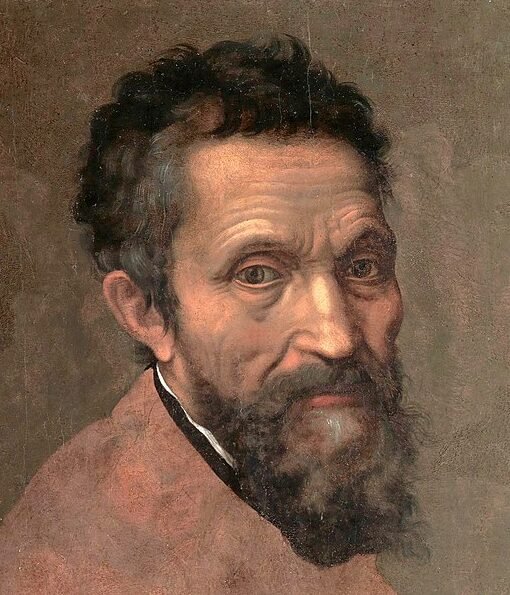
A portrait of Michelangelo.
Frescoes and Decorative Elements
The walls of the Sistine Chapel are divided into three horizontal levels:
- Upper Level: This area features a series of papal portraits and the Ancestors of Christ, painted by Michelangelo.
- Middle Level: This section includes the Life of Moses and Life of Christ frescoes, created by Botticelli, Perugino, and others.
- Lower Level: Originally decorated with faux drapery designs, this area now houses Raphael’s tapestries, which depict events from the lives of Saints Peter and Paul.
The ceiling frescoes, painted by Michelangelo, are arranged in nine central panels, flanked by sibyls, prophets, and biblical figures. This intricate visual narrative merges Old and New Testament themes, symbolizing the continuity of divine revelation.

Michelangelo’s painting “The Creation of Adam”
READ ALSO: 12 Most Terrible Stories from the Old Testament
Restoration and Preservation
The Sistine Chapel underwent extensive restorations, most notably from 1980 to 1994. This effort removed centuries of dirt, smoke, and overpainting, revealing the vibrant colors originally used by Michelangelo. While the restoration was largely praised, some critics argued that the cleaning process removed intentional shading effects.
Preservation efforts continue due to the high number of visitors, which exceeds five million annually. To mitigate damage, climate control systems regulate temperature and humidity inside the chapel.
The preservation of the Sistine Chapel ensures that future generations can continue to experience its grandeur and spiritual significance.
Did you know…?
Electors of a new pope take an oath of secrecy, outside communication is banned, and the Sistine chapel is checked for surveillance devices.
Cultural and Religious Significance
The Sistine Chapel represents a convergence of art, faith, and history. Its frescoes influence countless artists and continue to inspire theological and philosophical discourse. Beyond its artistic value, the chapel remains a sacred space, hosting papal ceremonies and reaffirming the continuity of Catholic tradition.

History of the Catholic Church: How and When Did Catholicism Begin?
Timeline
- 1368: The original Cappella Maggiore is recorded as a chapel for papal worship.
- 1473–1481: Pope Sixtus IV commissions the Sistine Chapel, designed by Baccio Pontelli and built under Giovannino de Dolci.
- 1482: Renaissance painters complete frescoes on the chapel’s walls depicting the Life of Moses and the Life of Christ.
- August 15, 1483: The chapel is consecrated during the Feast of the Assumption.
- 1508–1512: Michelangelo paints the Sistine Chapel ceiling under Pope Julius II, revolutionizing Western art.
- 1535–1541: Michelangelo returns to paint The Last Judgment for Pope Clement VII and Pope Paul III.
- 1492: The first papal conclave is held in the Sistine Chapel, electing Pope Alexander VI.
- 1870s: Structural reinforcements are added due to subsidence and cracking.
- 1984–1994: A decade-long restoration reveals the frescoes’ original vibrancy.
- 2013: Pope Francis is elected in the Sistine Chapel, continuing its role in papal conclaves.
- 2018: The chapel hosts its first live-streamed concert.

Michelangelo’s paintings on the Sistine Chapel ceiling
Frequently Asked Questions
What is the significance of the Sistine Chapel?
It serves as the papal chapel in Vatican City, hosting important religious ceremonies and papal conclaves. Its artistic significance comes from Michelangelo’s ceiling frescoes and The Last Judgment, masterpieces of Renaissance art.
Who commissioned the Sistine Chapel and when was it built?
Pope Sixtus IV commissioned the chapel, built between 1473 and 1481. It was originally known as the Cappella Magna before being renamed in his honor.

A portrait of Pope Sixtus IV.
Who painted the Sistine Chapel ceiling, and when?
Michelangelo painted the ceiling between 1508 and 1512 under Pope Julius II’s patronage. The frescoes depict scenes from Genesis and are considered one of the greatest achievements in Western art.
What other artists contributed to the Sistine Chapel’s decoration?
Renaissance painters such as Sandro Botticelli, Pietro Perugino, Domenico Ghirlandaio, and Cosimo Rosselli created frescoes depicting the Life of Moses and Life of Christ on the walls.
Why is The Last Judgment controversial?
Painted by Michelangelo between 1535 and 1541, The Last Judgment was criticized for its nude figures. Later, Pope Paul IV ordered modifications, leading to censorship by artist Daniele da Volterra.
What role does the Sistine Chapel play in papal elections?
Since 1492, papal conclaves have been held there. Cardinals cast votes, with black smoke indicating no decision and white smoke signaling the election of a new pope.
The phrase “Extra omnes”, meaning “Everyone out,” is spoken by the master of papal liturgical celebrations before the conclave is sealed.
What restoration efforts have been made?
A major restoration from 1984 to 1994 cleaned centuries of grime, revealing Michelangelo’s vibrant colors. However, it sparked debates over whether some of his original details were lost.
What is unique about the Sistine Chapel Choir?
It is one of the oldest religious choirs, performing a cappella. Its most famous piece is Miserere by Gregorio Allegri, once exclusive to the Vatican until transcribed by Mozart from memory.
10 Most Renowned Italian Renaissance Painters and their Masterpieces





