The Last Judgment by Michelangelo
The Last Judgment is a fresco covering the altar wall of the Sistine Chapel, depicting the Second Coming of Christ and the final judgment of humanity.

“The Last Judgment”
Summary
Michelangelo’s The Last Judgment (Il Giudizio Universale) stands as one of the most iconic and debated artworks of the Italian Renaissance. This vast fresco, covering the altar wall of the Sistine Chapel in Vatican City, was commissioned by Pope Clement VII and completed under Pope Paul III between 1536 and 1541. Depicting the Second Coming of Christ and the final judgment of humanity, the fresco portrays a dramatic and intense vision of salvation and damnation. Despite its artistic brilliance, the fresco has been the subject of both admiration and controversy due to its striking nudity, unconventional composition, and theological implications.
Historical Context
Michelangelo was already a renowned artist when he began work on The Last Judgment, having completed the Sistine Chapel ceiling 25 years earlier.
The fresco was commissioned during a period of significant religious turmoil, as the Protestant Reformation had shaken the Catholic Church, leading to the Counter-Reformation. This context likely influenced the fresco’s somber tone and dramatic intensity, reflecting the urgency of salvation and divine justice.
The decision to place The Last Judgment on the altar wall was unconventional, as such depictions were traditionally located at the west end of churches.
By positioning the fresco above the altar, Michelangelo ensured that the dramatic vision of judgment was the focal point of the chapel, reinforcing its spiritual and doctrinal significance.
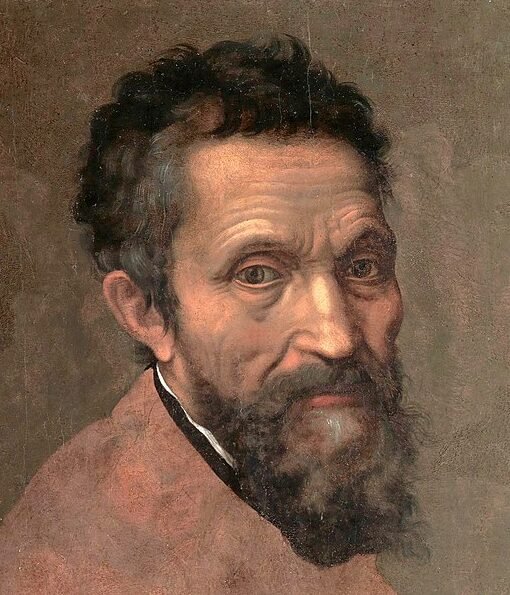
A portrait of Michelangelo.
Composition and Symbolism
The fresco is structured into several distinct sections, each depicting different aspects of the judgment process:
Central Figure of Christ
At the center of the composition, Christ appears as a powerful, beardless figure with an athletic build, reminiscent of classical deities such as Apollo and Hercules. This dynamic representation contrasts with traditional depictions of Christ as a serene and majestic figure seated on a throne. His right hand is raised, signaling the resurrection of the saved, while his left hand gestures downward, condemning the damned. The Virgin Mary, positioned beside Christ, turns her gaze downward, seemingly resigning herself to the final judgment.
In Michelangelo’s ‘The Last Judgment’, Christ is depicted as a powerful, beardless figure resembling classical gods, surrounded by saints displaying the tools of their martyrdom.
The Elect and the Saints
Surrounding Christ are numerous saints and apostles, each identifiable by their attributes. Saint Peter, holding the keys of Heaven, appears to return them to Christ, signifying the end of his role as gatekeeper.
Saint Bartholomew holds his own flayed skin, widely believed to be a self-portrait of Michelangelo, symbolizing the artist’s personal contemplation of mortality and salvation.
Other saints, such as Saint Lawrence with his gridiron and Saint Catherine with the wheel of her martyrdom, prominently display their attributes as a testament to their faith.
READ ALSO: 9 Greatest Catholic Saints of All Time and Their Accomplishments
The Resurrection of the Dead
In the lower left section of the fresco, the dead rise from their graves, aided by angels pulling them toward Heaven. These figures, some depicted as skeletons and others as fully fleshed bodies, reflect the transition from death to eternal life. This dramatic portrayal emphasizes the physical resurrection described in Christian doctrine.

The section of the painting depicting the “Resurrection of the Dead”
A self-portrait of Michelangelo appears in the flayed skin of St. Bartholomew, possibly symbolizing his spiritual struggle.
The Damned and Hell
On the lower right side, the damned are dragged toward Hell by demons. This chaotic scene includes figures expressing horror, despair, and resignation.
Charon, the boatman from classical mythology, ferries souls across the river, a direct reference to Dante’s Inferno. Minos, another figure from Dante, serves as the judge of the damned and is famously believed to bear the likeness of Biagio da Cesena, a Vatican official who criticized Michelangelo’s inclusion of nudity in the fresco.
Angels and Trumpets
At the center of the composition, angels blow their trumpets, announcing the moment of judgment. Some angels hold the Book of Life, recording the names of the saved, while others display the instruments of Christ’s Passion, such as the cross and the pillar of the Scourging, reinforcing the theme of redemption through sacrifice.

Artistic Style and Technique
Michelangelo’s style in The Last Judgment differs significantly from that of his earlier Sistine Chapel ceiling frescoes. While the ceiling features a balanced and harmonious composition, The Last Judgment is characterized by dynamic movement, muscular figures, and a sense of chaos. The swirling motion of the figures around Christ creates an overwhelming sense of divine power and inevitability.
Michelangelo painted ‘The Last Judgment’ between 1536 and 1541 under Pope Paul III.
The fresco is notable for its monochromatic tones, dominated by shades of flesh and sky. However, restoration efforts have revealed a more vibrant color palette, including blues, greens, oranges, and yellows, which add depth and animation to the scene.
Michelangelo employed the fresco technique, painting directly onto wet plaster, which required meticulous planning and execution. He also utilized foreshortening and perspective to create depth, making the figures appear as though they extend into the viewer’s space, further enhancing the dramatic impact.
Controversies and Criticism
From its unveiling, The Last Judgment elicited mixed reactions. While many praised Michelangelo’s mastery, others, particularly within the Catholic Church, criticized its explicit nudity and unconventional depiction of sacred figures.
Religious Objections
The Counter-Reformation emphasized decorum in religious art, leading to accusations that Michelangelo’s nude figures were inappropriate for a sacred space. Pope Paul IV considered destroying the fresco, but instead commissioned artist Daniele da Volterra to paint over the most controversial areas with draperies, earning him the nickname “Il Braghettone” (the breeches-maker).
The inclusion of mythological elements, such as Charon and Minos, also sparked debate, as they deviated from traditional Christian iconography. Some theologians argued that Michelangelo’s focus on artistic expression overshadowed the theological message.
Artistic Criticism
Some critics, including Pietro Aretino and Lodovico Dolce, argued that Michelangelo’s figures lacked grace and beauty, particularly his muscular female figures, which were often indistinguishable from male figures. Others found fault with the complex composition, suggesting that it prioritized artistic virtuosity over clarity.

Restoration and Legacy
Over the centuries, the fresco suffered from smoke damage, candle soot, and previous restoration efforts. A major restoration between 1980 and 1994 removed layers of grime and overpainting, revealing Michelangelo’s original colors and details.
Despite past controversies, The Last Judgment remains one of the most significant works of Renaissance art. It has influenced countless artists and continues to be a focal point for discussions on religious art, human anatomy, and artistic expression.
Frequently Asked Questions
When was The Last Judgment painted?
Michelangelo worked on it between 1536 and 1541, starting 25 years after completing the Sistine Chapel ceiling.
Who commissioned The Last Judgment?
Pope Clement VII initially commissioned it, but it was completed under Pope Paul III, who supported its final execution.

A part of the painting, showing St. Peter with keys to Heaven.
How is the composition structured?
The saved rise on the left, the damned descend on the right, and the central figure of Christ pronounces judgment, surrounded by saints.
Why was the fresco controversial?
Critics objected to its nudity, muscular figures, and inclusion of classical elements like Charon and Minos, leading to censorship.
Who is depicted in the fresco?
Over 290 figures, including Christ, the Virgin Mary, saints, angels, the saved, the damned, and mythological characters like Charon.
Where is Michelangelo’s self-portrait?
His face appears on the flayed skin held by St. Bartholomew, symbolizing self-reflection and mortality.
How did the Counter-Reformation impact the fresco?
Following the Council of Trent, censorship led to covering nudity with painted drapery, primarily by Daniele da Volterra.
What restoration efforts have been made?
The 1980–1994 restoration removed grime and some censorship, revealing Michelangelo’s original colors and details.
How does The Last Judgment differ from traditional depictions?
Unlike earlier compositions with clear order, Michelangelo’s version is dynamic, chaotic, and filled with movement, emphasizing tension and judgment.
10 Most Renowned Italian Renaissance Painters and their Masterpieces





