How Did Cyrus the Great Really Die?
by World History Edu · December 14, 2024
The circumstances of Cyrus the Great’s death remain an enduring historical puzzle. Despite the significance of this Persian ruler—founder of the Achaemenid Empire and revered statesman—ancient sources provide divergent and often conflicting accounts.
The challenge lies not only in these discrepancies but also in the cultural filters, narrative biases, and intended audiences that shaped each historian’s story. Though we may never pinpoint the exact manner of his demise, examining the principal ancient sources and the archaeological evidence allows us to understand how Cyrus’s death was remembered, interpreted, and integrated into different historical and mythic traditions.
Historical Context
Cyrus the Great (c. 600–530 BC) rose from a relatively obscure background to establish the largest empire yet seen in the ancient world. By unifying the Medes and Persians, defeating Lydia and Babylon, and extending Persian rule deep into Central Asia, he forged a multicultural realm known for its administrative sophistication, tolerance of local customs, and a blend of imperial ambition with statesmanship.
Understanding the accounts of his death requires situating them in a time when historical “truth” often blended fact with legend, where history could be as much moral lesson and cultural memory as objective record.
The Ctesias Account
One of the earliest and lengthiest versions comes from Ctesias of Cnidus, a Greek physician at the Persian court who wrote in the late 5th century BC. Although his work, the Persica, survives only in fragments and later summaries, Ctesias presented a richly detailed narrative of Cyrus’s last campaign. According to him, Cyrus met his end fighting the Derbices, a group described as dwelling beyond the northeastern frontier of the empire. Accompanied by Scythian archers, cavalry, and even Indian war elephants, the Derbices formed a formidable coalition.

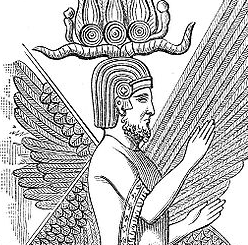
Image: A wall relief portraying Cyrus the Great.
Cyrus’s Campaign Against the Derbices
In this telling, Cyrus’s death resulted from his attempt to quell resistance in the empire’s distant frontiers. He is portrayed as a heroic figure, pushing into remote lands where alliances of nomadic and semi-nomadic peoples challenged Persian dominance. The Derbices narrative places Cyrus’s death somewhere northeast of the Syr Darya River, emphasizing how far his influence reached and the difficulties he faced in controlling such distant regions.
The Herodotus Account
Herodotus, the “Father of History,” writing in the mid-5th century BC, offers another detailed but differing narrative in his Histories. He situates Cyrus’s last battle not against the Derbices, but against the Massagetae—described as a warrior confederation related to the Scythians. The Massagetae inhabited the arid lands of Central Asia, near modern Kazakhstan and Uzbekistan. Unlike Ctesias’s story, Herodotus’s account involves an intricate strategic engagement and a fascinating royal antagonist, the empress Tomyris.
Tomyris and the Massagetae
According to Herodotus, Cyrus, advised by the exiled Lydian king Croesus, attempted to expand or secure Persia’s borders by engaging the Massagetae on their own ground. He first tried diplomacy, proposing marriage to Tomyris to gain her lands without bloodshed. She refused. Cyrus then constructed bridges and rafts along the Amu Darya (Oxus River) to reach her territory. In response, Tomyris invited him to meet in fair battle within her domain.
The Stratagem and Downfall
Herodotus details a clever trick: Cyrus left a camp stocked with wine and provisions but manned by weaker troops. The Massagetae, led by Tomyris’s son Spargapises, captured it easily. Unfamiliar with wine, they overindulged, weakening their defenses.
Cyrus’s elite soldiers launched a surprise attack, capturing Spargapises. This provoked Tomyris’s wrath; she assembled her full force, confronted the Persians, and inflicted a crushing defeat. Cyrus was slain in the melee. Herodotus’s dramatic climax comes with Tomyris’s gruesome act: decapitating Cyrus’s corpse and plunging his head into a vessel of blood, symbolically punishing his “bloodthirsty” ambition.
Uncertainty in Herodotus’s Narrative
Herodotus himself admits to uncertainty, noting that he has heard multiple versions of Cyrus’s death. This admission highlights the complexity of oral traditions and source materials available to Greek historians. Even so, Herodotus’s version became one of the most famous and frequently repeated stories—perhaps because it combined heroic struggle, moral retribution, and the vivid imagery of a proud queen avenging her son.

Image: Herodotus (c. 484 BC – c. 425 BC)
The Xenophon Account
A radically different perspective comes from Xenophon, the Athenian historian and philosopher of the late 5th and early 4th century BC. In his Cyropaedia, a semi-fictional, didactic biography of Cyrus, Xenophon portrays the Persian king as the ideal ruler. Here, Cyrus does not die in battle at all. Instead, he meets a peaceful, noble end in his capital. Surrounded by friends and family, he gives advice, reflects on life and leadership, and passes away serenely.
A Philosophical Ideal
Xenophon’s aim was not strict historical accuracy. The Cyropaedia is more a treatise on statecraft and virtue than a reliable historical record. By having Cyrus die of natural causes, Xenophon underscores the moral perfection of his character. His Cyrus is a model king who not only conquers but also rules justly and leaves the world at peace. Xenophon’s account thus stands in stark contrast to the violent deaths described by Ctesias or Herodotus.
The Berossus Account
Berossus, a Babylonian priest writing in Greek during the Hellenistic period, adds yet another layer of complexity. Though less detailed, Berossus suggests that Cyrus met his death while warring against the Dahae archers, another nomadic group to the northeast. This account echoes the frontier struggle theme found in Ctesias’s narrative, but lacks the moralistic drama of Herodotus or the philosophical agenda of Xenophon.
Comparing the Accounts
These varied accounts reflect different traditions and intentions. Ctesias and Berossus portray Cyrus’s end as a frontier conflict, underscoring the difficulties of maintaining an empire’s distant edges. Herodotus depicts a moral lesson: a once-invincible conqueror undone by trickery and overreach, punished by a fierce queen. Xenophon presents a political and ethical ideal, a ruler who ends his life in peace, illustrating the virtues of enlightened kingship.
The Tomyris Tradition
Herodotus’s depiction of Tomyris killing Cyrus became particularly famous and persisted in later retellings. The image of a powerful female ruler avenging her people struck a chord with ancient and modern audiences. Yet some historians question the plausibility of such a dramatic narrative. It is possible that Herodotus, intrigued by exotic peoples and eager to highlight moral themes, selected the Tomyris story for its narrative impact. Regardless, Tomyris’s slaying of Cyrus remains one of history’s most memorable depictions of a conqueror’s downfall.

Image: Queen Tomyris and the head of Cyrus
The Issue of Sources and Reliability
The core problem with determining Cyrus’s true cause of death is the nature of the sources. Herodotus, Ctesias, Xenophon, and Berossus wrote decades—or even centuries—after the events they describe. They relied on oral traditions, earlier texts now lost, and their own interpretive frameworks. Their audiences also mattered: Greek readers might appreciate moral parables or ethnographic curiosities, shaping how each historian chose to tell the story.
Lack of Persian Primary Sources
We also face a shortage of Persian primary records about Cyrus’s death. Achaemenid royal inscriptions and administrative tablets seldom describe how kings died. Their focus was on legitimizing power, celebrating building projects, and proclaiming divine favor. Without a Persian counterpart to the Greek narratives, the historical detective work becomes even harder. What we know is filtered through foreign eyes, each with their own agenda.
Archaeological Clues
Archaeology and textual fragments offer limited assistance. We have Cyrus’s likely tomb at Pasargadae, a structure that ancient authors such as Aristobulus (a companion of Alexander the Great) described. Yet the tomb itself provides no direct evidence of the circumstances of his death. It only confirms that Cyrus was interred with honor, likely by his successors, and that his memory was cherished by subsequent generations of Persians and others who ruled the region.
Did the Persians Recover His Body?
Herodotus suggests that the Massagetae may have kept Cyrus’s body, but other sources hint that the Persians retrieved it. Cyrus’s remains were probably returned home and buried in Pasargadae. The tomb’s architectural style, blending simplicity and grandeur, may reflect the kind of ruler Cyrus was: a conqueror but also a statesman who established a lasting imperial tradition. The question of his body’s recovery is emblematic of the broader uncertainty. Some scholars posit that Persians, eager to maintain the legitimacy of Cyrus’s lineage, would have striven to secure and properly bury his remains.
Cyrus’s Tomb at Pasargadae
The tomb, now a UNESCO World Heritage Site, stands as a testament to Cyrus’s enduring importance. Ancient writers Strabo and Arrian relay Aristobulus’s eyewitness descriptions: a rectangular structure of diminishing stone tiers supporting a small chamber. Within, a golden coffin and fine tapestries attested to his revered status. Alexander the Great, upon conquering Persia, reportedly restored the tomb’s interior after finding it disturbed. Alexander’s admiration of Cyrus—he read the Cyropaedia as a youth—suggests that the Persian king’s legend transcended cultural boundaries and endured long after his empire had fallen.

Image: Tomb of Cyrus
Cultural and Political Influences on the Accounts
Why do we have such contrasting narratives? Cultural and political contexts played a significant role. Greek historians used Cyrus’s death to advance moral lessons or highlight the Otherness of distant peoples. Xenophon crafted an idealized portrait for didactic purposes. Berossus, writing under Hellenistic patronage, may have adjusted his narrative to suit Greek tastes or to highlight Babylonian knowledge. Each account must be read as a reflection of its author’s world, not just as a record of the past.
The Difficulty of Reconciliation
Is it possible to reconcile these versions into a single coherent storyline? Some historians have tried, suggesting that Herodotus and Ctesias may be reflecting different traditions stemming from the Persian imperial court, or that Xenophon’s peaceful ending was purely literary. However, the discrepancies are too fundamental to form a smooth synthesis. The narratives differ in location, enemies, manner of death, and moral implications. Attempting to harmonize them would strip away the complexity and richness of the traditions themselves.
A Symbolic Death
Another perspective is to view the contradictions in these narratives as symbolic. Cyrus’s empire spanned disparate cultures and terrains; it is fitting that stories of his death are equally varied, reflecting the multifaceted legacy he left behind. In some traditions, he falls as a hero on the frontier, in others as a victim of moral hubris, and in still others as an idealized lawgiver who passed away naturally. This multiplicity mirrors the complexity of the historical Cyrus, a figure simultaneously real and legendary, human and mythic.
Modern Scholarly Perspectives
Modern historians and scholars of ancient Persia tend to be cautious about embracing any single version. The accounts are treated as literary and cultural artifacts. While they can offer clues—geographic details, names of peoples, patterns of warfare—the final truth eludes us. Scholars now emphasize the importance of understanding why authors like Herodotus or Xenophon portrayed Cyrus’s death as they did, rather than insisting on one narrative’s factual correctness.
The Role of Oral Traditions
It is likely that much of what ended up in Herodotus and Ctesias came from oral traditions: stories told by mercenaries, traders, diplomats, or exiles who moved between East and West. In the absence of a centralized Persian historical record, these storytellers carried multiple versions of Cyrus’s demise. Over time, as these stories passed through generations, each retelling may have introduced embellishments or moral lessons, further obscuring the original facts.
Historical vs. Legendary Cyrus
Determining how Cyrus died is less about pinpointing a single historical fact and more about recognizing that he entered the realm of legend before the ink dried on the earliest Greek histories. The discrepancy among accounts indicates that Cyrus quickly became more than just a conqueror. He stood as an archetype of a just ruler, a cunning strategist, and, in some accounts, a flawed imperialist. His death, whether at the hands of a vengeful queen or in the peace of his palace, symbolized the complexity of kingship itself.
Cyrus’s Influence on Later Cultures
Cyrus’s long shadow stretched into the Jewish tradition, where he is remembered as the liberator who allowed the exiled Hebrews to return and rebuild their temple. Greek thinkers admired or critiqued him through their philosophical lenses. Later Enlightenment figures and even the Founding Fathers of the United States found inspiration in his governance. Thus, the manner of his death mattered less than the legacy of his life. The question “How did Cyrus really die?” pales in importance compared to “Why does Cyrus still matter?”
Conclusion
How did Cyrus the Great really die? The simple answer: we do not know. Ancient accounts contradict one another, and no conclusive evidence survives. Yet these conflicting stories offer invaluable insight into the ancient world’s narrative traditions. They illustrate how historical figures could become legendary symbols, subject to varying interpretations by later generations. Cyrus’s death, much like his life, transcends fact to embody mythic resonance. What remains is an enduring legacy that shaped perceptions of empire, leadership, and morality—long after the sands covered the battlefields where he may have drawn his final breath.
Frequently Asked Questions

Why is there uncertainty surrounding Cyrus the Great’s death?
Different ancient authors give conflicting accounts influenced by their perspectives, sources, and cultural biases, making it difficult to confirm a single definitive version.
What does Ctesias claim happened to Cyrus?
Ctesias states that Cyrus died in battle against the Derbices, aided by Scythian archers and Indian war elephants, northeast of the Syr Darya.
How does Herodotus’s version of Cyrus’s death differ from Ctesias’s?
Herodotus situates Cyrus’s death in a conflict with the Massagetae, a Scythian-related tribe in Central Asia, rather than the Derbices.
Who was Tomyris, according to Herodotus?
Tomyris was the Massagetae empress who rejected Cyrus’s marriage proposal, fought him in battle, and, after defeating him, allegedly decapitated his corpse in revenge.
What role did Croesus play in Herodotus’s narrative?
Croesus, the former Lydian king serving as Cyrus’s advisor, encouraged him to attack the Massagetae in their own territory.
How does Xenophon’s portrayal of Cyrus’s death contrast with the battle narratives?
Xenophon describes Cyrus dying peacefully in his capital, presenting a morally idealized, serene end rather than a violent one.

Image: Bust of Xenophon.
What does Berossus say about Cyrus’s demise?
Berossus mentions that Cyrus died while fighting against the Dahae archers near the Syr Darya’s headwaters, providing another variant of the frontier battle scenario.
What uncertainty exists about the fate of Cyrus’s body?
While Herodotus suggests it might not have been recovered, other sources hint that the Persians may have retrieved his remains.
Where is Cyrus’s tomb located?
His tomb is believed to be in Pasargadae, in southwestern Iran, and is recognized as a UNESCO World Heritage Site.
How did Alexander the Great react to Cyrus’s tomb?
Alexander was both fascinated and disturbed by the tomb’s condition, taking steps to restore it due to his admiration for Cyrus.
What lasting reputation did Cyrus the Great enjoy in various cultures?
Persians revered him as a fatherly ruler, Babylonians considered him a liberator, and he is celebrated in Jewish tradition for freeing the exiles and allowing the rebuilding of the Temple.