The Late Ottoman Period
by World History Edu · January 4, 2025
The Late Ottoman period was defined by a convergence of internal reform, external intervention, and far-reaching societal changes. It was an era of ambition and turmoil: administrators hoped to strengthen the empire’s unity through modernization, yet found themselves contending with local particularities, nationalist agitations, and foreign demands.
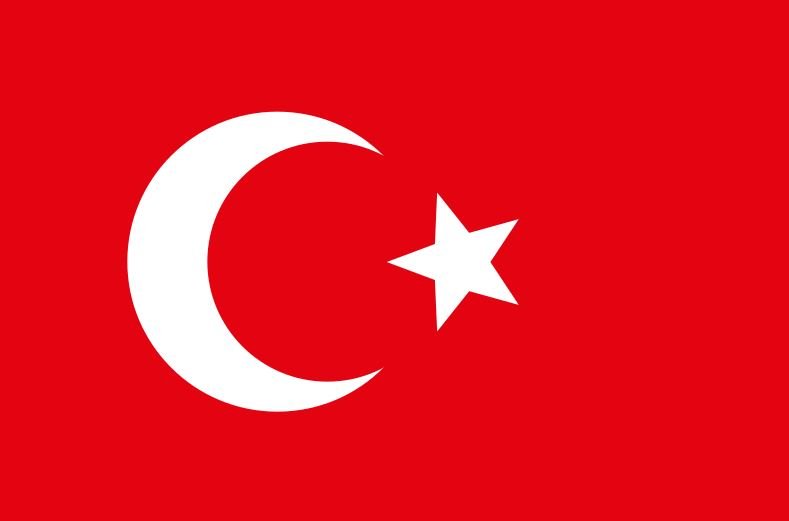
Flag used by the Ottoman Empire between 1844 and 1922.
Summary
The Late Ottoman period, generally spanning from around 1750 until 1918, marked a transformative era for regions under the dominion of the Ottoman Empire. During these years, the empire’s boundaries gradually contracted, but its history left an enduring cultural, economic, and social footprint in the Balkans, the Caucasus, the Middle East, and North Africa.
From far-reaching administrative reforms to external pressures from European powers, this era underwent a blend of continuity and change that would ultimately shape the societies in these areas. While traditional periodization often separates the Late Ottoman phase from the subsequent Mandate regimes, many scholars note that this division can obscure the ongoing developments that persisted across the formal end of Ottoman authority.
Context and Geographic Span
By the mid-eighteenth century, the Ottoman Empire was under continuous strain. Previously, it had controlled vast areas stretching from North Africa through the Arabian Peninsula and onward into the Balkans. Yet political, military, and economic setbacks triggered a steady contraction of these regions, leaving the empire to confront internal revolts and ongoing challenges to its sovereignty.
Although the empire officially ended in 1922, historians frequently concentrate on the stretch of time up to the conclusion of the First World War in 1918, since the signing of the Armistice laid bare the empire’s vulnerability to partition. During this late phase, the empire’s territories shrank, especially in the Balkans and North Africa, forcing Ottoman rulers to reimagine how they governed the remaining domains.

A map showing the Ottoman Empire in 1914 AD.
Foreign Pressures and European Influences
Increased European encroachment sharply influenced the empire’s trajectory during this period. From diplomatic interventions to full-scale military invasions—exemplified by the Napoleonic campaigns in Egypt—European powers exploited the empire’s strategic significance and economic resources. Treaties like the Capitulations granted European merchants and missionaries broad privileges, empowering foreign interests in Ottoman lands.
The empire attempted to counterbalance these pressures by seeking alliances with various European states, but it often found itself caught between opposing interests. While some Ottoman administrators recognized the need to modernize in line with Western models, others felt a profound aversion to outside interference, creating tensions within governing circles.
Administrative and Legal Reforms
One of the defining features of the Late Ottoman period was the Tanzimat, an extensive series of reforms introduced between the mid-nineteenth century and the 1870s. These reforms encompassed reorganization of taxation, increased centralization of administrative powers, and steps toward codifying laws in pursuit of greater equity among subjects.
The key objective of these measures was to strengthen the state by improving its bureaucracy, creating a fairer basis for governance, and enhancing the empire’s military. The 1839 Edict of Gülhane, for example, underscored the promise of security for life, honor, and property for all citizens, aiming to consolidate imperial unity amid internal and external threats. While some communities welcomed these legal innovations, others resisted, fearing the erosion of local structures, religious traditions, or customary rights.
Social and Demographic Changes
Social transformation accelerated during the Late Ottoman period, spurred both by reforms at home and ties abroad. Innovations in communication, such as the spread of printing presses and newspapers, contributed to the more rapid exchange of political and cultural ideas. This environment fostered debates on questions of identity, administrative efficiency, and westernizing influences. As newspapers circulated in multiple languages, from Arabic to Greek to Turkish, different ethnic and religious groups also gained new instruments for voicing their aspirations. Alongside the growth of new media outlets, urban centers swelled, attracting diverse populations in search of work, education, and entrepreneurial opportunities.
Though the empire maintained an overarching Islamic identity, the concept of Ottoman citizenship began to gain traction. Religious and ethnic affiliations were gradually integrated into a broader conversation about what it meant to be an Ottoman subject in the modern world. Educational reforms sought to harmonize religious instruction with secular curricula, opening schools that taught modern sciences and foreign languages. New graduates from these institutions, often returning from study abroad, injected fresh perspectives into administrative roles.
Economic Globalization
During the Late Ottoman period, economic globalization intensified. European markets reached deeper into local Ottoman economies, shaping patterns of trade, finance, and production. Agricultural producers benefited from integration into global trade networks; at the same time, they faced vulnerabilities when global prices fluctuated or when Ottoman territories lost tariff autonomy.
Infrastructure projects, notably the construction of railways and telegraph lines, were carried out to tighten the empire’s hold over distant regions and to stimulate commercial growth. Yet these undertakings often required substantial foreign loans. Consequently, the empire struggled under the weight of interest payments and foreign oversight agencies like the Ottoman Public Debt Administration. This financial dependency fueled dissatisfaction among many Ottoman intellectuals and officials who resented the level of foreign meddling in state affairs.

Coat of arms of the empire between 1844 and 1922.
Military Modernization and Shifting Alliances
Repeated defeats and mounting territorial losses convinced many Ottoman leaders that military reform was essential. European advisors—particularly from Germany—were brought in to update training and doctrine. New military academies emerged, producing officers who were conversant with Western strategic thought and organizational structures.
As the empire’s external alliances shifted, these officers sometimes became the backbone for nationalist and reformist movements. The Young Turks, for instance, sprang from a circle of military and civilian elites dissatisfied with the empire’s direction, eventually overthrowing Sultan Abdul Hamid II in 1909 and stirring a fresh wave of centralized governance.
Cultural Vibrancy and Intellectual Debates
While the empire grappled with political and economic concerns, cultural life blossomed in cities such as Istanbul, Cairo, and Beirut. Novelists, journalists, and poets engaged audiences in discussions about the empire’s destiny, the role of religion in state affairs, and the merits of adopting European technologies. Translations of European works into Ottoman Turkish and Arabic grew more prevalent, introducing ideas of constitutionalism, individual rights, and scientific methodologies. Literary salons and newspapers facilitated interaction across social strata, letting emerging intellectuals shape public discourse.
Persistent Continuities
Despite the sweeping transformations, many rural regions witnessed only gradual change. Local family networks, religious orders, and age-old landholding traditions persevered in influencing daily life.
Although the empire introduced reforms like standardized taxation and a strengthened gendarmerie, villagers in remote areas often went on with routines much as they had for centuries, shaped by clan alliances, local market rhythms, and personal agreements with officials.
Historians caution that placing too rigid an endpoint at 1918 can inadvertently gloss over these continuities. In certain locales, structures of authority and agricultural practices carried on with minimal disruption even as political administrations were reshaped in Istanbul or as European presence became more visible.
Fall and Aftermath
By the First World War’s conclusion, the empire lay in ruins. Having fought on the side of the Central Powers, it faced punitive peace treaties that dismantled its remains. This fragmentation, however, did not abruptly end the social and economic fabrics constructed under Ottoman rule.
Across the Arab provinces, the Balkans, and Anatolia, the newly emerging mandates and nation-states not only inherited the empire’s systems of administration but also had to grapple with the existence of multi-ethnic, multi-religious populations.
Many bureaucrats, business families, and community leaders who had been shaped by the Late Ottoman environment found ways to influence successor governments, underscoring the porous boundary between the empire’s end and the onset of the Mandate era.