Italian Composer Ferruccio Busoni
Ferruccio Dante Michelangiolo Benvenuto Busoni (1 April 1866 – 27 July 1924) was an Italian composer, pianist, conductor, editor, writer, and teacher whose contributions to music and pedagogy left an enduring legacy. His international career spanned many roles and disciplines, making him one of the most dynamic figures in the classical music world. Known for his virtuosity, innovative compositions, and influential writings, Busoni worked closely with leading musicians, artists, and intellectuals of his era.
In the article below, World History Edu delves into his life, career, and achievements, highlighting his immense contributions to music and education.
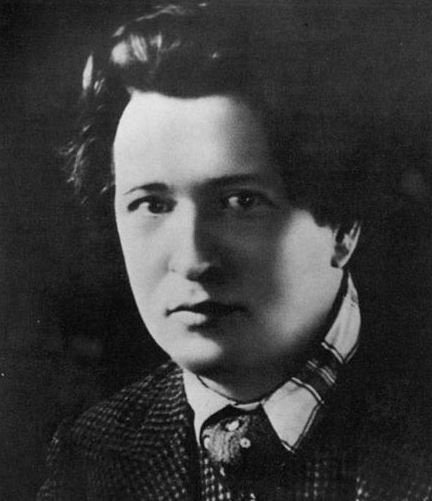
An 1886 photo of Ferruccio Busoni.
Early Life and Education
Born in Empoli, Tuscany, Ferruccio Busoni was the only child of Ferdinando, a clarinetist, and Anna Weiss, a pianist. The family moved to Trieste shortly after his birth, where Busoni displayed prodigious talent as a musician. He began performing and composing at the age of seven, making his public debut in 1873. A child prodigy largely taught by his father, Busoni’s early years were marked by rigorous training, which he later recalled with mixed emotions due to its severity.
Supported by a patron, Busoni studied at the Vienna Conservatory from ages nine to eleven. His performances there earned high praise, including from the influential critic Eduard Hanslick. During this period, Busoni met Franz Liszt, whose playing deeply impressed him. After leaving Vienna, he briefly studied in Graz under Wilhelm Mayer and composed several works, including a now-lost Stabat Mater. At just 15, he became the youngest member of the Accademia Filarmonica of Bologna since Mozart.

Formative Years: Teaching and Composing
In the late 1880s, Busoni began establishing himself as a teacher and composer. Following recommendations from Hugo Riemann, he took up a teaching position at the Institute of Music in Helsingfors (Helsinki), where he befriended composers such as Jean Sibelius and Armas Järnefelt. This period also marked his first ventures into transcriptions, notably of J.S. Bach’s Toccata and Fugue in D minor. Busoni’s engagement with Bach’s music would remain a defining aspect of his career.
In 1890, Busoni’s Konzertstück for piano and orchestra won the inaugural Anton Rubinstein Competition in Saint Petersburg. This success led to a teaching position at the Moscow Conservatory. Though his tenure in Moscow was short, it was significant, as he married Gerda Sjöstrand during this time and further developed his compositional voice.
In 1891, Busoni moved to the United States, accepting a post at the New England Conservatory of Music in Boston. Although his time in America was brief, he began a series of concerts and established connections that would influence his later works, such as his Indian Fantasy for piano and orchestra, inspired by North American indigenous melodies.
Establishing a Base in Berlin
Busoni settled in Berlin in 1894, a city he would call home for much of his life. Berlin provided an excellent base for his career as a touring virtuoso, and his reputation as both a pianist and composer grew steadily. In 1904, he premiered his monumental Piano Concerto, an ambitious work requiring an offstage male chorus. Around this time, he also began composing works that revealed a mature and individual style, such as the Elegies and the suite An die Jugend.
Busoni’s engagement with the works of other composers also flourished during this period. His transcriptions of Bach’s organ works for piano, published as the Bach-Busoni Editions, became standard repertoire for pianists. These transcriptions were not mere reproductions but reimaginings, showcasing Busoni’s philosophy that performers should actively interpret and re-create music.
A Visionary in Music Theory and Aesthetics
In 1907, Busoni published Sketch of a New Esthetic of Music, a groundbreaking work that advocated for innovation in music. He envisioned a future where music transcended traditional structures and embraced microtones and other novel elements. The essay included his famous maxim: “Music was born free; and to win freedom is its destiny.” This work not only influenced his own compositions but also resonated with contemporaries like Arnold Schoenberg and later composers exploring atonality and experimental techniques.
Wartime and Swiss Exile
World War I disrupted Busoni’s life and career. As an Italian citizen living in Germany, he moved to neutral Switzerland in 1915. There, he continued composing and performing, premiering his one-act opera Arlecchino alongside a revised version of Turandot in Zurich in 1917. These works reflected his interest in blending traditional forms with modernist elements.
During this period, Busoni also deepened his theoretical explorations, experimenting with microtones and unconventional scales. His expanded edition of Sketch of a New Esthetic of Music provoked a heated exchange with German composer Hans Pfitzner, highlighting Busoni’s position as a polarizing yet influential figure.
Return to Berlin and Final Years
After the war, Busoni returned to Berlin, resuming his teaching and composing activities despite declining health. His primary focus during his final years was Doktor Faust, an opera he left unfinished at his death in 1924. The work was later completed by his assistant, Philipp Jarnach, and remains a testament to Busoni’s creative ambition and intellectual depth.
In Berlin, Busoni continued to teach some of the most promising musicians of the time, including Kurt Weill and Egon Petri. His influence extended beyond his students to the broader artistic community, where he maintained connections with figures like Igor Stravinsky and Edgard Varèse.
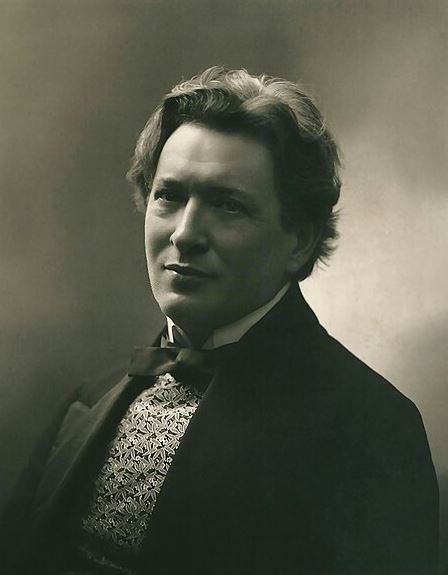
A 1913 photo of Busoni.
Contributions to Pianism and Transcriptions
Busoni’s contributions to pianism are monumental. Alfred Brendel described his playing as the “victory of reflection over bravura,” emphasizing his intellectual approach to performance. His transcriptions of Bach, Liszt, and other composers elevated the art of interpretation, blending fidelity to the original with creative innovation.
Ferruccio Buson’s life and work exemplify the intersection of tradition and innovation, leaving a lasting impact on the musical world.
Busoni’s own piano works, such as the Fantasia contrappuntistica and Indian Diary, reflect his unique style, combining contrapuntal rigor with harmonic experimentation. His Klavierübung, a compendium of exercises and studies, remains a valuable resource for pianists.
Ferruccio Buson’s Legacy and Influence
Ferruccio Busoni’s legacy lies not only in his compositions but also in his writings, transcriptions, and pedagogical contributions. His theoretical works continue to inspire musicians and scholars, while his students carried forward his innovative spirit. The Ferruccio Busoni International Piano Competition, established in 1949, honors his memory and influence.
Busoni’s forward-looking vision and uncompromising artistry ensure his place as one of the most significant figures in the history of Western classical music.
Frequently Asked Questions
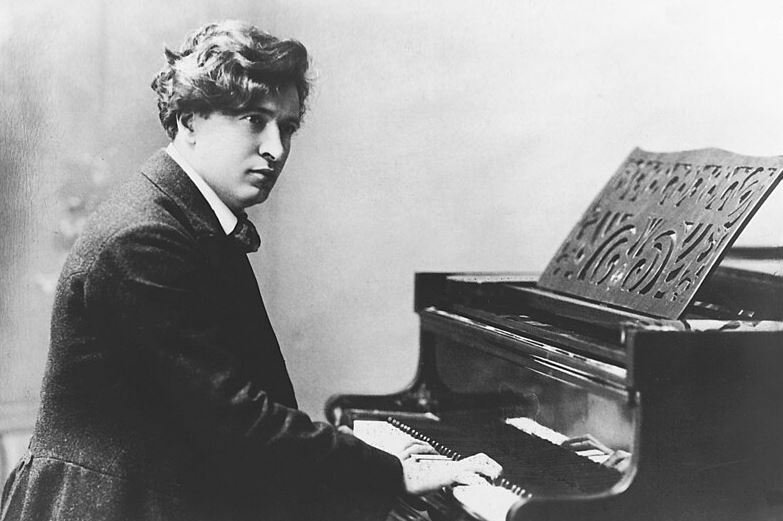
Ferruccio Busoni playing a piano
What were the key influences on Busoni’s musical education?
He was a child prodigy taught by his father and studied at the Vienna Conservatory, later training with Wilhelm Mayer and Carl Reinecke. He also met Franz Liszt, whose playing inspired him.
What marked Busoni’s shift in compositional style?
After publishing Sketch of a New Esthetic of Music in 1907, he moved from a late Romantic style to a more individual approach, incorporating atonality and microtonal elements.
What are Busoni’s most notable works?
His major works include the monumental Piano Concerto, the opera Doktor Faust, the Fantasia contrappuntistica, and transcriptions of J.S. Bach’s works, collectively known as the Bach-Busoni Editions.
How did World War I impact Busoni’s life?
He spent the war years in neutral Switzerland, composing and teaching. During this time, he premiered Arlecchino and Turandot and worked on Doktor Faust.
What role did Busoni’s transcriptions play in his legacy?
His transcriptions, especially of Bach’s organ works, reimagined pieces for piano with innovative interpretations, cementing his reputation as both a performer and thinker.
What was Busoni’s philosophy on music?
He believed music should evolve freely, rejecting rigid conventions. His writings emphasized innovation, the role of the interpreter, and the exploration of new tonal systems.
FACT CHECK: At World History Edu, we strive for utmost accuracy and objectivity. But if you come across something that doesn’t look right, don’t hesitate to leave a comment below.





