James Otis Jr.: Life and Major Accomplishments
James Otis Jr. (1725–1783) was a pivotal figure in the early years of American colonial resistance to British rule. As a lawyer, legislator, and writer, Otis laid much of the intellectual groundwork for the American Revolution. Known for his eloquence and fervent advocacy of colonial rights, Otis’s ideas on natural law, representation, and constitutional rights influenced key figures of the Revolution, including Samuel Adams and John Adams.

James Otis Jr. (1725–1783) was a prominent American lawyer, colonial legislator, and early patriot in the Massachusetts Bay Colony during the Revolutionary Era. Image: Bronze sculpture of James Otis Jr. in front of the Barnstable County Courthouse, Massachusetts
Early Life and Education
James Otis Jr. was born on February 5, 1725, in West Barnstable, Massachusetts, into a prominent family. He was the eldest surviving son of Colonel James Otis Sr., a respected lawyer and militia officer, and Mary Allyne Otis. His siblings, including Mercy Otis Warren and Joseph Otis, also played significant roles during the Revolutionary Era. Mercy became a renowned historian and playwright, chronicling the American Revolution, while Joseph and his brothers were active in political and military efforts.
Otis graduated from Harvard College in 1743, where he excelled academically. After completing his studies, he pursued law under the mentorship of Jeremiah Gridley, one of Boston’s most distinguished lawyers. By the mid-1750s, Otis had established himself as a prominent attorney, gaining a reputation for his sharp intellect and oratorical skill.
Career and the Writs of Assistance Case
In 1760, Otis was appointed Advocate General of the Admiralty Court, a prestigious position that solidified his standing in Boston’s legal community. However, his career took a dramatic turn when Governor Francis Bernard denied his father the position of Chief Justice of Massachusetts, appointing Thomas Hutchinson instead. Outraged, Otis resigned his post in protest.
In 1761, Otis gained widespread recognition for his role in the Paxton v. Gray case, where he argued against the legality of writs of assistance. These writs allowed British authorities to search private homes and businesses without cause, a practice that Otis condemned as unconstitutional and a violation of natural law. His nearly five-hour argument before the Massachusetts Superior Court galvanized public sentiment against British overreach.
Although Otis lost the case, his fiery rhetoric and impassioned defense of colonial rights inspired many, including a young John Adams, who later recalled the event as “the first act of opposition to the arbitrary claims of Great Britain.” Otis’s argument laid the intellectual foundation for the principle of constitutional limits on government power and the eventual assertion of American independence.

James Otis mentored Samuel Adams, inspired John Adams with his eloquence. Image: Founding Father and 2nd President of the United States John Adams
Intellectual Contributions and Pamphleteering
Otis’s legal and philosophical arguments were further developed in a series of influential pamphlets published during the early 1760s. Among these, The Rights of the British Colonies Asserted and Proved (1764) stands out as a seminal work. In this pamphlet, Otis argued that:
- Natural Rights Supersede Government Authority: He emphasized that all individuals are born with inherent rights, including life, liberty, and property. These rights, he asserted, are derived from nature and God, not from human institutions.
- Taxation Without Representation is Tyranny: Otis contended that taxes imposed by a government without the consent of the governed violated fundamental rights.
- Constitutional Government Must Serve the Public Good: He argued that government exists to promote the welfare of society as a whole, not to enrich a ruling elite or external authority.
These ideas resonated deeply with colonists who felt increasingly alienated by British policies, and they became rallying points for the burgeoning independence movement.
Renowned for opposing British-imposed writs of assistance that allowed unwarranted property searches, James Otis Jr. later criticized taxation measures, coining the phrase “taxation without representation is tyranny.”
Otis also explored themes of racial equality, a rare stance for his time. In his writings, he declared that “the colonists are by the law of nature freeborn, as indeed all men are, white or black.” His advocacy for universal liberty reflected the broader Enlightenment ideals that influenced many revolutionary thinkers.
Role in the Stamp Act Congress
In 1765, Otis was elected as a delegate to the Stamp Act Congress, convened to coordinate colonial opposition to Britain’s Stamp Act. The Congress marked a significant step toward unified colonial resistance. Otis played a key role in drafting petitions to Parliament and King George III, asserting that the colonies could not be taxed without their consent.
James Otis Jr. played a crucial role in the early resistance to British authority, championing principles of constitutionalism and natural rights that became central to the American Revolution.
While Otis’s arguments at the Stamp Act Congress were measured and rooted in legal precedent, they reflected his growing frustration with British policies. His efforts helped shape the Declaration of Rights and Grievances, a document that articulated colonial objections to taxation without representation and emphasized the colonies’ loyalty to the Crown while asserting their rights.
Advocacy and Moderation
Despite his radical rhetoric at times, Otis often sought to balance his calls for action with moderation. Unlike figures such as Samuel Adams, who openly advocated for revolutionary measures, Otis cautioned against mob violence and urged adherence to legal and constitutional channels. His nuanced position sometimes put him at odds with more militant patriots, but it also underscored his commitment to principle over expediency.
A mentor to Samuel Adams and an inspiration to John Adams, Otis’s influence waned in the 1770s due to mental illness and alcoholism, though his early efforts cemented his legacy as a Revolutionary figure.
For instance, during the protests against the Townshend Acts, Otis urged restraint, warning that unchecked mob violence could undermine the legitimacy of the colonial cause. This approach reflected his belief in the rule of law and his desire to avoid unnecessary escalation.
Personal Struggles and Mental Illness
As the 1760s progressed, Otis’s career and public influence were increasingly overshadowed by his struggles with mental illness. Friends and contemporaries, including John Adams, noted signs of instability as early as the mid-1760s. A pivotal event occurred in 1769 when Otis was physically assaulted by British tax collector John Robinson at the British Coffee House in Boston. The attack left Otis with a severe head injury, which likely exacerbated his existing condition.
By the early 1770s, Otis had largely withdrawn from public life. He spent much of his later years living with family in the Massachusetts countryside, where his condition fluctuated. Despite his diminished role, Otis remained a symbolic figure of early resistance to British authority.
Legacy and Influence
James Otis’s contributions to the American Revolution cannot be overstated. His eloquent arguments against writs of assistance and taxation without representation inspired a generation of colonial leaders and helped shape the ideological foundation of the Revolution. John Adams, in particular, credited Otis with sparking the movement for independence, calling him “a flame of fire” whose ideas ignited the cause.
Otis’s pamphlets and speeches introduced concepts of natural rights, constitutional government, and representation that became central to the Revolutionary discourse. His phrase “taxation without representation is tyranny” encapsulated the grievances of the colonies and remains one of the most enduring slogans of the era.
Did you know…?
Otis’s writings remain an essential part of the Revolutionary canon. His major works include:
- The Rudiments of Latin Prosody (1760): A textbook on Latin grammar, reflecting his academic rigor.
- A Vindication of the Conduct of the House of Representatives (1762): A defense of colonial self-governance.
- The Rights of the British Colonies Asserted and Proved (1764): A foundational text articulating the philosophical basis for colonial resistance.
- Considerations on Behalf of the Colonists (1765): Expanded on his earlier arguments, emphasizing the principle of equal representation.
Death and Poetic Symbolism
Otis’s life ended as dramatically as it unfolded. On May 23, 1783, he was struck by lightning while standing in a doorway during a thunderstorm. His sudden and unexpected death was seen by many as poetic, reflecting the electrifying nature of his contributions to the revolutionary cause.
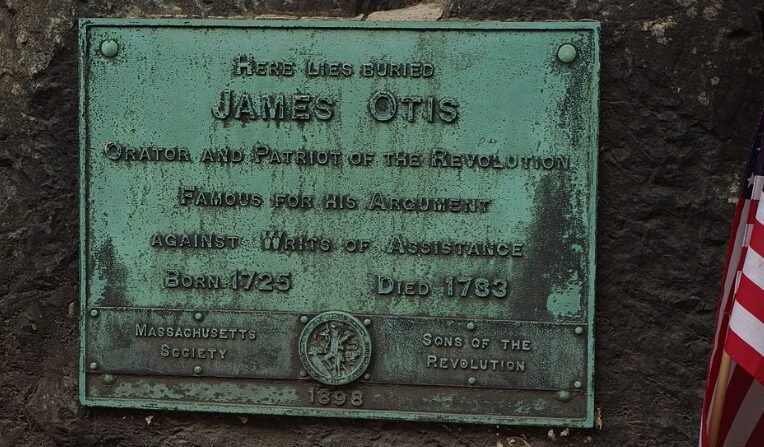
James Otis’s grave in the Granary Burying Ground, Massachusetts, Boston
Conclusion
James Otis Jr. was a visionary whose ideas and actions left an indelible mark on the path to American independence. His eloquence, intellect, and commitment to principle inspired the revolutionary generation and provided a framework for the fight against British oppression.
READ MORE: Who were the Sons of Liberty?
Frequently Asked Questions
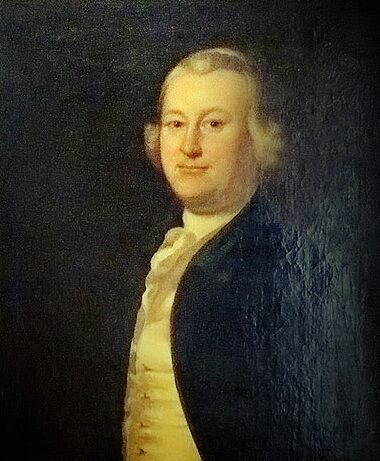
James Otis Jr. (1725–1783) was a prominent lawyer, legislator, and early advocate for colonial rights during the Revolutionary Era. He is known for his opposition to British policies and his influential writings that helped shape revolutionary thought. Image: Portrait of James Otis, Jr. by English painter Joseph Blackburn, 1755
What is the significance of Otis’s family background?
Otis was the eldest surviving child of Colonel James Otis Sr., a respected lawyer and militia officer. His siblings, including Mercy Otis Warren and Joseph Otis, were also influential during the American Revolution, highlighting the family’s deep involvement in revolutionary activities.
What was Otis’s educational background?
James Otis graduated from Harvard in 1743. His education and intellect helped him rise to prominence in Boston’s legal circles.
What were writs of assistance, and how did Otis oppose them?
Writs of assistance allowed British authorities to search private homes without cause. In 1761, Otis delivered a five-hour argument in the Paxton v. Gray case, opposing these writs as unconstitutional and galvanizing colonial resistance to British authority.
How did John Adams describe Otis’s 1761 speech against writs of assistance?
John Adams described Otis as “a flame of fire” and considered his speech the starting point of American opposition to British claims. Adams later called this moment “the first act of opposition to the arbitrary claims of Great Britain.”
What were Otis’s views on natural rights and representation?
Otis argued that natural rights superseded government authority and that taxation without representation violated these rights. He emphasized these ideas in his pamphlets, including The Rights of the British Colonies Asserted and Proved (1764).
What unique stance did Otis take on racial equality?
He advocated for racial equality, asserting that all men, “white or black,” were born free and entitled to life, liberty, and property. This was a rare position for his time.
What was Otis’s role in the Stamp Act Congress of 1765?
As a representative of Massachusetts, Otis played a key role in drafting petitions to Parliament, opposing British taxation policies, and advocating for unified colonial resistance.
Why was Otis’s approach sometimes seen as moderate compared to figures like Samuel Adams?
While Otis was a passionate advocate for colonial rights, he often urged restraint and opposed mob violence. His moderation occasionally placed him at odds with more radical revolutionaries.
What factors contributed to Otis’s mental health decline?
Otis’s behavior became increasingly erratic in the 1760s, likely due to mental illness. A physical altercation with British tax collector John Robinson in 1769, resulting in a severe head injury, may have exacerbated his condition.
What was Otis’s lasting legacy in the American Revolution?
Despite his struggles, Otis is credited with coining the phrase “taxation without representation is tyranny.” His writings and speeches laid the ideological groundwork for American independence.
How did James Otis Jr. die, and what was symbolic about his death?
Otis died on May 23, 1783, after being struck by lightning while standing in a doorway during a thunderstorm. His sudden and dramatic death symbolized the turbulent and electrifying nature of his life and contributions.





