What was the First Intermediate Period of Egypt?
The First Intermediate Period (c. 2181–2055 BC) in ancient Egyptian history is often described as a “dark period” due to its political fragmentation and decline in centralized power. Spanning approximately 125 years, it encompassed the Seventh (often deemed mythical), Eighth, Ninth, Tenth, and part of the Eleventh Dynasties.
Did you know…?
The term “First Intermediate Period” was coined in 1926 by Egyptologists Georg Steindorff (1861 -1951) and Henri Frankfort (1897 – 1954).

A map of Map of Ancient Egypt, (c. 3150 BC to 30 BC), showing its major regions including Lower and Upper Egypt.
Events Leading to the Period
The collapse of the Old Kingdom was multifaceted. Hypotheses point to several contributing factors:
- Lengthy Reign of Pepi II: Pepi II’s reign, potentially extending into his 90s, led to succession crises as he outlived many heirs.
- Rise of Provincial Nomarchs: These governors gained hereditary control over their provinces, reducing allegiance to the central monarchy. They erected local tombs and raised private armies, leading to regional conflicts.
- Environmental Factors: A potential decline in Nile inundations, possibly linked to a drier climate, might have caused widespread famine, although some scholars dispute this.
The increasing autonomy of nomarchs fragmented Egypt. Neighboring provinces often engaged in disputes over resources and power, further eroding centralized control.

A jar bearing the cartouches of Pharaoh Pepi II, originating from Egypt. Currently housed in the Neues Museum, Berlin.
Dynastic Overview
The Seventh and Eighth Dynasties, based in Memphis, are shrouded in obscurity. Manetho’s exaggerated claim of “70 kings in 70 days” reflects the instability of this period. Minimal archaeological evidence survives, though artifacts such as scarabs attributed to Neferkare II and small pyramids, like that of King Ibi at Saqqara, offer glimpses into their rule.
The Heracleopolitan rulers of the Ninth and Tenth Dynasties arose after the decline of Memphis. Akhthoes (possibly Wahkare Khety I) founded the Ninth Dynasty, although he is portrayed as a tyrannical figure. Successors like Kheti II and III managed limited consolidation but lacked the grandeur of Old Kingdom pharaohs.
The Siut province, under its nomarchs, played a pivotal role as a buffer state. Inscriptions from Siut tombs highlight military efforts, agricultural prosperity, and administrative reforms, underscoring the complexity of local governance during this time.
The Southern Rivalry: Ankhtifi and Thebes
Ankhtifi, a prominent warlord and nomarch based at Hierakonpolis, expanded his influence southward and attempted to subdue Thebes. His tomb at Mo’alla provides a detailed account of his rule, including claims of mitigating famine and chaos.
The First Intermediate Period signifies an era marked by rivalry between two major power centers: Heracleopolis in Lower Egypt and Thebes in Upper Egypt.
The Theban rulers, descendants of the nomarch Intef, gradually asserted dominance in Upper Egypt. Intef II’s military campaigns expanded Theban control, while Intef III’s conquests paved the way for his successors. Mentuhotep II ultimately unified Egypt, marking the transition to the Middle Kingdom.
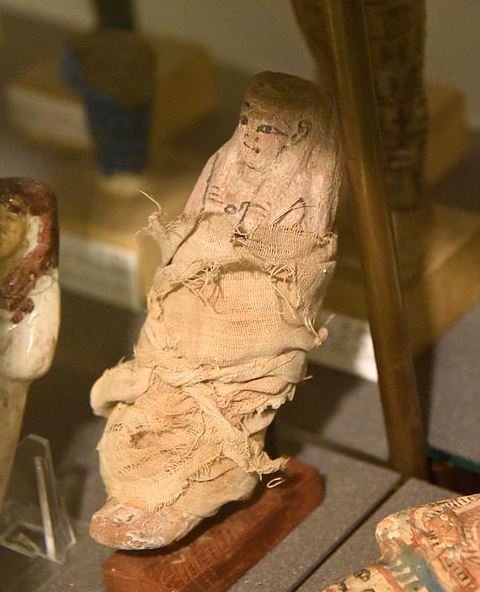
A ceramic ushabti figure from Heracleopolis Magna, adorned with preserved linen wrappings, attributed to T3y-ms from Egypt’s 19th Dynasty. This artwork is currently housed in the Petrie Museum of Egyptian Archaeology, London.
Cultural and Artistic Developments of the First Intermediate Period
The First Intermediate Period saw the emergence of new literary forms, notably the Ipuwer Papyrus. This text, often interpreted as lamentations, reflects societal turmoil, although its exact historical context remains debated.
Artistic expression during this era diverged significantly between regions:
- Memphite Traditions: The northern rulers clung to Old Kingdom artistic norms, producing modest tomb reliefs and maintaining continuity with past traditions.
- Theban Innovations: Isolated from Memphis, Theban artisans developed unique styles. Their reliefs featured narrow shoulders, angular limbs, and bold facial features. Bright colors and new proportions characterized their work, as seen in stelae and statues like the Limestone Statue of Steward Mery.
Architectural advancements included rock-cut saff tombs in Thebes, featuring courtyards and colonnades. These structures symbolized regional distinctiveness and innovation in mortuary practices.

Political Dynamics and Unification
The protracted rivalry between Heracleopolis and Thebes culminated in conflict. The Theban kings, under Mentuhotep II, decisively defeated the Heracleopolitan rulers around 2033 BC. This reunification heralded the Middle Kingdom, ending the fragmentation of the First Intermediate Period.
Questions and Answers
Why is it called a “dark period”?
It is termed a “dark period” due to the lack of monumental evidence, political instability, and the perception of chaos reflected in later Egyptian literature.
What caused the collapse of the Old Kingdom?
Factors include the prolonged reign of Pepi II, succession crises, the rise of powerful provincial nomarchs, and possibly environmental issues like low Nile inundations leading to famine.

What role did Heracleopolis play during this period?
Heracleopolis, under the Ninth and Tenth Dynasties, became a northern power center. Its kings, such as Akhthoes, struggled to maintain control but were ultimately overshadowed by Theban rulers.
Who were the prominent figures in Thebes during this era?
The Theban rulers, particularly Intef II and Intef III, expanded their control in Upper Egypt. Mentuhotep II eventually unified Egypt, ending the period.
How did art and architecture evolve during this time?
Artistic styles diverged regionally, with Memphite traditions continuing in the north and innovative Theban styles emerging in the south. Theban saff tombs showcased unique mortuary architecture.
What does the Ipuwer Papyrus reveal about this period?
The Ipuwer Papyrus describes societal unrest, economic decline, and famine, offering a literary glimpse into the hardships of the time, though its historical accuracy is debated.

Ipuwer Papyrus
How did the First Intermediate Period end?
Theban king Mentuhotep II defeated Heracleopolitan rulers around 2033 BC, reunifying Egypt and beginning the Middle Kingdom.