Mumtaz Mahal
Mumtaz Mahal was the chief consort of Mughal Emperor Shah Jahan and the inspiration behind the Taj Mahal.
Early Life and Background
Mumtaz Mahal, born as Arjumand Banu Begum on April 27, 1593, in Agra, was a woman of Persian descent who became one of the most celebrated figures of the Mughal era. She was the daughter of Abu’l-Hasan Asaf Khan, a wealthy Persian noble and a high-ranking official in the Mughal court. Her mother, Diwanji Begum, also hailed from an aristocratic lineage, being the daughter of Khwaja Ghias-ud-din of Qazvin. Mumtaz Mahal was the niece of Empress Nur Jahan, the chief consort of Emperor Jahangir, making her an integral part of the Mughal imperial family.
Growing up in a privileged environment, Mumtaz Mahal received an excellent education. She was well-versed in Persian and Arabic and was known for her intelligence, grace, and refinement. Her early years were spent in the Mughal court, where she gained insight into royal customs and courtly politics. Her beauty and charm attracted many suitors, but her destiny was sealed when she was betrothed to Prince Khurram, later known as Emperor Shah Jahan.
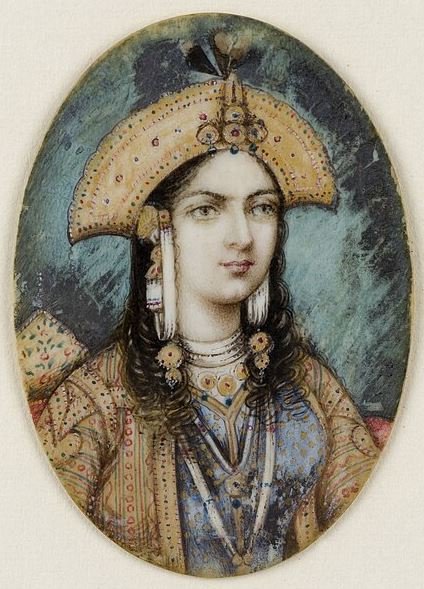
Mumtaz Mahal’s portrait at the Lahore Museum in Pakistan.
Marriage to Shah Jahan
Mumtaz Mahal’s betrothal to Prince Khurram (later Shah Jahan) took place in 1607 when she was just 14 years old. However, their marriage was postponed for five years, and they were finally wed on May 10, 1612, in an extravagant ceremony in Agra. Despite already being married to Princess Kandahari Begum, Shah Jahan found his deepest affection reserved for Mumtaz Mahal.
Following their marriage, Shah Jahan bestowed upon her the title “Mumtaz Mahal,” which means “The Exalted One of the Palace.” Unlike many royal marriages that were primarily political alliances, Mumtaz and Shah Jahan shared a deep emotional connection. Their love story was legendary, and the emperor’s unwavering devotion to her remained unparalleled in Mughal history. Although he had other wives, it was widely acknowledged that Mumtaz Mahal was his favorite and closest companion.
Mumtaz Mahal accompanied Shah Jahan in his travels and military campaigns, playing an active role in his life. She was his confidante and closest adviser, and he often consulted her on political matters. Their marriage lasted 19 years and was blessed with 14 children, though many did not survive infancy. Among her surviving children were Jahanara Begum, who later became an influential woman at court, and Dara Shikoh, the heir-apparent, whose fate was eventually sealed by his younger brother Aurangzeb.
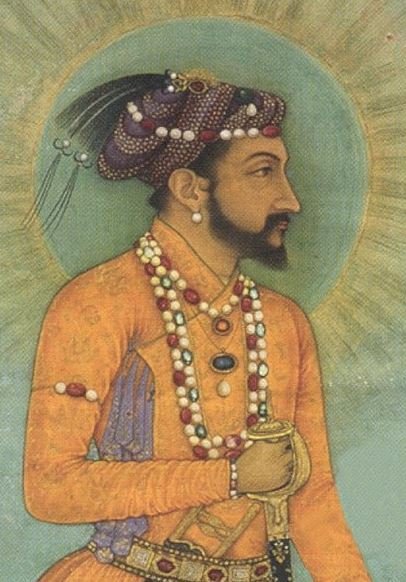
A portrait of Shah Jahan by Indian artist Bichitr
Role as Mughal Empress
When Shah Jahan ascended the Mughal throne in 1628, Mumtaz Mahal was given the esteemed title of Padshah Begum, signifying her status as the chief empress. As the most influential woman in the empire, she wielded considerable power and was involved in state affairs. Unlike her aunt Nur Jahan, who played a dominant role in imperial politics, Mumtaz Mahal preferred to act as a trusted adviser rather than an overt power broker.
Unlike her aunt, Nur Jahan, Mumtaz Mahal did not seek political power but had significant influence over Shah Jahan.
Her influence extended beyond politics into philanthropy and patronage of the arts. She was known for her charitable contributions, supporting scholars, poets, and theologians. Mumtaz Mahal also played a crucial role in providing financial assistance to widows, orphans, and destitute women, ensuring their welfare in a male-dominated society. Her compassion and generosity made her beloved among the people of the empire.
Death and Its Aftermath
Mumtaz Mahal’s life was tragically cut short at the age of 38. In 1631, she accompanied Shah Jahan on a military campaign in the Deccan region. While in Burhanpur, she gave birth to her 14th child, Gauhar Ara Begum, after a prolonged and difficult labor of 30 hours. She suffered severe postpartum complications and died on June 17, 1631.
Her death left Shah Jahan utterly devastated. Contemporary accounts describe him as inconsolable, retreating into mourning for an entire year. His grief was so profound that his hair reportedly turned white within weeks. The loss of his beloved wife had a lasting impact on him, shaping his later years and contributing to his eventual decline.
The Taj Mahal, a testament to the love between Mumtaz Mahal and Shah Jahan, remains a timeless symbol of devotion and an architectural marvel that continues to awe and inspire generations.
Initially, Mumtaz Mahal was buried in a modest grave in Burhanpur, but Shah Jahan soon planned a grand mausoleum to honor her memory. In December 1631, her body was exhumed and transported to Agra, where she was reinterred in a temporary tomb while plans for her final resting place were underway.
Construction of the Taj Mahal
Shah Jahan’s immense love for Mumtaz Mahal led him to commission one of the most magnificent architectural wonders in history—the Taj Mahal. The construction of the mausoleum began in 1632 and took over two decades to complete. Skilled artisans, architects, and laborers from across the empire and beyond were employed to build the structure. White marble from Rajasthan, precious stones from Persia, and intricate calligraphy work from expert craftsmen contributed to the unparalleled beauty of the monument.
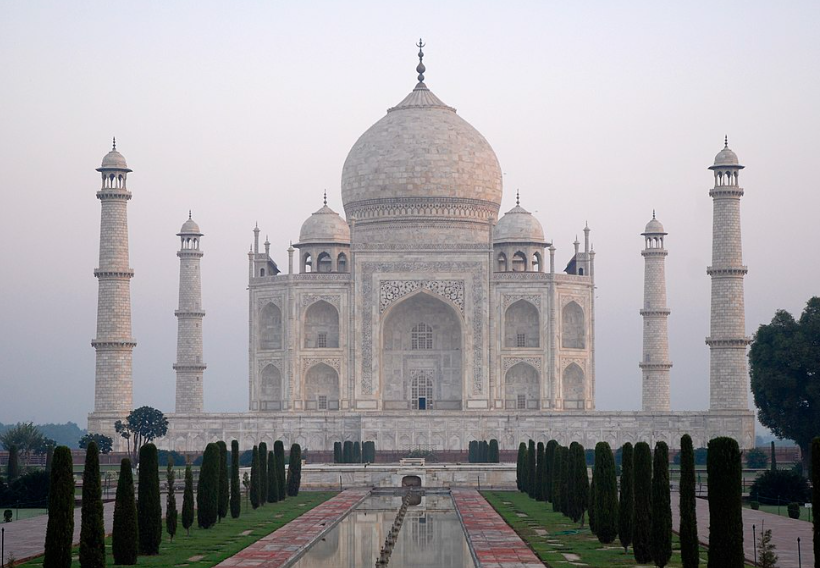
Regarded as one of the greatest monuments in the world, Taj Mahal is an ivory-white marble mausoleum located on the right bank of the river Yamuna in the Indian city of Agra. The structure was built in memory of Queen Mumtaz, the favorite wife of Mughal emperor Shah Jahan, who died while giving birth to her 14th child, Gauhar Ara.
The Taj Mahal stands as an eternal symbol of love and devotion. It is renowned for its exquisite symmetry, stunning domes, and intricate carvings, reflecting the zenith of Mughal architecture. The cenotaph of Mumtaz Mahal lies in the center of the mausoleum, alongside Shah Jahan, who was later entombed beside her by his son Aurangzeb.
New Seven Wonders of the World: Definition, Selection, History, & Significance
Mumtaz Mahal’s Legacy
Mumtaz Mahal’s legacy is inseparable from that of the Taj Mahal, which remains one of the most visited and admired monuments in the world. Recognized as a UNESCO World Heritage Site, it attracts millions of visitors each year who marvel at its beauty and historical significance.
Beyond her role as an empress and the inspiration behind the Taj Mahal, Mumtaz Mahal was remembered for her intelligence, generosity, and unwavering support of her husband. She played a crucial role in shaping Shah Jahan’s reign, not only as his beloved consort but also as a guiding force in his political and personal life.
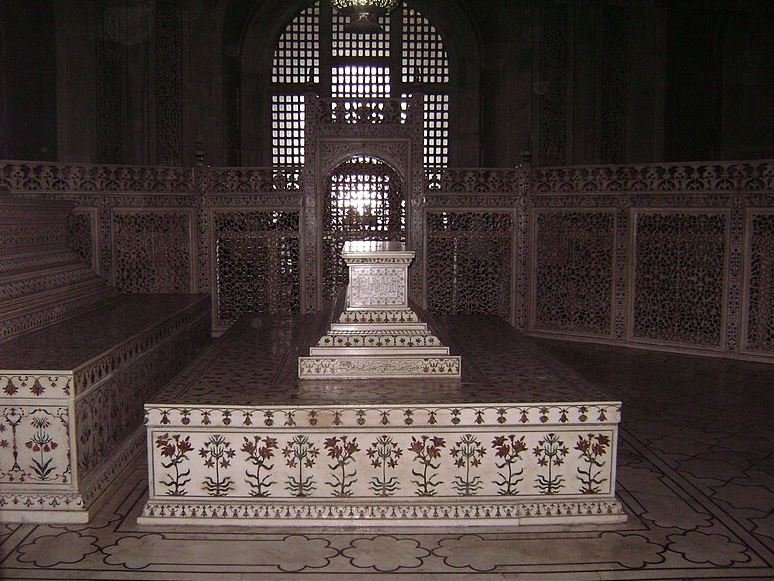
Mumtaz Mahal’s Cenotaph.
Mumtaz Mahal was more than just the inspiration behind a breathtaking monument; she was a woman of grace, intelligence, and influence.
Mumtaz Mahal in Popular Culture
Mumtaz Mahal’s story has inspired countless works of literature, art, and film. Her love story with Shah Jahan has been depicted in novels, poetry, and movies, reinforcing the idea of undying devotion. Various Indian and international films, including the 1963 movie Taj Mahal and the 2005 film Taj Mahal: An Eternal Love Story, have dramatized her life and romance.
In literature, her name is often mentioned in historical fiction, poetry, and biographies that seek to explore her life beyond the grandeur of the Taj Mahal. Her story continues to captivate the imagination of people worldwide, making her one of the most iconic figures of Mughal history.
Timeline of Mumtaz Mahal
- 1593 (April 27): Born as Arjumand Banu Begum in Agra to Abu’l-Hasan Asaf Khan and Diwanji Begum.
- 1607: Betrothed to Prince Khurram (later Shah Jahan) at the age of 14.
- 1612 (May 10 or June 7): Marries Prince Khurram and receives the title “Mumtaz Mahal.”
- 1614–1630: Accompanies Shah Jahan on military campaigns and political affairs.
- 1628: Becomes Empress of the Mughal Empire upon Shah Jahan’s accession.
- 1631 (June 17): Dies in Burhanpur while giving birth to her 14th child, Gauhar Ara.
- 1631 (December): Her body is moved to Agra for burial.
- 1632–1653: Construction of the Taj Mahal, her final resting place, commissioned by Shah Jahan.
Frequently Asked Questions about Mughal Empress Mumtaz Mahal
What was Mumtaz Mahal’s birth name?
Arjumand Banu Begum.
When and where was she born?
She was born on April 27, 1593, in Agra.
Who were her parents?
Her father was Abu’l-Hasan Asaf Khan, a Persian noble, and her mother was Diwanji Begum.
When did she marry Shah Jahan?
She married him on May 10 or June 16, 1612.
How many children did she have?
It’s been stated that she had 14 children, including Dara Shikoh, Jahanara Begum, and Aurangzeb.
What was her role in the Mughal court?
She was Shah Jahan’s trusted advisor and was given the imperial seal, granting her influence in state affairs.
How did Mumtaz Mahal die?
She died on June 17, 1631, in Burhanpur due to postpartum complications while giving birth to her 14th child.
Where was she first buried?
She was initially buried in Burhanpur before being reinterred in the Taj Mahal.

The Taj Mahal was built to stand for not just the love Shah Jahan had for Mumtaz but it was meant to represent the queen herself.
Why did Shah Jahan build the Taj Mahal?
He built it as a mausoleum for Mumtaz Mahal, symbolizing their love and devotion.
What was Shah Jahan’s reaction to her death?
He was devastated, went into mourning for a year, and his appearance drastically changed due to grief.
How is she remembered today?
She is immortalized through the Taj Mahal, literature, films, and even astronomical features named after her.
Mumtaz Mahal’s deep bond with Shah Jahan set her apart from other Mughal queens, making her an enduring figure in history.





