Most Significant Religious Sites in World History
Throughout history, religious sites have served as centers of worship, pilgrimage, and cultural development. These locations, often sacred to multiple faiths, embody the beliefs, traditions, and histories of civilizations across the globe. From towering temples and ancient shrines to revered mountains and spiritual landscapes, these sites continue to inspire millions of people today.
Below is an in-depth exploration of some of the world’s most significant religious sites, their historical importance, and their continued relevance.
Abrahamic Religious Sites
The Kaaba – Mecca, Saudi Arabia

Muslims facing the Kaaba during prayers.
The Kaaba, located within the Masjid al-Haram in Mecca, is the holiest site in Islam. According to Islamic tradition, it was originally built by the prophet Ibrahim (Abraham) and his son Ismail (Ishmael) as a house of worship dedicated to the one God. Muslims around the world face the Kaaba during daily prayers, and it is the focal point of the Hajj pilgrimage, which millions undertake annually. Pilgrims perform rituals such as the Tawaf (circumambulating the Kaaba) and the Sa’i (walking between the hills of Safa and Marwah), following the traditions of the Prophet Muhammad.
READ MORE: Most Famous Prophets in Islam
The Church of the Holy Sepulchre – Jerusalem, Israel

Church of the Holy Sepulchre in the Christian Quarter of the walled area in East Jerusalem
For Christians, the Church of the Holy Sepulchre is among the most revered sites. Built on the believed location of Jesus Christ’s crucifixion, burial, and resurrection, it has been a pilgrimage destination since the 4th century. The church houses the Edicule, which is considered the tomb of Jesus, and other significant relics, such as the Stone of Anointing, where his body was prepared for burial. Managed by multiple Christian denominations, the church represents a unifying site for believers worldwide.
Abrahamic religions are monotheistic faiths tracing their origins to Abraham, including Judaism, Christianity, and Islam.
The Western Wall – Jerusalem, Israel

A close view of the The Western Wall.
The Western Wall, also known as the Wailing Wall, is the most sacred site in Judaism. It is the last remaining part of the Second Temple, which was destroyed by the Romans in 70 CE. Devout Jews gather here to pray, place written petitions into the crevices, and reflect on their heritage. The site is especially significant during religious observances such as Tisha B’Av and Yom Kippur. The wall remains a powerful symbol of Jewish resilience and faith.
Al-Aqsa Mosque and Dome of the Rock – Jerusalem, Israel

The Dome of the Rock is located on the Mount Temple in the Old City of Jerusalem which is in East Jerusalem.
The Al-Aqsa Mosque and Dome of the Rock are among Islam’s holiest sites, located on the Temple Mount in Jerusalem. The Dome of the Rock, an iconic gold-domed structure, enshrines the rock from which Prophet Muhammad is believed to have ascended to heaven during the Night Journey (Isra and Mi’raj). Al-Aqsa Mosque, nearby, is the third holiest site in Islam and has been a place of worship for over 1,300 years. The site remains a point of spiritual and geopolitical significance.
READ ALSO: How Did Prophet Muhammad Die?
The Shrine of Bahá’u’lláh – Bahjí, Israel

Shrine of Baháʼu’lláh
For Bahá’ís, the Shrine of Bahá’u’lláh in Bahjí is the most sacred site, as it is the final resting place of Bahá’u’lláh, the founder of the Bahá’í Faith. It serves as the Qiblih (direction of prayer) for Bahá’ís worldwide. The surrounding gardens and structures at the Bahá’í World Centre in Haifa also hold deep religious significance.
Indian Religious Sites
Varanasi – India

A view, from Ganga river, showing various ancient structures in Varanasi.
Regarded as the spiritual capital of Hinduism, Varanasi is one of the oldest continuously inhabited cities in the world. Situated on the banks of the Ganges River, it is believed to be the city of Lord Shiva. Devotees flock to the ghats for purification rituals, cremation ceremonies, and prayers. The Kashi Vishwanath Temple, dedicated to Shiva, is one of the most revered Hindu shrines. The city’s importance extends beyond Hinduism, as it is also significant in Buddhism and Jainism.
READ ALSO: What are the Principal Deities in Hinduism?
Bodh Gaya – India

A view of the Bodhi Tree
Bodh Gaya is the site where Siddhartha Gautama, the Buddha, attained enlightenment under the Bodhi Tree in the 6th century BCE. Today, the Mahabodhi Temple complex marks this sacred spot and remains a major pilgrimage destination for Buddhists worldwide. The temple, a UNESCO World Heritage Site, features ancient stupas, sculptures, and meditation areas. The site is especially active during celebrations of Buddha Purnima.
Amritsar – India

Golden Temple in Amritsar.
Amritsar is home to the Harmandir Sahib, or Golden Temple, the holiest site in Sikhism. Founded by Guru Ram Das in the 16th century, the temple is renowned for its spiritual atmosphere and its practice of Langar, a communal meal served to all visitors, regardless of background. The temple’s golden façade, serene water tank (Amrit Sarovar), and vibrant religious ceremonies make it a revered site for Sikhs worldwide.
Mount Kailash – Tibet

A view of the north section of Mount Kailash.
Mount Kailash is sacred to multiple faiths, including Hinduism, Buddhism, Jainism, and Bon. Hindus believe it to be the abode of Lord Shiva, while Buddhists regard it as the dwelling place of the Buddha Demchok. Pilgrims undertake the Kailash Mansarovar Yatra, a strenuous journey around the mountain, as an act of devotion and purification.
East Asian Religious Sites
Lhasa – Tibet

The Potala Palace in Lhasa.
Lhasa, the spiritual heart of Tibetan Buddhism, is home to the Jokhang Temple and the Potala Palace. Jokhang Temple houses a revered statue of Buddha, while the Potala Palace, once the residence of the Dalai Lama, symbolizes Tibetan culture and faith. Thousands of pilgrims travel here yearly to offer prayers and prostrations.
Ise Grand Shrine – Japan

Ise Shrine
The Ise Grand Shrine is the most significant Shinto shrine in Japan, dedicated to Amaterasu, the sun goddess. The shrine is rebuilt every 20 years as part of a centuries-old tradition symbolizing renewal. It remains a central site for Japanese spiritual and cultural identity.
Middle Eastern and Persian Religious Sites
Imam Ali Shrine – Najaf, Iraq

A 2023 photo of the Imam Ali Shrine.
The Imam Ali Shrine is one of the holiest sites in Shia Islam, as it contains the tomb of Ali, the first Imam and cousin of Prophet Muhammad. Millions of pilgrims visit during religious commemorations, particularly Arba’een.
Imam Husayn Shrine – Karbala, Iraq

A 2008 photo of the Imam Husayn shrine.
Karbala is sacred to Shia Muslims due to the martyrdom of Imam Husayn at the Battle of Karbala in 680 CE. His shrine is among the most visited in Islam, especially during the annual Arba’een pilgrimage, which draws millions of devotees.
Ancient and Indigenous Religious Sites
Stonehenge – England
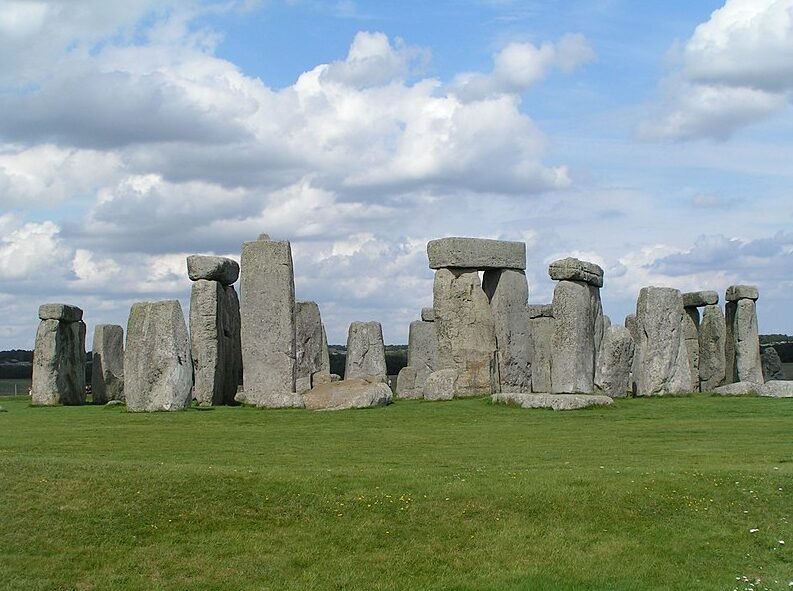
The Stonehenge at Salisbury Plain.
Stonehenge, a prehistoric monument, has long been associated with spiritual and ritualistic practices. Scholars believe it may have served as a temple for sun worship, a burial ground, or an astronomical observatory. Neo-pagans and Druids continue to celebrate solstices here.
Chichen Itza – Mexico

El Castillo, at Chichen Itza
Chichen Itza was a major Mayan religious center featuring temples dedicated to the gods, including the famous El Castillo pyramid, aligned with celestial movements. It remains a site of cultural and spiritual significance.
Uluru – Australia

Uluru
Uluru, also known as Ayers Rock, is sacred to the Anangu people of Australia. It features ancient rock art and is associated with Dreamtime creation stories. Indigenous Australians continue to perform ceremonies here, emphasizing its enduring spiritual importance.
Questions and Answers
What is the holiest site in Judaism?
The Holy of Holies on the Temple Mount in Jerusalem, though the Western Wall is the most accessible sacred site today.
What is the significance of the Church of the Holy Sepulchre?
It is believed to be the site of Jesus’ crucifixion, burial, and resurrection.
Why is Mecca important in Islam?
It houses the Kaaba, the most sacred site in Islam, and is the destination for the Hajj pilgrimage.
READ ALSO: History of the Black Stone in Mecca
What is the Bahá’í Faith’s holiest site?
The Shrine of Bahá’u’lláh in Bahjí, Israel, which is the Qiblih (direction of prayer) for Bahá’ís.
What are the four major sites of Buddhist pilgrimage?
Lumbini (birthplace), Bodh Gaya (enlightenment), Sarnath (first sermon), and Kushinagar (death of the Buddha).
What is the holiest city in Hinduism?
Varanasi, regarded as the spiritual capital of India and a major pilgrimage site.
What is the significance of Lalish in Yazidism?
It is the most sacred site for Yazidis and houses the tomb of Sheikh Adi ibn Musafir.
Where is the Golden Temple and why is it significant?
Located in Amritsar, India, it is the holiest site in Sikhism and a symbol of spiritual and cultural identity.
Religious sites serve as the physical manifestation of faith, history, and cultural identity. Whether ancient or modern, they continue to shape the spiritual journeys of millions.
What is Mount Athos?
A monastic community in Greece, highly sacred to Eastern Orthodox Christianity.
What is the central religious site of Confucianism?
The Temple of Confucius in Qufu, China, which honors the philosopher Confucius.
Why is Mount Gerizim important to Samaritans?
They believe it is the true sacred site chosen by God, instead of Jerusalem’s Temple Mount.
What is the most sacred place for Zoroastrians?
The Fire Temple of Udvada in India, which houses an ancient Atash Behram (holy fire).
Why is the Salt Lake Temple significant to Latter-day Saints?
It is the most sacred temple of the LDS Church, with a designated Holy of Holies for divine communion.

Salt Lake Temple in the City of Salt Lake, Utah in the USA.
What is the Ise Shrine in Shinto?
It is the most sacred Shinto shrine in Japan, dedicated to the sun goddess Amaterasu.
READ ALSO: Top 10 Japanese Gods and Goddesses