Parysatis II
Parysatis, the youngest daughter of Artaxerxes III of Persia, holds a fascinating yet tragic place in history. Her life, marked by the political intrigue of the Persian court and the sweeping conquests of Alexander the Great, highlights the intersection of Persian and Macedonian cultures during a pivotal era. Married to Alexander the Great in 324 BC during the grand Susa weddings, she is believed to have been murdered the following year, likely as a result of courtly rivalries and succession politics. Below World History Edu explores her life, marriage, and untimely demise.
Royal Beginnings
Parysatis was born into the powerful Achaemenid dynasty as the youngest daughter of Artaxerxes III, who ruled the Persian Empire from 358 to 338 BC. Her early life was shaped by the grandeur and complexities of the Persian court. Tragedy struck in 338 BC when Artaxerxes III was assassinated, a political upheaval that left her brother Arses to inherit the throne.

Parysatis II was the youngest daughter of Artaxerxes III of Persia and a member of the Achaemenid royal family. Rock relief of Artaxerxes III of Persia in Persepolis
Political Turmoil
Arses’s reign was brief, lasting only two years before he was overthrown and succeeded by their second cousin, Darius III, in 336 BC. During these turbulent years, Parysatis and her sisters likely remained within the confines of the Persian court, shielded but also constrained by the patriarchal power structures of the Achaemenid dynasty.
Involvement in Darius III’s Campaign
As Alexander the Great began his campaign against Persia, Darius III mobilized his resources, including members of the royal family. Parysatis and her sisters accompanied the Persian army during these critical years. Following the pivotal Battle of Issus in 333 BC, Parysatis and other Persian elite members were captured in Damascus by Alexander’s general, Parmenion. This event marked a turning point in her life, setting the stage for her eventual marriage to Alexander.
Marriage to Alexander the Great
In 324 BC, Parysatis married Alexander the Great in a politically significant ceremony at Susa. On the same occasion, Alexander married Stateira, the eldest daughter of Darius III. By wedding both Parysatis and Stateira, Alexander sought to consolidate his authority over the Persian Empire, symbolizing unity between Macedonian and Persian elites. The five-day celebration featured 90 additional marriages between Persian noblewomen and Alexander’s loyal Greek and Macedonian soldiers, reinforcing the fusion of the two cultures.
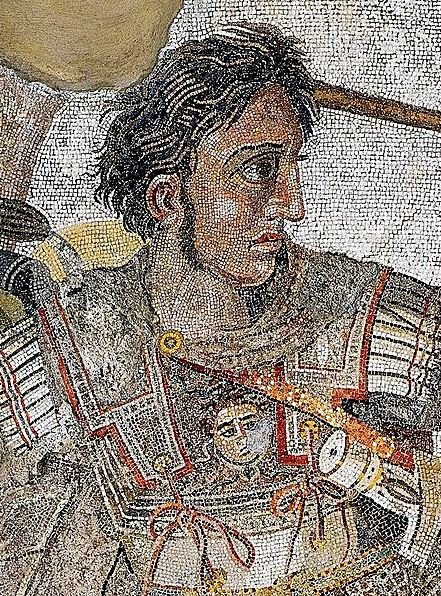
Mosaic of Alexander the Great.
As the youngest daughter of Artaxerxes III, Parysatis II experienced the turbulence of Persian politics and the seismic shifts brought about by Alexander the Great’s conquests.
Parysatis’s marriage to Alexander elevated her position within the Macedonian-Persian power structure. The union represented Alexander’s strategic move to legitimize his rule by binding himself to the Achaemenid royal family. However, this alliance also made her a potential rival to others vying for power, particularly Alexander’s first wife, Roxana.
Rulers of the Achaemenid Empire: From Cyrus the Great to Artaxerxes V
The Mystery of Parysatis’s Fate
After the Susa weddings, historical records become silent about Parysatis. Her name does not appear in subsequent accounts of Alexander’s campaigns or the events following his death. Some historians, such as Elizabeth Donnelly Carney, have speculated that Parysatis may have been confused with Drypetis, another Achaemenid princess, in certain sources. This ambiguity complicates efforts to reconstruct her life after her marriage.
In 323 BC, following Alexander’s sudden death in Babylon, the empire descended into chaos as his generals and family members vied for control. According to Plutarch, Roxana, Alexander’s first wife, ordered the murder of Stateira and her sister to secure her own position and that of her son, Alexander IV. Carney argues that Parysatis, not Drypetis, may have been the other victim of Roxana’s actions. If Parysatis were pregnant or capable of claiming a child by Alexander, she would have posed a significant threat to Roxana’s ambitions.
Legacy and Historical Significance
Parysatis’s marriage to Alexander represents one of the most prominent examples of the cultural integration Alexander sought to achieve between Macedonian and Persian societies. Her role as a bridge between two great empires symbolizes the complex interplay of diplomacy, conquest, and personal alliances in the ancient world.
The likely murder of Parysatis underscores the dangers faced by women of royal lineage in ancient courts, where political alliances and rivalries often dictated their fates.
Frequently Asked Questions about Parysatis II
What was her role in Persian and Macedonian history?
She married Alexander the Great in 324 BC at the Susa weddings to strengthen Alexander’s ties to the Achaemenid royal family.
What happened to her after her marriage to Alexander?
There are no clear accounts of her life after the marriage. However, some historians suggest she was murdered in 323 BC, likely by Roxana, Alexander’s first wife, to secure her own influence and that of her son, Alexander IV.
Why might Parysatis have been targeted by Roxana?
As Alexander’s wife, Parysatis could claim to be pregnant with his child, posing a political threat to Roxana’s position.

Alexander the Great and Roxana
What evidence exists about her fate?
Historians, including Elizabeth Donnelly Carney, argue that Plutarch’s account of Stateira’s murder may have misidentified Parysatis as Stateira’s sister, suggesting Parysatis was likely a victim.
What is known about her early life?
After her father’s murder in 338 BC, she likely lived at the Persian court and was captured following the Battle of Issus in 333 BC during Alexander’s conquest.
What significance did her marriage hold?
Her marriage to Alexander symbolized the merging of Persian and Macedonian royal lines, part of Alexander’s strategy to unify his empire.