Ramesses III
Ramesses III, officially known as Usermaatre Meryamun Ramesses-Heqaiunu, was the second Pharaoh of the Twentieth Dynasty of Egypt. Scholars estimate that he reigned from around 1185 to 1155 BC, making him the last New Kingdom ruler with significant power.
His reign was marked by external threats, economic challenges, and cultural shifts, reflecting a period of transition in Ancient Egypt. Despite these difficulties, his military successes and grand architectural projects left a lasting impact on Egyptian history.

A wall relief depicting Ramesses III offering incense.
Early Life and Ascension
Ramesses III was the son of Pharaoh Setnakhte and Queen Tiy-Merenese. His father, Setnakhte, took the throne during a period of political instability, likely overthrowing the previous ruler, Twosret.
Unlike some of his predecessors, Ramesses III was not directly related to the famous Ramesses II (aka Ramesses the Great) but was possibly descended from another branch of the Ramesside lineage. He ascended the throne in a time of crisis, and his rule was dedicated to preserving Egypt’s territorial integrity and economic stability.
Ramesses III was the second pharaoh of Egypt’s Twentieth Dynasty, ruling from circa 1185 to 1155 BC. He is considered the last powerful ruler of the New Kingdom.
Upon his coronation, Ramesses III followed the tradition of affirming his divine kingship. Inscriptions from his mortuary temple at Medinet Habu describe his coronation ceremony, where doves were released to the four corners of Egypt, symbolizing his divine authority and the preservation of Ma’at (order and balance) in the kingdom.
Military Campaigns and Defense Against Invasions
Ramesses III’s reign was characterized by continuous warfare, particularly against the so-called Sea Peoples and Libyan invaders. These conflicts were part of the wider Late Bronze Age collapse, during which several ancient civilizations, including the Hittites and Mycenaeans, fell.
In Year 5 of his reign, he led his army against a coalition of Libyan tribes that attempted to settle in the western Nile Delta. His forces successfully repelled them, ensuring Egypt’s western borders remained secure. However, the greatest challenge came in Year 8, when the Sea Peoples launched a large-scale invasion by both land and sea.
The Sea Peoples, consisting of groups like the Peleset (Philistines), Denyen, Shardana, and Tjekker, had already ravaged other empires before setting their sights on Egypt. Ramesses III decisively defeated them in two major battles:
- The Battle of Djahy (southern Lebanon): His army stopped the land invasion, preventing the Sea Peoples from advancing further into Egyptian territories.
- The Battle of the Delta: This naval battle took place at the mouth of the Nile. Ramesses III employed an ambush strategy, lining the riverbanks with archers while Egyptian ships engaged the enemy in direct combat. The Sea Peoples were completely overwhelmed, with their ships destroyed and survivors captured or killed.
Following his victory, Ramesses III resettled the defeated groups in southern Canaan, possibly leading to the emergence of Philistine city-states in the region. These victories helped delay the decline of Egyptian power, but the economic cost of these wars severely strained the state’s resources.
What was the Bronze Age? – History, Culture, Tools, Development, & Major Facts
Economic Decline and Internal Struggles
The continuous military campaigns and increasing costs of maintaining Egypt’s defenses had long-term economic consequences. The treasury was depleted, and signs of economic distress became evident during his reign. The most notable event was the first recorded labor strike in history.
In Year 29, the artisans and workers at Deir el-Medina, responsible for constructing royal tombs in the Valley of the Kings, staged a strike due to delayed food rations. The situation indicated a broader economic crisis, as inflation and supply shortages made it difficult to maintain stable provisions for the workforce. Some scholars speculate that climatic changes, possibly linked to the Hekla 3 volcanic eruption, contributed to reduced agricultural yields, exacerbating food shortages.
Despite these economic troubles, Ramesses III continued to build monumental structures, attempting to project an image of stability and continuity. His mortuary temple at Medinet Habu is one of the most impressive in Egypt, featuring detailed reliefs of his military victories and religious dedications.
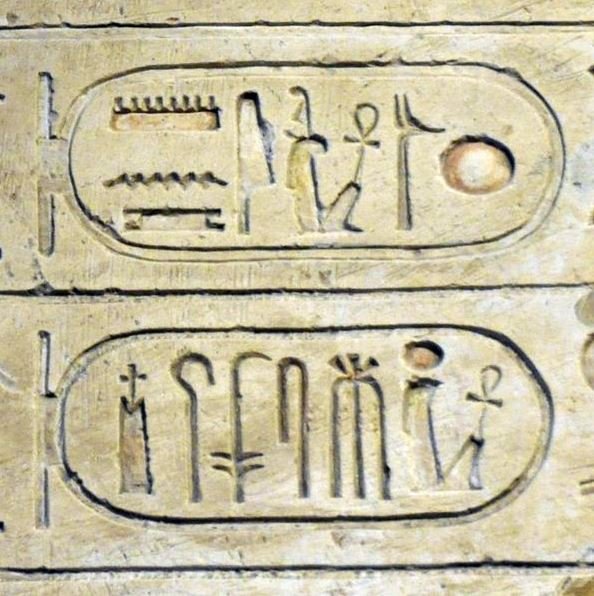
Ramesses III’s Royal Cartouches
Assassination and the Harem Conspiracy
One of the most dramatic events of Ramesses III’s reign was his assassination, orchestrated by members of his own court. This conspiracy, known from ancient trial documents, was led by one of his secondary wives, Queen Tiye, who sought to place her son, Pentaweret, on the throne instead of the designated heir, Ramesses IV.
The plot involved high-ranking officials, palace servants, and military officers. Some of the conspirators attempted to use magic and bribery to ensure the plan’s success. While the exact details remain unclear, modern forensic analysis of Ramesses III’s mummy reveals that he suffered a deep cut to the throat, which severed his trachea and major blood vessels, leading to immediate death.
CT scans confirmed Ramesses III’s throat was deeply cut, severing his trachea and major blood vessels, a fatal wound likely inflicted by multiple assailants.
Following the assassination, a series of trials ensued. Many of the conspirators, including Pentaweret, were either executed or forced to commit suicide. Despite the turmoil, the rightful heir, Ramesses IV, ascended the throne, ensuring the continuation of the dynasty, albeit in a weakened state.
Architectural Achievements
Ramesses III was a prolific builder, following in the footsteps of earlier great pharaohs like Ramesses II. His most significant architectural contributions include:
- Medinet Habu: His mortuary temple in western Thebes remains one of the best-preserved temples in Egypt. It features elaborate depictions of his battles and religious offerings.
- Karnak and Luxor: He contributed to temple expansions, reinforcing Egypt’s religious institutions during a time of political uncertainty.
- Mining and Trade Expeditions: Records from the Great Harris Papyrus indicate that he sent expeditions to the Sinai Peninsula and Punt, extracting valuable resources like turquoise and copper.
Legacy and Historical Impact
Although Ramesses III managed to defend Egypt from external threats, the underlying economic and political problems persisted. His successors, particularly Ramesses IV through Ramesses XI, struggled to maintain centralized power, leading to the fragmentation of Egypt and the eventual decline of the New Kingdom.
His reign is often viewed as the last stronghold of Egyptian imperial might before the onset of internal divisions and invasions by foreign powers, such as the Libyans and Nubians. The collapse of Egyptian influence in the Near East following his death also contributed to the regional power vacuum that later saw the rise of new states, including those of the Israelites and the Neo-Assyrian Empire.
Frequently Asked Questions
What challenges did Ramesses III face during his reign?
His reign saw economic decline, foreign invasions, and internal unrest, which contributed to the weakening of Egypt’s power.
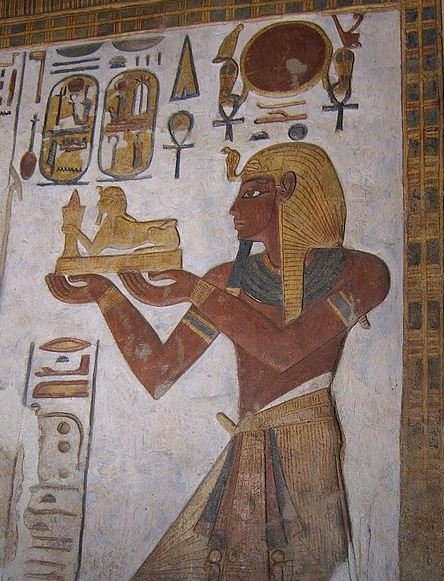
A relief of Ramesses III at the Temple of Khonsu at Karnak
READ MORE: Khonsu: Ancient Egyptian God of the Moon and Time
How did Ramesses III defend Egypt from the Sea Peoples?
He defeated them in two major battles: the Battle of Djahy (land) and the Battle of the Delta (naval), preventing Egypt’s collapse.
What was the impact of his wars on Egypt’s economy?
The heavy cost of military campaigns drained Egypt’s treasury, leading to economic difficulties, including the first recorded labor strike.
What is Medinet Habu, and why is it significant?
Medinet Habu is Ramesses III’s mortuary temple, known for its well-preserved inscriptions detailing his military victories and fortifications.
How did Ramesses III die?
He was assassinated in the Harem Conspiracy, orchestrated by Queen Tiye and her son Pentaweret, who sought to alter the succession.
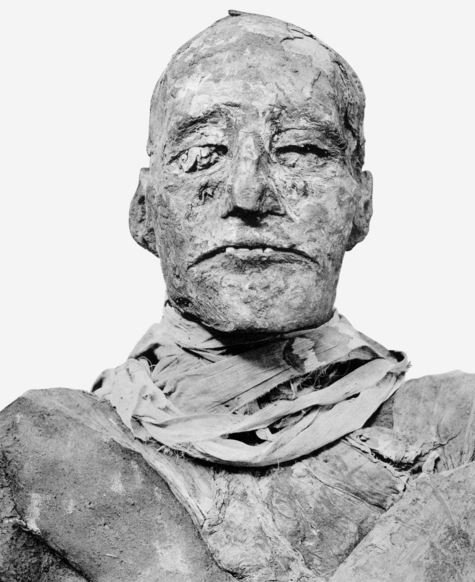
Mummy of Ramesses III
Who succeeded Ramesses III?
His designated heir, Ramesses IV, took the throne despite the conspiracy, while several of his other sons ruled Egypt later.
What role did the Great Harris Papyrus play in his legacy?
This document records his vast temple donations, military campaigns, and efforts to maintain Egypt’s stability.
Ancient Egyptian Kings of the New Kingdom and their Accomplishments
FACT CHECK: At worldhistoryedu.com, we strive for utmost accuracy and objectivity. But if you come across something that doesn’t look right, don’t hesitate to leave a comment below.





