What is the Relationship Between the Greek Symposium and Poetry?
The Greek symposium was an essential social institution in ancient Greece, functioning as both a convivial gathering and a platform for cultural expression. It brought together men of similar social standing to share food, wine, and intellectual pursuits, while also serving as a venue for poetic performance and appreciation.
Poetry and the symposium were deeply intertwined, with poetry often serving as both a source of entertainment and a medium for philosophical, political, and personal expression within the sympotic setting.
In the article below, World History Edu explores the multifaceted relationship between the Greek symposium and poetry, examining their historical development, mutual influence, and cultural significance.
Origins and Nature of the Symposium
The Greek symposium, derived from the word “symposion,” meaning “drinking together,” was an integral part of elite male social life. It emerged during the Archaic period (c. 800–500 BCE) and continued to flourish through the Classical period (c. 500–323 BCE). Symposia were exclusive gatherings, held in the andron (men’s quarters) of a host’s house. Participation was limited to male citizens, though exceptions occasionally included courtesans (hetairai) or musicians.
Symposia were highly ritualized events, beginning with libations to the gods and progressing through structured stages of drinking, conversation, and entertainment. These gatherings were not merely hedonistic but were forums for intellectual exchange, the cultivation of personal bonds, and the reinforcement of social hierarchies. Within this environment, poetry played a central role, contributing to the unique blend of leisure and cultural enrichment that characterized the symposium.

Symposium Scene Depicted on a Fresco in the Tomb of the Diver, Greek Colony of Paestum, Italy, c. 480–470 BCE
Poetry as a Core Element of the Symposium
Performance and Communal Experience
Poetry in the symposium was inherently performative. Poets or skilled reciters would declaim verses, often accompanied by musical instruments like the lyre or aulos. The performance created a shared cultural and emotional experience, fostering a sense of community among participants. Sympotic poetry was typically composed in a manner that encouraged interaction, with participants often engaging through call-and-response formats, singing in unison, or contributing their own verses.
This communal nature of poetry at symposia underscores its role as a social adhesive, helping to unify the group while allowing individuals to display their wit, creativity, and cultural knowledge.
Themes and Subject Matter
The themes of sympotic poetry often reflected the concerns and interests of the elite male participants. Love, friendship, wine, and the pleasures of life were common topics, celebrated in a lighthearted and often playful tone. However, sympotic poetry also addressed weightier issues, including politics, philosophy, and morality.
Poets such as Theognis of Megara used sympotic settings to comment on social and political dynamics, weaving personal reflections with broader concerns. For instance, Theognis’s poetry reflects anxieties about loyalty, betrayal, and the stability of aristocratic values in a rapidly changing society. In this way, the symposium served as both a sanctuary for revelry and a platform for serious discourse.
Key Genres of Sympotic Poetry
Several genres of Greek poetry were intimately tied to the symposium, each contributing uniquely to the cultural and social atmosphere of these gatherings.
Lyric Poetry
Lyric poetry, performed with the accompaniment of a lyre, was perhaps the most quintessential form of sympotic poetry. Poets such as Alcaeus and Anacreon epitomized the genre, crafting verses that celebrated love, friendship, and the conviviality of the symposium. Alcaeus’s works, for example, often invoke the imagery of wine and camaraderie, while also touching on themes of exile and political strife.
Anacreon, known for his lighthearted and sensual compositions, captured the hedonistic spirit of the symposium. His poems extolled the pleasures of wine and romantic love, embodying the ethos of carpe diem that resonated with sympotic audiences.
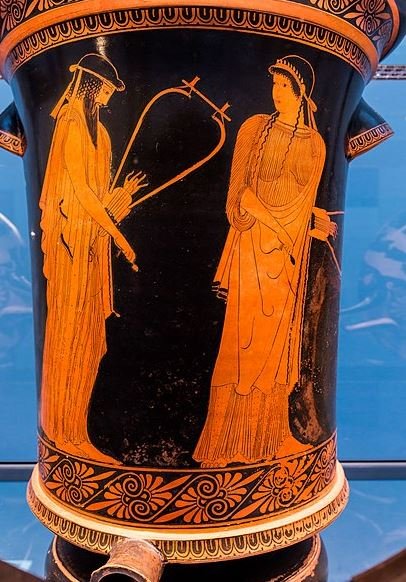
Alcaeus and Sappho, as depicted by Greek artist Brygos Painter.
Elegiac Poetry
Elegiac poetry, composed in elegiac couplets, was another staple of the symposium. This genre was versatile, ranging from love elegies to moralistic reflections and political commentary. Poets like Solon and Mimnermus employed elegiac poetry to address diverse themes, often blending personal emotions with philosophical musings.
Solon’s elegies, for instance, combined reflections on justice and governance with sympotic imagery, illustrating how poetry could bridge the private and public spheres. Elegiac poetry thus mirrored the dual nature of the symposium as both a space for leisure and a forum for intellectual engagement.
Skolia (Drinking Songs)
Skolia were short, informal drinking songs sung by participants during the symposium. These songs were often improvised and passed around the group in a manner akin to a musical game. The content of skolia ranged from humorous and bawdy to reflective and laudatory.
One famous skolion, attributed to the poet Simonides, celebrates the virtues of moderation and wisdom, encapsulating the balance of indulgence and restraint valued in sympotic culture.
The Role of Poets and Poetry in Sympotic Culture
Poets as Cultural Mediators
Poets played a crucial role in shaping the ethos and identity of the symposium. Through their compositions, they mediated the values, aspirations, and anxieties of their audiences. This is evident in the works of figures like Pindar, whose odes, while primarily associated with athletic victories, were also performed in sympotic contexts. Pindar’s poetry reinforced notions of aristocratic excellence and divine favor, aligning with the self-image of the elite participants.
The Symposiast as Poet
The symposium also encouraged amateur poetic expression, blurring the lines between professional poets and participants. Guests were often expected to contribute their own verses, either by composing new ones or recalling existing works. This practice not only showcased individual talent but also reinforced the shared cultural literacy that underpinned sympotic life.
Poetry as a Tool for Social Bonding
In addition to entertainment, poetry served as a means of fostering social cohesion and delineating group identity. By engaging with shared cultural references and themes, participants affirmed their membership in the sympotic community. This is particularly evident in the political and ideological dimensions of sympotic poetry, which often reflected the values and concerns of the aristocratic elite.
The Philosophical Dimensions of Sympotic Poetry
The symposium was not merely a space for lighthearted revelry but also a site of philosophical inquiry and reflection. This intellectual aspect is exemplified in Plato’s Symposium, a dialogue that explores the nature of love through a series of speeches delivered during a sympotic gathering. While Plato’s work is a literary construction, it reflects the genuine philosophical engagement that could occur within the sympotic setting.
In sympotic poetry, themes of love, mortality, and the pursuit of virtue often intersected with philosophical discourse. Poets like Archilochus and Xenophanes used their verses to critique societal norms and explore existential questions, demonstrating the profound interplay between poetic expression and philosophical thought.
The Legacy of the Symposium and Its Poetry
The relationship between the Greek symposium and poetry left an enduring legacy, influencing subsequent literary and cultural traditions. The sympotic ethos, with its emphasis on conviviality, intellectual exchange, and artistic expression, persisted in later forms of social and literary gatherings, such as the Roman convivium and the medieval banquet.
Moreover, the themes and forms of sympotic poetry continued to resonate in Western literary history, inspiring poets and thinkers across centuries. The integration of poetry into social rituals, as epitomized by the symposium, underscores the enduring power of poetry to connect individuals and communities through shared experiences of beauty, meaning, and reflection.
Conclusion
The Greek symposium and poetry were inextricably linked, each enriching the other in profound ways. Poetry was both a product and a defining feature of the symposium, shaping its atmosphere and reflecting its values. Through its performative, communal, and intellectual dimensions, sympotic poetry illuminated the complexities of human experience, from the joys of friendship and love to the challenges of politics and mortality.
Questions and Answers
What was the Greek symposium, and what role did poetry play within it?
The Greek symposium was a social gathering of the elite, characterized by feasting, drinking, and intellectual exchange. Poetry played a central role, serving as both entertainment and a medium for reflecting sympotic practices, values, and the atmosphere of the gatherings.
How does poetry serve as a window into sympotic practices?
Poetry often depicted rituals, customs, and the atmosphere of symposia. Xenophanes described wine-mixing bowls, food offerings, and prayers, while Alcaeus captured playful elements like drinking games. These portrayals highlight the longevity and cultural importance of sympotic poetry.
Did sympotic poetry reflect reality, or did it idealize the symposium?
Sympotic poetry often idealized the symposium, serving as a guide to proper behavior rather than a strict reflection of reality. For example, Anacreon advised on wine mixing and moderation, while Alcaeus warned of overindulgence, illustrating poetry’s dual role in celebrating customs and promoting decorum.
How did the sympotic environment influence poetry?
The exclusivity of the symposium created an intimate setting that encouraged poetic performance. This inward-facing atmosphere allowed poetry to explore themes of refuge and escapism, contrasting with the outward themes of epic poetry.
What relationship existed between wine and poetry in the symposium?
Wine and poetry were closely intertwined, both offering pleasure and emotional release. Alcaeus noted parallels in their effects, but poetry also acted as a counterbalance to wine, promoting moderation and refinement, much like the careful mixing of wine reflected the structured composition of poetry.
How does sympotic poetry compare to other sources, such as pottery, in understanding the symposium?
While sympotic poetry provides insights into the customs and atmosphere of the symposium, it often idealized these gatherings. Pottery and historical accounts offer complementary perspectives, helping to build a fuller understanding of the symposium’s cultural significance.
What makes the relationship between poetry and the symposium significant?
The relationship was dynamic, with mutual influence shaping both poetry and the symposium. Poetry captured the visible and intangible aspects of these gatherings and engaged with key sympotic elements like wine, highlighting their intricate cultural interplay.