Resistance to Apartheid in South Africa
Apartheid in South Africa was a state-enforced system of racial segregation that lasted from 1948 to 1994. During this time, various sectors of society actively opposed apartheid through organized movements, civil disobedience, and armed struggle. The resistance, both domestic and international, ultimately led to negotiations for its dismantling.
READ ALSO: Brief history of South Africa and why it has three capital cities
Below World History Edu presents a detailed examination of the various forms of resistance that contributed to the fall of apartheid.
Early Resistance and Civil Disobedience
African National Congress (ANC) and the Defiance Campaign
The African National Congress (ANC), established in 1912, initially pursued a moderate approach toward racial equality. However, after the 1948 election, where the National Party (NP) institutionalized apartheid, the ANC became more radicalized. The ANC’s Youth League, led by Nelson Mandela, Walter Sisulu, and Oliver Tambo, promoted direct action against racial laws.
In 1952, the ANC launched the Defiance Campaign, a nonviolent resistance movement against discriminatory laws. Activists deliberately broke apartheid regulations such as pass laws and curfews, leading to mass arrests. Despite its eventual suppression, the campaign marked the beginning of widespread organized resistance.

A 1994 photo of Mandela casting his vote.
The Freedom Charter and the Treason Trial
In 1955, the ANC, alongside the South African Indian Congress and other organizations, drafted the Freedom Charter at the Congress of the People. The charter called for a democratic, non-racial South Africa. This led to the arrest of more than 150 leaders in the infamous Treason Trial (1956–1961), where the government attempted to silence opposition figures by accusing them of plotting to overthrow the state.
The Sharpeville Massacre and Its Consequences
On March 21, 1960, the Pan Africanist Congress (PAC), a breakaway group from the ANC, organized protests against pass laws. In Sharpeville, police opened fire on demonstrators, killing 69 people. The massacre shocked the world, leading to international condemnation. The government responded by banning the ANC and PAC, forcing resistance groups underground and pushing them toward armed struggle.
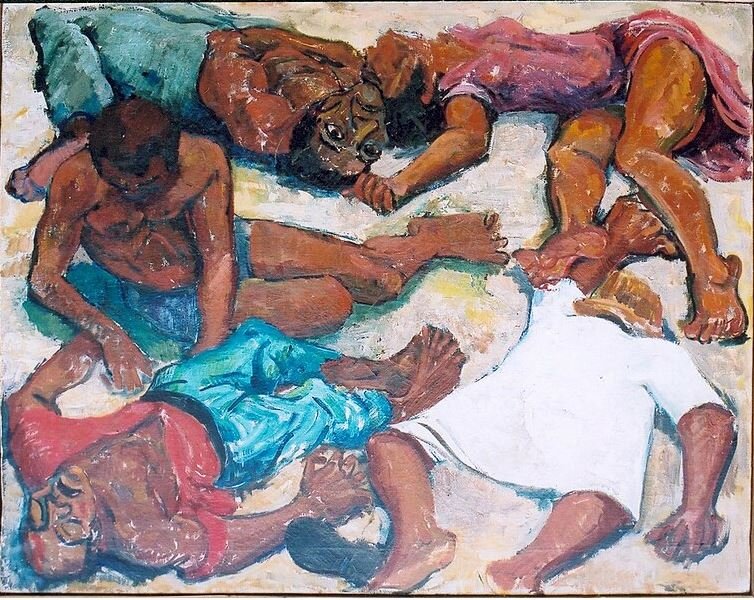
An illustration by Godfrey Rubens, depicting the Sharpeville massacre.
Armed Struggle and Underground Resistance
Umkhonto we Sizwe (MK) and Sabotage Campaigns
Following the Sharpeville Massacre, the ANC established its military wing, Umkhonto we Sizwe (MK), in 1961. Led by Nelson Mandela, MK initiated sabotage campaigns targeting government infrastructure such as power plants and police stations. The goal was to weaken the apartheid regime without causing mass casualties. However, the state cracked down harshly, arresting many MK leaders, including Mandela in 1962, leading to the Rivonia Trial (1963–1964) and life sentences for key figures.
International Support and Exile Operations
With its leadership imprisoned or exiled, the ANC operated from bases in Zambia, Tanzania, and Angola. The Soviet Union, Cuba, and other anti-colonial nations provided military training and financial support. The ANC also engaged in diplomatic efforts to secure sanctions against South Africa.
Youth Movements and the Soweto Uprising
In the late 1960s, the Black Consciousness Movement (BCM), led by Steve Biko, gained momentum. The movement encouraged black South Africans to embrace their identity and reject white supremacy. BCM inspired a new generation of activists and mobilized students against apartheid.
The apartheid government’s decision to enforce Afrikaans as the medium of instruction in black schools triggered the Soweto Uprising on June 16, 1976. Thousands of students protested, and police responded with gunfire, killing hundreds. The uprising marked a turning point in the struggle, inspiring increased resistance and drawing global attention to the brutality of apartheid.

Steve Biko
Trade Unions and Economic Resistance
During the 1970s and 1980s, black trade unions played a crucial role in anti-apartheid resistance. Organizations like the Congress of South African Trade Unions (COSATU) led strikes that disrupted key industries, weakening the apartheid economy. Consumer boycotts targeted white-owned businesses that upheld apartheid policies.
Founded in 1983, the United Democratic Front (UDF) brought together over 400 anti-apartheid organizations, advocating for political rights and mobilizing grassroots activism. The UDF helped organize protests, boycotts, and defiance campaigns, further destabilizing the apartheid regime.
Trade unions, particularly the Congress of South African Trade Unions (COSATU), organized massive worker strikes and boycotts, crippling the economy and pressuring the government to reform.
International Pressure and Sanctions
By the 1980s, international pressure against apartheid intensified. Countries imposed trade embargoes, withdrew investments, and cut diplomatic ties. The United Nations declared apartheid a crime against humanity, and institutions like the Commonwealth and the European Economic Community (EEC) imposed sanctions.
South Africa faced isolation in sports and culture, being banned from events like the Olympics and FIFA World Cup. International artists and musicians refused to perform in the country, further marginalizing the apartheid regime.
Negotiations and the End of Apartheid
In 1989, F. W. de Klerk became President of South Africa and initiated reforms, recognizing that apartheid was unsustainable. In 1990, he lifted bans on the ANC and PAC and released Nelson Mandela after 27 years in prison. Talks began between the government and opposition groups to dismantle apartheid.
Negotiations led to the drafting of a new constitution, culminating in South Africa’s first multiracial elections on April 27, 1994. The ANC won with a majority, and Nelson Mandela became the country’s first black president, marking the official end of apartheid.
Questions and Answers
What was apartheid and how was it opposed?
Apartheid was a system of institutionalized racial segregation in South Africa, implemented by the National Party in 1948. It was opposed through passive resistance, civil disobedience, mass protests, armed struggle, and international sanctions.
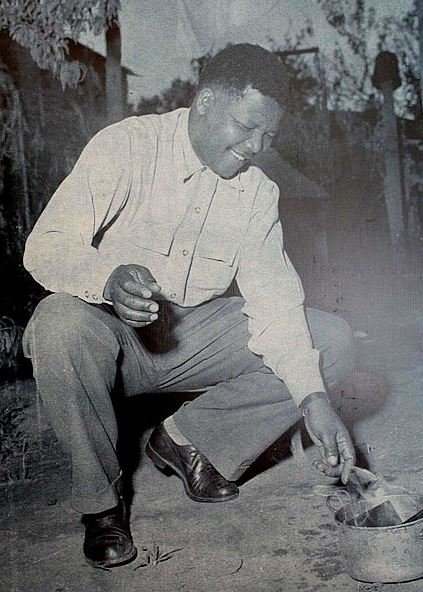
A 1960 image of Nelson Mandela burning his passbook.
What role did the African National Congress (ANC) play in opposing apartheid?
The ANC led anti-apartheid efforts, initially through nonviolent protests like the Defiance Campaign, and later through armed resistance via its military wing, uMkhonto we Sizwe (MK).
How did the Sharpeville Massacre change the anti-apartheid movement?
The 1960 Sharpeville Massacre, where police killed 69 protestors, led to the banning of the ANC and PAC, prompting both groups to adopt armed resistance.
The 1976 Soweto Uprising, led by students protesting against Afrikaans-language education, resulted in brutal police repression, radicalizing youth and strengthening resistance movements.
How did international pressure contribute to ending apartheid?
Economic sanctions, diplomatic isolation, and cultural boycotts from the international community weakened the apartheid regime and pushed it towards negotiations.

A sign restriction during apartheid.
What was the role of the United Democratic Front (UDF)?
Formed in 1983, the UDF united various anti-apartheid groups, mobilizing mass resistance against apartheid laws and the Tricameral Parliament.
How did the apartheid government respond to resistance?
The government used detention without trial, bannings, censorship, and state violence, including declaring states of emergency in the 1980s.
When did negotiations to end apartheid begin?
Secret talks began in 1987, and in 1990, President F.W. de Klerk lifted bans on the ANC and PAC, releasing Nelson Mandela and initiating formal negotiations.
What was the significance of the 1994 election?
The 1994 South Africa election was the first multiracial democratic election in South Africa, marking the official end of apartheid and bringing Nelson Mandela to power.
How did the Black Consciousness Movement (BCM) influence resistance?
Founded by Steve Biko, the BCM emphasized psychological liberation, black pride, and mobilization against apartheid, inspiring student movements and protests.

Apartheid in South Africa
How did women contribute to the anti-apartheid movement?
Women led protests, including the 1956 anti-pass laws march, and played key roles in organizations like the ANC Women’s League and the Federation of South African Women.
What was the Mass Democratic Movement (MDM)?
Formed in 1989, the MDM coordinated peaceful protests, civil disobedience, and anti-apartheid campaigns that further eroded the government’s control.
How did white South Africans oppose apartheid?
Some white South Africans, such as Helen Suzman and Harry Schwarz, opposed apartheid through legal and political means, while others engaged in sabotage and protests.
What was the impact of the Truth and Reconciliation Commission (TRC)?
Established in 1995, the TRC investigated human rights violations under apartheid, promoting truth-telling and reconciliation for victims and perpetrators.





