Apepi: The Hyksos ruler of Lower Egypt
Apepi was one of the longest-reigning and most influential Hyksos rulers of Egypt. While he initially maintained peaceful relations with the native Thebans, hostilities eventually led to his dynasty’s decline.
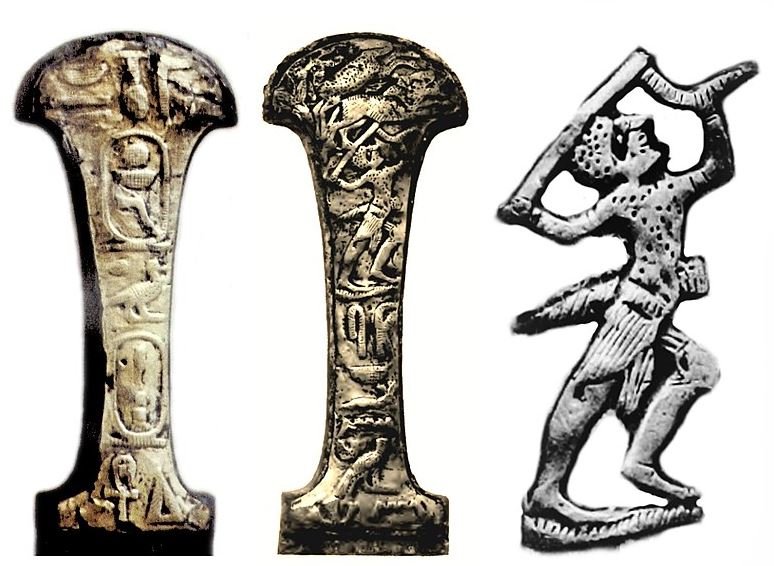
A soldier’s electrum dagger hilt from the reign of Hyksos Pharaoh Apepi, depicting him wielding a short bow and sword while hunting.
Summary
Apepi (also known as Ipepi or Apophis) was one of the most prominent rulers of the Hyksos, a dynasty of foreign kings who controlled Lower Egypt during the Second Intermediate Period (c. 1700-1555). He reigned during the 15th Dynasty, primarily in the 16th century BC. According to the Turin Canon of Kings, his rule lasted for approximately 40 years. Though he officially governed only Lower Egypt, he exerted influence over much of the country during the early part of his reign. However, his authority was gradually challenged by the Theban 17th Dynasty, which ultimately led to the expulsion of the Hyksos from Egypt after his death.
Titles and Praenomina
Apepi used multiple throne names throughout his reign, signifying different phases of his rule. These included:
- Nebkhepeshre (“Re is the Lord of Strength”) – his first prenomen.
- Aaqenenre (“The Strength of Re is Great”) – adopted in the middle of his reign.
- Aauserre (meaning similar to Aaqenenre) – used in the final decade of his rule.
Initially, scholars believed that there were two Hyksos rulers named Apepi, but it is now widely accepted that he was a single individual who changed his royal titles over time. His Horus name, Shetep-tawy, meaning “He who pacifies the Two Lands,” is attested in inscriptions from Bubastis and on an offering table.
Reign and Political Influence
Apepi came to power following the death of Khyan, his predecessor, who had intended his son, Yanassi, to inherit the throne. However, Apepi appears to have taken control instead. His rule was marked by both military dominance and strategic diplomacy, especially with the native Egyptian rulers of Thebes.
Initially, Apepi maintained peaceful relations with the 17th Dynasty, engaging in trade and coexisting with the Theban rulers. However, tensions eventually escalated, leading to conflicts that contributed to the Hyksos’ downfall.
Despite his power, Apepi did not focus on large-scale construction projects. Instead, he usurped monuments from previous rulers by inscribing his name over statues and sphinxes, including those of Amenemhat II and Imyremeshaw.
Relationship with the 17th Dynasty and Conflict
During the early years of Apepi’s rule, he maintained trade relations with the Theban rulers to the south. However, this fragile peace eventually broke down, leading to open hostilities.
Kamose, the last king of the 17th Dynasty, launched military campaigns against the Hyksos and referred to Apepi as the “Chieftain of Retjenu,” implying a Canaanite origin. Although Kamose died before completing the expulsion of the Hyksos, the war against them continued under Ahmose I, who ultimately succeeded in driving them out of Egypt.
Apepi is believed to have ruled longer than Kamose but did not survive to witness the final defeat of his people. His successor, Khamudi, was the last Hyksos ruler and was ultimately overthrown by Ahmose I, who established the 18th Dynasty and ushered in the New Kingdom.
Religious Policies
Apepi is notable for his devotion to the god Seth, whom he seemingly worshipped exclusively. A later Ramesside-era text records that “King Apophis chose for his Lord the god Seth. He didn’t worship any other deity in the whole land except Seth.”
This monolatric practice has been interpreted by some scholars as an early example of exclusive devotion to a single god, possibly foreshadowing Akhenaten’s later worship of Aten. However, it is likely that Seth, a deity associated with chaos and the desert, was simply favored by the Hyksos due to his connections with their homeland in the Levant.
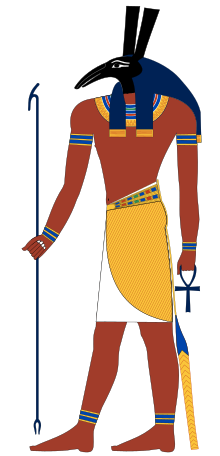
Seth, also known as the Lord of the Red Land, is the god of deserts, storms, strife, disorder, violence, and foreigners in ancient Egyptian religion.
Apepi’s religious devotion to Seth, political maneuvering, and eventual conflict with the Thebans made him a key figure in Egyptian history.
READ ALSO: 10 Most Revered Gods and Goddesses in Ancient Egypt
Extent of Control Over Upper Egypt
A long-standing debate in Egyptology concerns whether Apepi ever ruled Upper Egypt. Several artifacts bearing his name have been found in Thebes and other Upper Egyptian locations, including a dagger, an offering table, and a stone vessel fragment. However, these items may have been acquired through trade rather than direct rule.
One of the strongest pieces of evidence suggesting Hyksos control over Upper Egypt is a block inscribed with Apepi’s name found at Gebelein. Some scholars argue that this block was brought there after the Hyksos capital, Avaris, was sacked by the Thebans, meaning it does not necessarily prove Apepi’s reign extended that far south.
Historical Records and Artifacts
Apepi’s reign is documented in several sources, including:
- The Rhind Mathematical Papyrus, which is dated to his 33rd regnal year.
- The Turin King List, which assigns 40+ years to a Hyksos ruler believed to be Apepi.
- A scarab bearing his prenomen, discovered in Tell el-Ajjul in the Gaza Strip, cataloged by Flinders Petrie in 1933.
These records confirm his long reign and extensive influence.
Family and Successors
Apepi had at least two known sisters, Tani and Ziwat. Tani is mentioned on a shrine door at Avaris and on an offering table stand, while Ziwat’s name appears on a bowl found in Spain, suggesting potential trade or diplomatic connections.
A prince named Apepi, recorded on a Berlin seal, was likely his son. He also had a daughter, Herit, whose vase was found in a Theban tomb. Some scholars speculate she may have been married to a Theban king, possibly as part of a diplomatic alliance, though it is also possible that the vase was simply a looted object taken from Avaris after the Hyksos were expelled.
End of Hyksos Rule and Legacy
Apepi’s rule marked the peak of Hyksos dominance in Egypt, but it was also the beginning of their downfall. Though he managed to maintain control over much of Lower Egypt for decades, the Theban resistance gradually weakened his grip. Following his death, his successor, Khamudi, struggled to hold onto power as Ahmose I continued the war against the Hyksos. Around 1540 BC, Ahmose successfully captured Avaris and expelled the Hyksos from Egypt, ending their rule and beginning the 18th Dynasty.
Apepi’s legacy is largely shaped by his role as a foreign ruler in Egypt and his religious devotion to Seth. His reign is remembered both for the military struggles with the Thebans and his unique place in the Second Intermediate Period as the last powerful Hyksos king.
Frequently Asked Questions
How did Apepi maintain power in Egypt?
Although officially ruling Lower Egypt, he dominated most of the country early in his reign and maintained peaceful trade relations with the Theban Seventeenth Dynasty.

A beetle-shaped artifact inscribed with the last royal name of Apepi.
What were Apepi’s throne names?
He used three praenomina: Nebkhepeshre (“Re is the Lord of Strength”), Aaqenenre, and Aauserre, with the latter two meaning “The strength of Re is great.”
Did Apepi build monuments?
Rather than constructing his own, he usurped monuments from previous rulers, including sphinxes of Amenemhat II and statues of Imyremeshaw.

Was Apepi a monotheist?
Ramesside records suggest he exclusively worshipped Seth, which some scholars interpret as a later condemnation of Akhenaten’s monotheism.
Did Apepi control Upper Egypt?
There is no definitive evidence; objects with his name found in Thebes may have been traded or taken as loot after the Hyksos defeat.
How did Apepi’s rule end?
He was succeeded by Khamudi, the last Hyksos king, before Ahmose I expelled the Hyksos and established the 18th Dynasty.
Did Apepi have family ties to Thebes?
His daughter, Herit, may have married a Theban king, though her belongings could have been taken as war spoils after Avaris fell.





