Lower Egypt: History and Major Facts
Lower Egypt, known as Miṣr as-Suflā in Arabic and Tsakhet in Coptic, represents the northernmost region of ancient Egypt. Encompassing the fertile Nile Delta between Upper Egypt and the Mediterranean...

Lower Egypt, known as Miṣr as-Suflā in Arabic and Tsakhet in Coptic, represents the northernmost region of ancient Egypt. Encompassing the fertile Nile Delta between Upper Egypt and the Mediterranean...
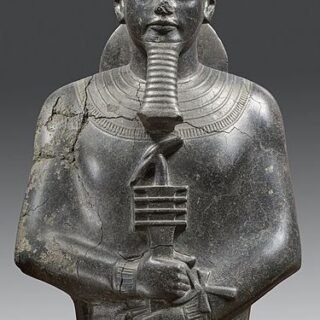
Ptah was an ancient Egyptian deity worshiped from the Early Dynastic Period (c. 3100 BCE) through to the Roman period. As a result, he holds a distinguished place in not just...

Throughout history, cities have been the epicenters of power, culture, and civilization, acting as hubs for trade, governance, and intellectual discourse. The ancient world, spanning from the cradle of civilization...

Menes was the mighty ruler who according to legend united Upper and Lower Egypt during the Early Dynastic Period of ancient Egypt. Owing to this, he is generally regarded by...

Egypt’s oldest known stone pyramid, the Step Pyramid of Djoser to this day remains one of the most spectacular archaeological structures in the world. Built about 4,700 years ago, the...

Majority of ancient Egyptian cities that thrived economically and culturally usually had one thing in common: the Nile River. The Nile, the longest river in the world, played an important...





