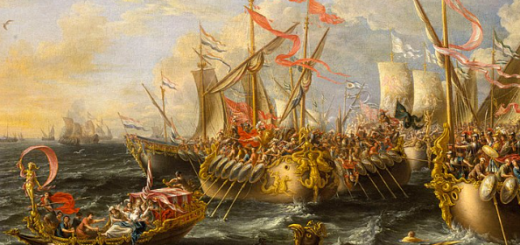
The Battle of Telamon (225 BCE)
The Battle of Telamon, fought in 225 BCE, was a pivotal confrontation between the Roman Republic and the Gallic tribes of northern Italy. The battle marked the culmination of years of tension and warfare between the Romans and the Gauls, culminating in a decisive Roman victory that secured Roman dominance in northern Italy and paved the way for further Roman expansion into the region. This battle was a critical turning point that reduced the threat posed by the Gallic tribes and helped consolidate Roman hegemony over the Italian Peninsula.
The battle took place near the town of Telamon (modern-day Talamone) in Etruria and involved a complex sequence of maneuvers that resulted in a double-envelopment of the Gallic forces. This battle not only demonstrated Roman military superiority but also highlighted the effectiveness of Roman strategic planning and coordination between multiple Roman armies.
Background and Prelude to the Battle
Roman-Gallic Relations and Rising Tensions
The Romans had a long and tumultuous history with the Gallic tribes, dating back to the early days of the Republic. The Gallic sack of Rome in 390 BCE by the Senones left an indelible mark on Roman memory and shaped their policy towards the Gauls for centuries. Although the Romans had gradually expanded their influence northward, they were still wary of the Gallic tribes who occupied the Po Valley, an agriculturally rich and strategically important region.
Throughout the 3rd century BCE, the Romans had been consolidating their control over central Italy and extending their reach into northern Italy. However, the Gallic tribes, particularly the Boii, Insubres, and Taurini, viewed Roman encroachment with hostility. These tribes formed a confederation to resist Roman expansion and sought to defend their territories through military force.

A view of the hills of Talamone, the site were the battle took place
The Gallic Alliance and Mobilization
By 225 BCE, tensions had reached a boiling point. The Boii and Insubres, who had suffered territorial losses to the Romans, sought to prevent further Roman advances. To bolster their strength, they forged alliances with other Gallic tribes, including the Taurini and Gaesatae. The Gaesatae, a group of mercenary warriors from beyond the Alps, were renowned for their ferocity in battle and were considered a formidable addition to the Gallic coalition.
The Gallic alliance amassed a force estimated at over 50,000 warriors. Their objective was to invade Roman territory, ravage the countryside, and threaten the heartland of the Republic. This invasion aimed to force the Romans to abandon their expansionist ambitions in northern Italy.
Roman Response and Military Preparations
The Roman Senate, recognizing the gravity of the situation, responded swiftly. Consuls Lucius Aemilius Papus and Gaius Atilius Regulus were tasked with assembling and leading Roman forces to counter the Gallic threat. The Romans mobilized a combined force of approximately 70,000 men, including Roman legions and allied contingents from Latin and Etruscan cities.
The Roman strategy involved a two-pronged approach. Lucius Aemilius Papus took command of the main army stationed near Ariminum (modern-day Rimini) to guard against a direct Gallic incursion into Roman territory. Gaius Atilius Regulus, who had been stationed in Sardinia, was recalled with his forces to reinforce the Roman position.
The Invasion and Initial Engagements
Gallic Advance into Etruria
The Gallic forces launched their invasion in the spring of 225 BCE, crossing the Po River and advancing southward into Etruria. Their initial progress was swift and devastating, as they plundered towns and villages, spreading panic throughout the region. The Gallic advance threatened the city of Rome itself, prompting the Roman Senate to hastily deploy additional forces.
Lucius Aemilius Papus moved his army to intercept the Gallic advance, while Gaius Atilius Regulus sailed from Sardinia and landed near Pisa with his army. The two Roman consuls planned to converge on the Gallic forces and trap them between their armies.
Initial Skirmishes and Maneuvering
As the Gallic army advanced deeper into Etruria, they encountered increasing resistance from local militias and Roman garrisons. Although the Gauls continued to plunder and ravage the countryside, their progress slowed as they met organized opposition. The Romans, meanwhile, maneuvered their armies to encircle the Gallic forces and cut off their retreat.
Lucius Aemilius Papus positioned his army to block the Gallic advance southward, while Gaius Atilius Regulus moved to intercept the Gauls from the north. The stage was set for a climactic battle that would determine the fate of northern Italy.
The Battle of Telamon
Location and Terrain
The decisive battle occurred near Telamon, a strategically significant town located along the coast of Etruria. The terrain consisted of rolling hills and open fields, providing ample space for maneuvering large armies. Telamon’s position allowed the Romans to exploit the natural landscape to their advantage, using the hills to conceal their movements and surprise the Gallic forces.
Roman Double-Envelopment Strategy
The key to Roman success at Telamon was their effective use of a double-envelopment strategy, a tactic that involved surrounding and attacking the enemy from multiple directions. Lucius Aemilius Papus and Gaius Atilius Regulus coordinated their movements to achieve this objective.
- Lucius Aemilius Papus’ Position: Papus’ army approached from the south, positioning itself to block the Gallic retreat and confront the main body of the enemy.
- Gaius Atilius Regulus’ Arrival: Regulus’ forces, arriving from the north, cut off the Gallic escape route and occupied the high ground overlooking the battlefield.
Gallic Realization and Reaction
The Gauls realized too late that they were caught in a trap. Their initial confidence, fueled by their numerical superiority and recent successes, quickly turned to desperation as they found themselves surrounded. The Gauls attempted to break out of the encirclement, but the disciplined and coordinated Roman legions held their ground.
The Gallic leaders, including the Gaesatae, encouraged their warriors to fight with ferocity, hoping to smash through the Roman lines and escape the encirclement. However, the Roman forces maintained their formation and absorbed the initial Gallic onslaught.
Main Phase of the Battle
The battle unfolded in a brutal and chaotic melee. The Gauls, known for their aggressive and fearless fighting style, charged the Roman lines with tremendous force. The Gaesatae, in particular, fought with remarkable valor, often engaging the Romans without armor to demonstrate their bravery. However, their lack of protection made them vulnerable to Roman pila (javelins) and disciplined swordplay.
The Romans, fighting in tightly organized formations, withstood the Gallic assault and gradually wore down their opponents. The Roman manipular system, which allowed for flexibility and rotation of fresh troops, proved superior to the disorganized and exhausted Gallic warriors.
The manipular system allowed Roman legions to rotate fresh troops into battle, maintaining pressure on the enemy. The hastati engaged first, followed by the principes and triarii, ensuring a sustained and coordinated assault that overwhelmed the Gauls.
Roman Encirclement and Collapse of the Gallic Lines
As the battle wore on, the Roman double-envelopment succeeded in fully encircling the Gallic army. Trapped and outnumbered, the Gauls were gradually overwhelmed. The Roman forces pressed the attack from all sides, cutting down the remaining Gallic warriors and preventing any chance of escape.
The Gallic lines eventually collapsed, and the battlefield became a scene of carnage. Tens of thousands of Gauls were killed, and the remnants of the Gallic army were either captured or scattered. The Roman victory at Telamon was complete and decisive.
Aftermath and Consequences
The battle resulted in catastrophic losses for the Gallic alliance. Estimates suggest that over 40,000 Gallic warriors were killed, with many others captured or enslaved. The Roman casualties were significantly lower, although the exact numbers are not recorded. The victory at Telamon demonstrated the superiority of Roman military organization and discipline over the chaotic and undisciplined Gallic forces.
The victory at Telamon had far-reaching consequences for the Roman Republic:
- Securing Northern Italy: The defeat of the Gallic coalition eliminated the immediate threat to Rome and secured Roman dominance over northern Italy. The Gallic tribes, demoralized and weakened, were no longer able to mount a significant challenge to Roman authority.
- Expansion into Cisalpine Gaul: Following the victory, the Romans embarked on a systematic campaign to pacify and colonize Cisalpine Gaul (modern northern Italy). Roman colonies were established, and the region was gradually integrated into the Roman political and administrative system.
- Roman Confidence and Military Prestige: The victory at Telamon boosted Roman confidence and enhanced their reputation as a formidable military power. It demonstrated the effectiveness of Roman strategy and tactical flexibility, reinforcing the Republic’s position as the dominant power in the region.
- Suppression of Future Gallic Threats: Although sporadic Gallic uprisings would continue in subsequent years, the defeat at Telamon marked the beginning of the end for Gallic resistance in northern Italy. The Roman grip on the region grew stronger, and future Gallic incursions were met with swift and decisive Roman responses.
Legacy of the Battle of Telamon
The Battle of Telamon highlighted the importance of coordination between multiple armies and the effective use of terrain and strategy. The Roman ability to adapt and innovate on the battlefield would continue to shape their military doctrine and contribute to their success in future campaigns.
The defeat of the Gallic tribes served as a cautionary tale for other enemies of Rome. It demonstrated that even numerically superior forces could be defeated by a well-organized and strategically adept opponent. The lessons learned at Telamon influenced Roman military thinking and informed their approach to subsequent conflicts.
The Battle of Telamon showcased the superiority of Roman military strategy and organization, setting a precedent for future Roman conquests.
The Roman victory at Telamon paved the way for the eventual incorporation of Cisalpine Gaul into the Roman Republic. Over the next several decades, the region was transformed into a Roman province, with Roman settlers and infrastructure replacing the traditional Gallic social and political structures.

Major Provinces and their Annexation Timeline in the Roman Republic
Frequently asked questions about the Battle of Telamon
What was the significance of the Battle of Telamon for the Gallic tribes of northern Italy?
The Battle of Telamon marked the beginning of the end for Gallic power in northern Italy. After their defeat, the Gallic tribes were no longer able to challenge Roman dominance, and their influence in the region declined rapidly.
How did the Romans respond to the Gallic threat before the Battle of Telamon?
The Romans responded by mobilizing a large force of over 140,000 men, with allied contingents from across Italy. They stationed three armies in Etruria, the Adriatic coast, and Sardinia to confront the Gallic advance.
Why did the Boii and other Gallic tribes seek alliances before marching on Rome?
The Boii feared further Roman encroachment into their territories and sought assistance from other Gallic tribes, including the Insubres and the Gaesatae, to counter the growing Roman threat. They promised riches and plunder to the Gaesatae to entice them into the coalition.
What was the initial Gallic strategy during their advance into Etruria?
The Gauls advanced through Etruria, pillaging and plundering along the way. Near Faesulae, they used a clever ruse by moving their infantry at night and leaving their cavalry by the campfires to mislead the Romans, which led to a successful ambush.
How did the arrival of Lucius Aemilius Papus affect the course of the battle?
Lucius Aemilius Papus arrived with his army from the Adriatic coast after the ambush at Faesulae, tipping the balance in favor of the Romans. His arrival prompted the Gauls to retreat, hoping to escape with their plunder.
What led to the decisive confrontation at Cape Telamon?
The Gauls, retreating with their captives and plunder, were unaware that Consul Gaius Atilius Regulus had landed at Pisae and was marching south to intercept them. The two Roman armies trapped the Gallic forces between them near Cape Telamon, leading to the final confrontation.
Why was the Roman strategy at Telamon so effective?
The Romans used a strategic encirclement, trapping the Gallic army between two forces. Regulus secured the high ground while Papus’ army pressed from behind. This double envelopment left the Gauls with no escape, ensuring a decisive Roman victory.
What was the role of the Gaesatae in the battle, and how did they fare?
The Gaesatae, renowned for their valor, fought without armor to display their bravery. However, their lack of protection made them vulnerable to Roman javelins, and they suffered heavy casualties before reaching the Roman lines.
What happened after the Gauls realized they were trapped at Telamon?
After capturing Roman scouts, the Gauls learned that they were surrounded by two Roman armies. Despite their efforts to resist, they were eventually overwhelmed and suffered catastrophic losses, with tens of thousands killed and over 9,000 captured.
What was the fate of the Gallic leaders after the battle?
King Concolitanus was captured, while King Aneroestes, overwhelmed by grief after the defeat, took his own life. The loss of their leaders further demoralized the Gallic forces.
How did the victory at Telamon affect Roman control over northern Italy?
The victory secured Roman dominance over northern Italy and paved the way for the incorporation of Cisalpine Gaul into the Roman Republic. It ensured that no future Gallic coalition could threaten Roman authority.
By eliminating the Gallic threat, the victory at Telamon opened the door for the Roman Republic to expand its influence and establish its supremacy over the Italian Peninsula.
What role did the Roman cavalry play in securing victory at Telamon?
The Roman cavalry, after defeating the Gallic horsemen on the hill, charged down and attacked the Gallic infantry from the flanks. This maneuver collapsed the Gallic lines and sealed their defeat.
How did the Romans treat the Gallic prisoners and plunder after the battle?
The Romans captured over 9,000 Gauls and displayed them as part of Consul Papus’ triumph in Rome. The plunder was returned to its rightful owners, and the lands of the rebellious tribes were devastated to prevent future threats.