Three Kingdoms of Korea
The Three Kingdoms period of Korea, known as Samhan (삼국시대), was a formative era that shaped the cultural, political, and social landscape of Korea. During this period, the Korean Peninsula was divided into three major kingdoms: Goguryeo, Baekje, and Silla. These kingdoms vied for dominance, engaging in numerous conflicts and alliances while simultaneously contributing to the cultural development of the region. Their interactions laid the foundation for the unified Korea that emerged later in history. This period saw the spread of Buddhism, the establishment of strong military and political systems, and the consolidation of Korean identity.

A map showing the Three Kingdoms of Korea.
Background and Foundations
The Three Kingdoms period emerged after the fall of Gojoseon, Korea’s first known state, around 108 BCE. Following its collapse, the Han Dynasty of China established several commanderies on the Korean Peninsula, but these were quickly overtaken by indigenous Korean states. The rise of Goguryeo, Baekje, and Silla began as regional powers consolidated, gradually expanding their territories and absorbing smaller states, such as Buyeo and Gaya.
By the 4th century, these kingdoms had firmly established their borders, with Goguryeo controlling the northern half of the Peninsula and large portions of Manchuria, Baekje occupying the southwest, and Silla in the southeast. Gaya, a confederation of city-states, played a significant role in the southern region before being absorbed by Silla in 562.

Goguryeo: The Military Power
Goguryeo was the most powerful of the Three Kingdoms, with a strong military tradition and a vast territory that spanned both the northern half of the Korean Peninsula and parts of Manchuria. Goguryeo was founded around 37 BCE and quickly expanded its influence, eventually controlling a large portion of the Liaodong Peninsula and even parts of modern-day Manchuria and Inner Mongolia.
Under the leadership of King Gwanggaeto the Great (r. 391–413), Goguryeo reached its zenith, conquering territories as far as the Liaodong Peninsula and northern China. Gwanggaeto’s military campaigns extended Goguryeo’s influence, pushing back Chinese incursions from the Han and Sui Dynasties. By the 5th century, Goguryeo became a dominant force in East Asia, challenging both the Sui and Tang Chinese dynasties.
The kingdom adopted Buddhism as its state religion in 372 CE, which helped cement its cultural ties with China. However, despite its military power, Goguryeo struggled to maintain unity, particularly in the face of growing pressure from both its neighbors and internal division.
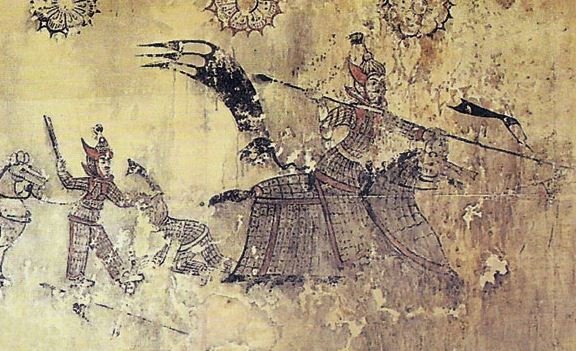
A mural depicting Goguryeo armor
Baekje: The Maritime Power
Baekje was founded in 18 BCE by Onjo, a descendant of Goguryeo’s royal family. The kingdom occupied the southwestern region of the Peninsula, with its capital located near modern Seoul. Baekje’s rise was significantly influenced by its maritime capabilities, making it one of the most important maritime powers in East Asia. The kingdom controlled crucial sea routes and acted as a bridge between the Korean Peninsula and Japan, facilitating the spread of Chinese culture and Buddhism.
Baekje’s strategic location and naval prowess allowed it to trade and establish diplomatic relations with China and Japan. In particular, it played a key role in introducing Buddhism to Japan, with the Baekje emissaries helping to spread both religious and cultural practices to the archipelago. Baekje’s cultural influence extended beyond religion, as it also transmitted Chinese literature, metallurgy, and ceramics to Japan.
Buddhism was introduced in the 4th century and became the state religion in all three kingdoms by the 6th century. It played a major role in the development of art, architecture, and social structures in Korea.
Despite its early successes, Baekje began to decline after a series of defeats at the hands of Goguryeo and Silla. In 660, a joint Silla-Tang army decisively defeated Baekje, leading to its eventual fall. Baekje’s legacy, however, continued to influence the culture of Japan, where many of its innovations were adopted.
Silla: The Diplomatic Genius
Silla, the smallest and weakest of the three kingdoms, faced numerous challenges from its more powerful neighbors. Founded in 57 BCE, Silla was initially a confederation of city-states under the leadership of the Jinhan federation. Unlike Goguryeo and Baekje, Silla’s growth was more gradual, relying heavily on diplomacy and strategic alliances rather than military conquest.
Silla’s fortunes changed in the 6th century when King Jinheung (r. 540–576) strengthened the kingdom’s military and expanded its territory by annexing the Gaya confederacy. Silla’s political strategy was primarily focused on alliances, particularly with Tang China. Through diplomacy, Silla secured assistance from the Tang Dynasty to defeat its rivals, Baekje and Goguryeo.
Silla’s alliance with the Tang allowed it to conquer Baekje in 660 and Goguryeo in 668, effectively unifying the Korean Peninsula for the first time in history. After the fall of Goguryeo, Silla sought to expel Tang forces from the peninsula, eventually achieving full control. Silla’s unification marked the beginning of the Unified Silla period, which lasted until the 10th century.
Religion: The Spread of Buddhism
Buddhism, which originated in India and spread through Central Asia, reached the Korean Peninsula in the 3rd century CE via China and Tibet. The Three Kingdoms embraced Buddhism, with each kingdom adopting it as the state religion at different times: Goguryeo in 372, Baekje in 384, and Silla in 528.
The spread of Buddhism played a crucial role in shaping the culture and society of the Three Kingdoms. It introduced new ideas about ethics, governance, and the afterlife. Monasteries and temples became centers of education and culture, and Buddhist art and architecture flourished during this period. The Goguryeo murals, for example, are famous for their depictions of Buddhist iconography.
Buddhism’s influence extended beyond Korea, especially to Japan. Baekje, in particular, was instrumental in transmitting Buddhist teachings to Japan, where the religion eventually became a major cultural force.
The End of the Three Kingdoms
The Three Kingdoms period came to an end in the 7th century with the unification of the Korean Peninsula under Silla. The unification process was accelerated by Silla’s alliance with Tang China, which helped defeat both Baekje and Goguryeo. The Tang forces initially administered parts of the peninsula, but Silla eventually drove them out, consolidating control over the entire peninsula.
However, the unity achieved by Silla was short-lived. By the late 9th century, internal strife and rebellions weakened the Silla kingdom, leading to its division into the Later Three Kingdoms: Silla, Hubaekje, and Hoseo, with Goryeo eventually emerging as the dominant power in the 10th century.
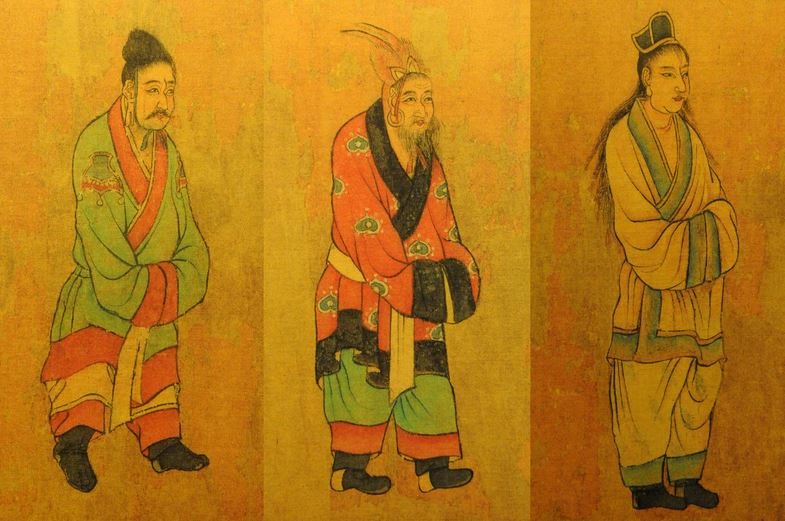
A 7th-century Tang Dynasty painting portrays envoys from the Three Kingdoms of Korea—Baekje, Goguryeo, and Silla.
Legacy of the Three Kingdoms
The Three Kingdoms of Korea laid the foundations for the cultural and political development of Korea. While the kingdoms were often in conflict, they shared many cultural traits, such as language, customs, and religion. The unification of the Korean Peninsula under Silla marked a significant milestone in Korean history, setting the stage for the emergence of the Goryeo Dynasty, which would later become the foundation of modern Korea.
The Three Kingdoms period also contributed to the development of Korean identity, with the Goguryeo, Baekje, and Silla peoples forming the cultural and ethnic foundation of the modern Korean population. The cultural achievements of the period, especially in art, architecture, and Buddhism, left a lasting impact on Korean civilization and continue to be celebrated today.

Frequently Asked Questions
What was the Three Kingdoms period in Korea?
The Three Kingdoms period (Samhan) was a time in Korean history when three kingdoms—Goguryeo, Baekje, and Silla—competed for dominance over the Korean Peninsula. It lasted from the 1st to the 7th century.
What was the geographical extent of the Three Kingdoms?
Goguryeo controlled the northern part of the Korean Peninsula and parts of Manchuria, Baekje occupied the southwest, and Silla was located in the southeast. The island kingdoms of Tamna and Usan were subordinated to Baekje and Silla.
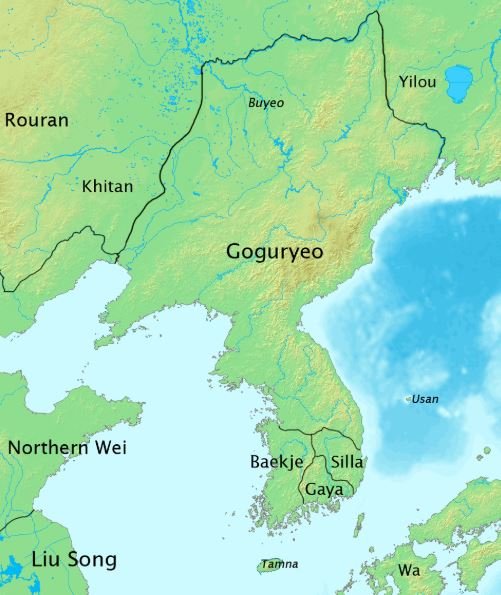
Another map showing the location of the Three Kingdoms
How did the Three Kingdoms influence Korean culture?
The Three Kingdoms shared similar culture and language. They adopted Buddhism, which arrived from India via China and Tibet, and made it the state religion, significantly shaping Korea’s cultural and religious landscape.
How did Goguryeo rise to power?
Goguryeo, founded in 37 BCE, grew through military conquest and expansion, becoming the most powerful of the three kingdoms. Under King Gwanggaeto the Great, Goguryeo controlled much of the northern Korean Peninsula and parts of Manchuria.
What role did Baekje play in East Asia?
Baekje, founded in 18 BCE, was a maritime power that facilitated cultural exchanges, especially with Japan. It introduced Buddhism and various Chinese and Korean technologies, including ceramics, metallurgy, and writing systems, to Japan.
How did Silla manage to unify the Korean Peninsula?
Silla, initially the smallest and weakest kingdom, used strategic alliances, particularly with Tang China, to defeat Baekje and Goguryeo. With the help of Tang forces, Silla unified the Korean Peninsula in 668 but later expelled the Tang to maintain full control.
What led to the decline of the Three Kingdoms?
The decline occurred due to constant warfare, internal strife, and shifting alliances. Silla’s eventual alliance with Tang China led to the fall of Baekje and Goguryeo, but internal divisions weakened Silla, leading to the Later Three Kingdoms period.