The Book of Genesis
Genesis is the first book of the Hebrew Bible and Christian Old Testament, detailing the creation of the world, humanity’s early history, and the origins of the Jewish people.
Summary
The Book of Genesis derived its name from the Greek Génesis meaning “origin” or “beginning”. It is the first book of both the Hebrew Bible and the Christian Old Testament. Its Hebrew name, Bereshit, translates to “In the beginning,” echoing the opening words of the text. Genesis narrates the creation of the world, the early history of humanity, and the origins of the Jewish people, culminating in the establishment of the covenant between God and Israel.
Genesis is part of the Torah, also known as the Pentateuch, the first five books traditionally attributed to Moses. Scholars date its composition to between the 9th and 5th centuries BCE, though some propose later dates. While foundational to both Judaism and Christianity, Genesis has been debated as a mix of historical, mythological, and theological literature.
Structure of Genesis
Genesis is divided into two main sections:
- Primeval History (Chapters 1–11): This part explores universal themes, including the creation, the fall of man, the flood, and the dispersion of nations.
- Ancestral History (Chapters 12–50): It recounts the stories of the patriarchs—Abraham, Isaac, Jacob, and Joseph—and the establishment of the covenant between God and the Israelites.
The recurring phrase elleh toledot (“these are the generations”) serves as a structural marker, transitioning between major sections and genealogies.
The Primeval History
The Creation (Genesis 1–2)
The first two chapters offer two distinct creation narratives. The first describes the systematic creation of the universe by Elohim over six days, culminating in the Sabbath. The second narrative focuses on Yahweh Elohim’s personal relationship with humans, detailing the creation of Adam and Eve and their placement in the Garden of Eden.
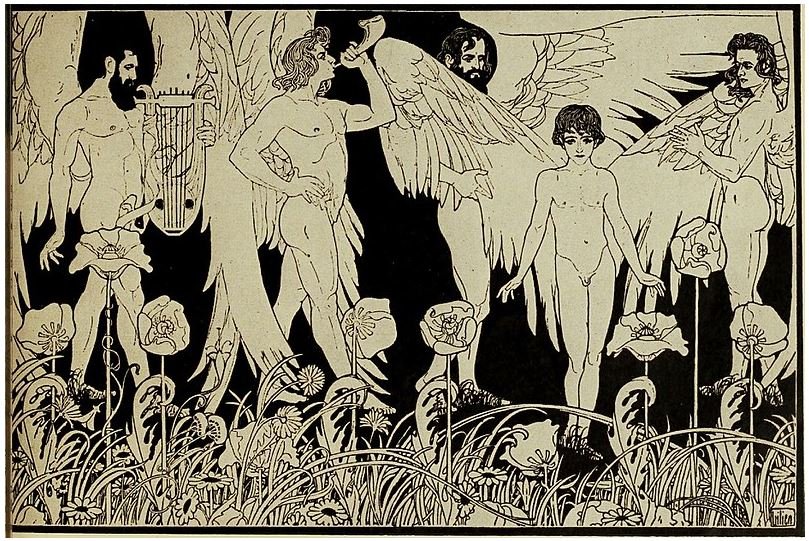
An illustration entitled “The Creation of Man” by Polish-Jewish artist Ephraim Moses Lilien.
The Fall and Its Consequences (Genesis 3–4)
Genesis 3 describes humanity’s first act of disobedience: Adam and Eve eat the forbidden fruit, influenced by a cunning serpent. This act results in their expulsion from Eden and the introduction of mortality and suffering. Genesis 4 continues with the story of Cain and Abel, illustrating the spread of sin as Cain murders his brother out of jealousy.
The Flood Narrative (Genesis 6–9)
Humanity’s increasing wickedness prompts God to cleanse the earth with a flood, sparing only the righteous Noah, his family, and selected animals. After the floodwaters recede, God establishes a covenant with Noah, symbolized by the rainbow, promising never to destroy the earth by flood again.
The Tower of Babel (Genesis 11)
The narrative of the Tower of Babel explains the origin of diverse languages and nations. Humanity’s pride and attempt to build a tower to the heavens result in God scattering them across the earth.
The Ancestral History
The Call of Abraham (Genesis 12–25)
Abraham, originally Abram, is called by God to leave his homeland and journey to Canaan. God promises to make Abraham the father of a great nation. The covenant is solidified with promises of descendants, land, and blessings. Key episodes include the birth of Isaac, the near-sacrifice of Isaac, and the death of Sarah.
Isaac and Jacob (Genesis 26–36)
Isaac’s narrative is relatively brief, serving as a bridge between Abraham and Jacob. Jacob, renamed Israel, becomes the father of the twelve tribes of Israel. His story includes his deception of Esau, his marriages to Leah and Rachel, and his wrestling with an angel.
The Story of Joseph (Genesis 37–50)
Joseph, Jacob’s favored son, is sold into slavery by his jealous brothers. Despite hardships, including imprisonment, Joseph rises to power in Egypt. His wisdom during a famine leads to the reunion and reconciliation of his family, setting the stage for the Israelites’ settlement in Egypt.
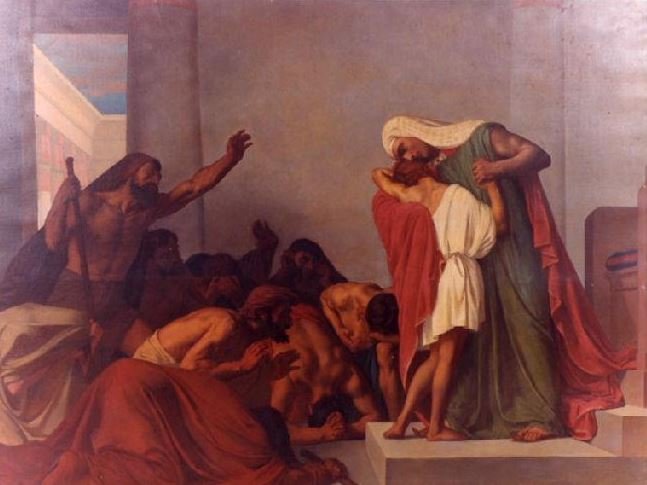
An artwork entitled “Joseph Recognized by His Brothers” depicts the story of Joseph.
Themes in Genesis
Genesis presents God as the sovereign creator who brings order from chaos. The structured creation narrative emphasizes divine intentionality and the inherent goodness of the created world.
The theme of covenant is central to Genesis. From Noah to Abraham, the covenants signify God’s commitment to humanity and His chosen people. These promises include land, descendants, and blessings, which become foundational to the identity of Israel.
Genesis portrays the pervasiveness of sin and God’s willingness to redeem humanity. Stories like the fall, the flood, and the Tower of Babel highlight human failings, while God’s covenants and the preservation of a faithful remnant underscore divine mercy.
The narratives of Genesis often explore the tension between human actions and divine plans. Characters like Abraham, Jacob, and Joseph navigate challenges that test their faith, illustrating how God’s purposes prevail despite human flaws.
Authorship and Composition
Genesis is traditionally attributed to Moses, but modern scholarship points to a composite authorship. The Documentary Hypothesis identifies four main sources: the Yahwist (J), Elohist (E), Deuteronomist (D), and Priestly (P). These sources, written over centuries, were later redacted into a unified text.
Debates about authorship highlight the presence of duplicate narratives and differing names for God, such as the two creation accounts and the varying uses of Yahweh and Elohim. Scholars argue that these sources reflect different theological and historical contexts.
Genre and Literary Style
Genesis belongs to the ancient Near Eastern genre of “antiquities,” blending myth, legend, and genealogy to connect the present to a distant, often idealized past. This genre served to validate cultural and religious traditions.
The genealogical framework of Genesis ties individual stories into a cohesive narrative, emphasizing continuity and divine purpose. The text’s literary artistry is evident in its use of symbolism, repetition, and parallelism.
Theological Significance in Judaism and Christianity
In Judaism, Genesis lays the foundation for understanding the covenantal relationship between God and Israel. It introduces key concepts such as chosenness, the Promised Land, and monotheism.
For Christians, Genesis is integral to the narrative of salvation history. The fall of man in Genesis 3 is seen as the origin of sin, with redemption achieved through Jesus Christ. The Abrahamic covenant is interpreted as a precursor to the new covenant.
Historical and Cultural Context
Genesis reflects the cultural and religious milieu of the ancient Near East. Parallels with Mesopotamian texts, such as the Epic of Gilgamesh and Enuma Elish, suggest shared traditions and influences. However, Genesis also distinguishes itself through its monotheistic worldview and emphasis on covenant.
The composition of Genesis likely coincided with significant historical events, such as the Babylonian Exile and Persian rule, which shaped its themes of identity, land, and divine promise.
Variants and Textual Traditions
The text of Genesis exists in multiple manuscript traditions, including the Masoretic Text, the Samaritan Pentateuch, and the Septuagint. These variations reflect the transmission and reception of Genesis across different communities.
Fragments of Genesis found among the Dead Sea Scrolls provide insights into its textual history and early interpretations. These manuscripts, though incomplete, affirm the antiquity and widespread use of Genesis.
Interpretive Approaches
Genesis has been interpreted both literally and figuratively. Literal readings dominated until the rise of modern science, which challenged traditional views of creation and history. Figurative interpretations focus on the theological and moral messages rather than historical accuracy.
Genesis has shaped religious beliefs, cultural narratives, and scientific debates, particularly regarding creation, human origins, and morality.
The historical-critical approach examines Genesis in its historical and literary context, seeking to uncover its sources, composition, and original audience.
Theological interpretations emphasize the enduring relevance of Genesis for understanding God, humanity, and the world. Themes like creation, covenant, and redemption resonate across religious traditions.
Genesis in Religious Practice
In Judaism, Genesis is read annually as part of the Torah cycle. Weekly Torah portions (parashiyot) divide the text into manageable sections, facilitating communal study and worship.
Christian traditions often draw on Genesis for theological reflection, particularly on topics like creation, sin, and covenant. Its stories are frequently cited in liturgy, sermons, and devotional practices.
Frequently Asked Questions
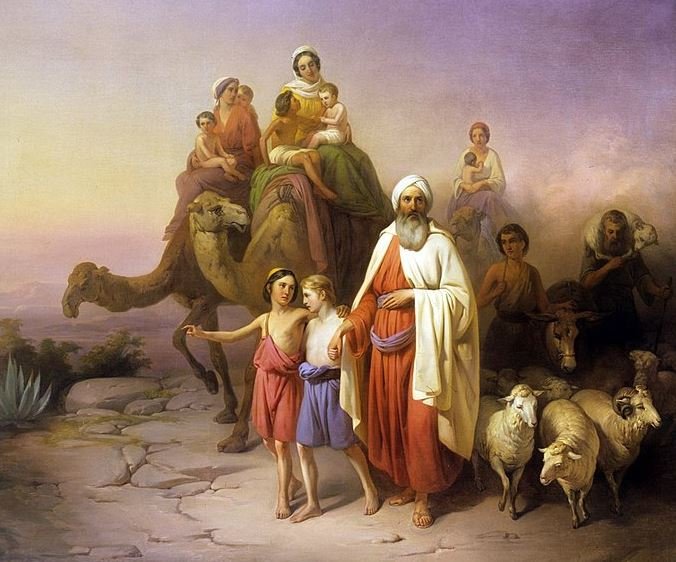
An illustration titled “Abraham’s Journey from Ur to Canaan” by Hungarian artist József Molnár.
Who is traditionally credited with authoring Genesis?
Jewish and Christian tradition credits Moses with writing Genesis, though modern scholarship suggests it was composed by multiple authors over centuries.
How is the Book of Genesis structured?
It has two main sections: the primeval history (chapters 1–11) addressing creation and early humanity,and the ancestral history (chapters 12–50) focusing on the patriarchs Abraham, Isaac, Jacob, and Joseph.
What are the main themes of Genesis?
Key themes include God’s covenants with humanity, the promise of land and descendants to Abraham’s lineage, and the idea of Israel as God’s chosen people.
What are the sources behind Genesis?
According to the documentary hypothesis, Genesis was derived from four main sources: Yahwist (J), Elohist (E), Deuteronomist (D), and Priestly (P), later compiled into its current form.
How does Genesis portray God’s relationship with humanity?
Genesis depicts God as both a creator and covenant-maker, responding to human sin with judgment, mercy, and promises for redemption.
What role does deception play in Genesis?
Deception is a recurring theme, with characters like Jacob and Abraham using trickery to navigate challenges, reflecting human vulnerability and resilience.