Signing of the United States Constitution
The signing of the United States Constitution on September 17, 1787, marked the culmination of a pivotal process in American history that began earlier that same year. Held at Independence Hall in Philadelphia, the Constitutional Convention gathered 55 delegates from twelve of the thirteen states to address the pressing issues facing the fledgling country under the Articles of Confederation.
These delegates worked for nearly four months, debating, drafting, and refining a new governing document that would replace the Articles and establish a more robust and adaptable national framework.
Rhode Island, distrustful of a stronger central government, chose not to participate in the convention, a reflection of the tension between state and national power that pervaded the convention’s deliberations.
The convention began in May 1787, with delegates like George Washington, James Madison, Alexander Hamilton, and Benjamin Franklin playing critical roles in the proceedings.
Washington was chosen to preside over the convention, lending his considerable reputation and influence to the effort.
Madison, who came with a well-prepared plan for a new government (later known as the Virginia Plan), emerged as one of the most influential figures in shaping the final document.
Hamilton, known for his advocacy of a strong central government, and Franklin, revered for his wisdom and experience, also contributed significantly to the debates and compromises that shaped the Constitution.
READ MORE: History and major facts about the Thirteen American Colonies

Image: United States coat of arms
The Need for a New Constitution
The Articles of Confederation, America’s first governing document, proved inadequate in addressing the needs of a growing and diverse nation. The Articles created a loose confederation of sovereign states with a weak central government that lacked the power to tax, regulate commerce, or enforce laws. This system led to widespread discontent, financial instability, and an inability to effectively manage both domestic and foreign affairs.
For example, Shays’ Rebellion, an uprising of discontented farmers in Massachusetts in 1786, highlighted the weaknesses of the Articles and demonstrated the need for a stronger national government.
By 1787, it became clear to many that reforming the Articles was insufficient and that an entirely new framework was needed. The Constitutional Convention was called to address these issues and to create a new system of government that could unite the states under a more effective federal structure.
The Drafting Process
The drafting of the Constitution was an intricate process that required intense debate and compromise. The convention was divided over several key issues, including the structure of the legislature, the powers of the federal government, the role of the executive, and the question of slavery.
One of the first major issues to arise was the representation of states in the national legislature. Larger states, like Virginia, wanted representation to be based on population, while smaller states, like New Jersey, feared that they would be overwhelmed and proposed equal representation for all states. This debate resulted in the Great Compromise (or Connecticut Compromise), which created a bicameral legislature with proportional representation in the House of Representatives and equal representation in the Senate.
Another contentious issue was the power of the executive branch. Many delegates feared the creation of a new monarchy and were wary of granting too much power to a single individual. Ultimately, they agreed on a system of checks and balances, with the president elected indirectly through the Electoral College and subject to the powers of Congress and the judiciary.
The issue of slavery also divided the delegates. Southern states, whose economies were heavily dependent on slavery, wanted to ensure that their enslaved populations would be counted for purposes of representation but not for taxation. Northern states, where slavery was less central, opposed this. The resulting Three-Fifths Compromise allowed three-fifths of the enslaved population to be counted for both representation and taxation purposes. This compromise, along with provisions protecting the slave trade for twenty years, temporarily resolved the issue but left it as a source of tension that would eventually lead to the Civil War (1861-1865).
Throughout the convention, delegates worked to balance the need for a strong central government with the desire to protect individual states’ rights. The result was a federal system in which power was divided between the national government and the states, with certain powers reserved for each.
The Committee of Detail and the Committee of Style
On July 24, 1787, the Constitutional Convention appointed the Committee of Detail, which was responsible for compiling the resolutions passed by the convention into a cohesive draft. This committee, composed of five members, including John Rutledge, Edmund Randolph, Oliver Ellsworth, Nathaniel Gorham, and James Wilson, produced a draft that contained 23 articles and a preamble. While the draft reflected the decisions made by the convention, it also introduced some rewording and organizational changes to clarify the document.
After further discussions and refinements, the convention established the Committee of Style and Arrangement on September 8, 1787. This committee, which included Alexander Hamilton, William Johnson, Rufus King, James Madison, and Gouverneur Morris, was tasked with condensing and polishing the draft into its final form.

Founding Father James Madison
Gouverneur Morris is widely credited with writing much of the final text, including the famous preamble, “We the People of the United States, in order to form a more perfect Union, establish Justice, insure domestic Tranquility, provide for the common defense, promote the general Welfare, and secure the Blessings of Liberty to ourselves and our Posterity, do ordain and establish this Constitution for the United States of America.”
The final draft, presented to the convention on September 12, 1787, reduced the 23 articles to seven and included a preamble and a closing statement.
The document’s wording was crafted to reflect both the broad goals of the new government and the compromises made during the convention. It was designed to be a flexible framework that could adapt to changing circumstances while preserving the fundamental principles of federalism and republican government.

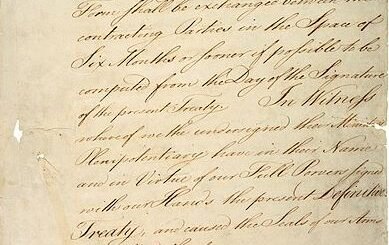
The United States Constitution was signed on September 17, 1787, at Independence Hall in Philadelphia.
The Signing Ceremony
On September 17, 1787, the final session of the Constitutional Convention was held, and the delegates gathered to sign the newly completed Constitution.
The signing took place in Independence Hall, where the Declaration of Independence had been signed 11 years earlier. Jacob Shallus, an assistant clerk of the Pennsylvania State Assembly, engrossed the final document, meaning he prepared it in a clear, final form for the delegates to sign.
A total of 39 delegates signed the Constitution, while three delegates—Elbridge Gerry of Massachusetts, Edmund Randolph of Virginia, and George Mason of Virginia—refused to sign. Gerry, Randolph, and Mason had concerns about the lack of a bill of rights and the potential for the federal government to become too powerful. Despite their refusal, the majority of delegates supported the final document.
Benjamin Franklin, one of the oldest and most respected members of the convention, delivered a closing speech, acknowledging that while the Constitution was not perfect, it was the best that could be achieved under the circumstances. His pragmatic endorsement helped sway many delegates to support the document, even if they had reservations about specific provisions.
Franklin’s speech was read aloud by James Wilson, as Franklin’s health prevented him from delivering it himself. In his remarks, Franklin famously stated, “There are several parts of this Constitution which I do not at present approve, but I am not sure I shall never approve them.” He concluded that the Constitution should be supported because it was unlikely that a better one could be produced, and it provided a solid foundation for the new government.
The signatures of the delegates were arranged by state, starting with George Washington, the president of the convention, who signed first. Washington’s leadership had been critical in guiding the convention to a successful conclusion, and his signature at the top of the document symbolized his endorsement of the new Constitution.

Image: George Washington (1732 – 1799)
The Closing Endorsement and the Role of the Signers
The closing endorsement of the Constitution, which followed the seven articles, serves as a record of the delegates’ approval of the final document. It does not grant any specific powers to the federal government or impose limitations, but it provides essential documentation of the Constitution’s legitimacy. It records who signed the Constitution, when and where they signed, and the role they played in its creation.
William Jackson, the secretary of the convention, also signed the Constitution, though he was not a delegate. His signature authenticated the document and verified certain handwritten corrections made to the text.
One notable detail about the signing is that the delegates signed the Constitution as individual witnesses to the unanimous consent of the states present, rather than as representatives of their respective states. This was an important distinction, as it emphasized the unity of the states in creating the new government, despite the fact that not all states had participated in the convention. Rhode Island, for instance, had refused to send delegates to the convention, yet the Constitution was presented as the product of a unified group.
The delegates’ signatures were grouped by state, starting with New Hampshire in the north and proceeding southward to Georgia. This geographical arrangement symbolized the unity of the states from different regions in agreeing to the new Constitution. However, due to space limitations, the delegates eventually began a second column of signatures on the left side of the page.

The final endorsement’s language was crafted by Gouverneur Morris and presented by Benjamin Franklin. The language was intentionally vague. This was a strategic move to gain unanimous support, particularly from dissenting delegates. Image: Benjamin Franklin
The Aftermath and Ratification Process
After the signing ceremony, the Constitution was sent to Congress, where it was approved and forwarded to the states for ratification.
The ratification process proved to be contentious, as many states were divided over whether to accept the new Constitution.
Some opponents, known as Anti-Federalists, were concerned about the potential for the federal government to infringe on states’ rights and individual liberties. They argued that the Constitution gave too much power to the national government and lacked explicit protections for individual freedoms.
In response to these concerns, supporters of the Constitution, known as Federalists, promised to add a bill of rights to address the issue of individual liberties. This compromise helped to win over some reluctant states, and the Constitution was ultimately ratified by the necessary nine states in June 1788.
The new government went into effect on March 4, 1789, with George Washington inaugurated as the first president in April of that year.
The Bill of Rights, consisting of the first ten amendments to the Constitution, was added in 1791, fulfilling the promise made during the ratification debates. These amendments guaranteed fundamental rights such as freedom of speech, religion, and the press, and protections against unreasonable searches and seizures.
Legacy of the Signing of the Constitution
The signing of the United States Constitution marked a critical moment in the history of the United States. The document created a framework for a strong yet flexible federal government, capable of adapting to the needs of the nation while protecting individual liberties and state sovereignty. The Constitution has endured for over two centuries, guiding the development of the United States through periods of growth, conflict, and change.
The delegates who signed the Constitution represented a diverse cross-section of 18th-century American society. Many were veterans of the American Revolution, and almost all had experience in state or local government. Their work in crafting and signing the Constitution laid the foundation for the democratic government that continues to shape the United States today.
Did you know…?
Most signers had played significant roles in the American Revolution, with seven having signed the Declaration of Independence and many having military experience. The signers represented a diverse group of 18th-century American leaders, many with backgrounds in local, colonial, or state governments.
Of the 74 chosen delegates, 55 attended the convention, and 39 signed the Constitution. Some delegates left before the signing, and three of the remaining 42 refused to sign. Benjamin Franklin, at 81, was the oldest signer, while Jonathan Dayton, at 26, was the youngest.
George Read, a delegate from Delaware, signed the Constitution on behalf of John Dickinson, who was unable to sign due to illness.
Frequently Asked Questions

What was the purpose of the Committee of Detail, formed on July 24, 1787?
The Committee of Detail was appointed by the Constitutional Convention to draft a constitution based on the resolutions passed by the delegates up to that point. The committee produced a draft with 23 articles and a preamble, though they continued to refine it until early September.
How did the Committee of Style contribute to the final draft of the Constitution?
The Committee of Style, formed on September 8, 1787, condensed the 23 articles into a more streamlined document with seven articles, a preamble, and a closing statement. Gouverneur Morris crafted the final wording to project a sense of unanimity among the states.
Who engrossed the final version of the Constitution, and when was it presented?
The final version of the Constitution was engrossed by Jacob Shallus and presented to the convention on September 17, 1787, during its last session.
How many delegates attended the Constitutional Convention, and how many signed the final draft?
Of the 74 delegates selected to attend the convention, 55 participated. However, 13 left for various reasons, and three refused to sign the final draft. Ultimately, 39 delegates signed the Constitution.
What additional documents did William Jackson carry to Congress along with the Constitution?
William Jackson carried two additional letters to Congress: a resolution recommending the Constitution for review by the states and a letter from George Washington to Arthur St. Clair, President of the Continental Congress, regarding the proposed Constitution.