Who was Edward the Elder?
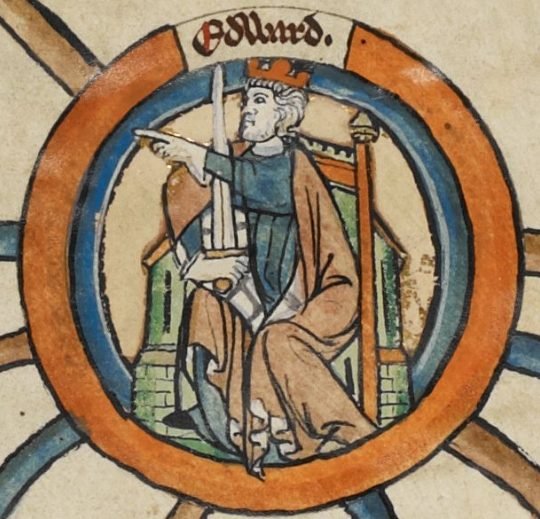
Edward the Elder was the King of the Anglo-Saxons from 899 until his death in 924. He was the elder son of Alfred the Great and Ealhswith. Image: Portrait miniature from a thirteenth-century genealogical scroll depicting Edward
Edward the Elder (circa 874 – 17 July 924) was the son of Alfred the Great and Ealhswith of Mercia, and he ruled as King of the Anglo-Saxons from 899 until his death in 924. His reign is considered a significant period in the formation of a unified England, as he successfully expanded his control over Viking-occupied territories in southern England and consolidated Anglo-Saxon rule. Although overshadowed by the legendary status of his father, Alfred the Great, Edward the Elder’s achievements were crucial in laying the foundation for a united English kingdom.
The Decline of Roman Britain and the Rise of Anglo-Saxon England
Early Life and Background
Edward’s exact birth date is uncertain, but he was born sometime in the 870s, likely around 874. As the eldest son of Alfred the Great, he grew up during a time of intense struggle between the Anglo-Saxon kingdoms and the Danish Vikings, who had conquered much of England.
Edward was educated under the watchful guidance of his father, who placed great emphasis on learning, governance, and military training. Alfred’s court was known for its promotion of literacy and culture, and Edward would have received instruction not only in warfare and statecraft but also in the Christian religion and governance principles.
Edward had several siblings, but his most notable sibling was his sister Æthelflæd, who later became the Lady of the Mercians. Æthelflæd played an essential role in Edward’s reign, particularly in military campaigns against the Vikings. Their close collaboration was critical in securing southern England from Viking control.
How did Alfred the Great handle the threat of the Great Heathen Army?
Succession and Struggles for the Throne
Edward succeeded his father, Alfred, as king in 899 after his death. However, his ascent to the throne was not without challenge. Edward’s cousin, Æthelwold, who was the son of Alfred’s elder brother, Æthelred I, also laid claim to the throne. Æthelwold believed he had a stronger right to the crown due to his father’s seniority over Alfred. Following Alfred’s death, Æthelwold declared himself king and gained support in Northumbria and parts of East Anglia, regions still under Viking control.
The conflict between Edward and Æthelwold became known as the Æthelwold Rebellion. In 901, Æthelwold allied with the Vikings of East Anglia and launched an invasion of Wessex. The decisive battle took place in 902 at the Battle of the Holme, where Æthelwold was killed. This victory secured Edward’s position as king, and the threat to his reign from within his family was eliminated.

In 886, Alfred adopted the title “King of the Anglo-Saxons” to reflect his rule over all Anglo-Saxons who were not under Viking control. Image: Alfred depicted in a stained-glass window of c. 1905 in Bristol Cathedral
Consolidation of Power and Military Campaigns
Edward’s reign is characterized by his continued efforts to secure and expand Anglo-Saxon control over the southern and central parts of England, which were still contested by the Vikings. Building on the defensive strategies established by his father, Edward pursued a policy of military expansion and fortification.
Defensive Network and the Burh System
One of Edward’s key strategies was the continued use of the burh system, a series of fortified towns and settlements first developed by Alfred the Great. These burhs were strategically located across Wessex and Mercia, providing defensive strongholds against Viking raids and acting as centers of administration and commerce. The network of burhs allowed Edward to consolidate his control over the territories he ruled and protect them from Viking attacks.
Edward expanded this network by building new fortifications and enhancing existing ones. His efforts helped to stabilize the southern territories and created a formidable barrier against Viking incursions. The success of this defensive system laid the foundation for later rulers to establish more permanent control over England.
History, Accomplishments, and Major Facts about the Kingdom of Mercia
Collaboration with Æthelflæd and Mercia
Edward’s sister, Æthelflæd, who ruled Mercia after her husband Æthelred’s death in 911, played a vital role in Edward’s military campaigns. Æthelflæd, often referred to as the “Lady of the Mercians,” proved to be a capable and determined leader, continuing the work of her husband in defending and expanding Mercian territory. Together, Edward and Æthelflæd launched joint military campaigns aimed at recapturing Viking-held territories.
In 910, a combined Mercian and West Saxon army defeated a Viking force from Northumbria at the Battle of Tettenhall. This victory significantly weakened the Viking presence in Northumbria and reduced the threat of northern Viking raids. Over the next decade, Edward and Æthelflæd gradually reclaimed much of southern England, including significant Viking settlements in East Anglia and the Midlands.
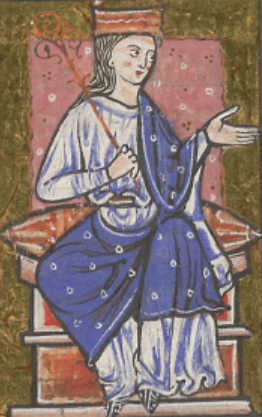
Aethelflaed of Mercia in English Midland was the daughter of Alfred the Great and Ealhswith. Aethelflaed distinguished herself as a warrior queen who fought passionately for her people against Viking invaders. Her reign spanned from 911 to 918 when she died.
Reclaiming Viking Territories
Edward’s most notable achievements came during his campaigns against Viking-occupied territories. His ability to lead effective military operations and forge alliances with other Anglo-Saxon rulers, such as Æthelflæd, allowed him to systematically drive the Vikings out of southern England.
Between 911 and 918, Edward recaptured major Viking strongholds, including Bedford, Derby, Leicester, and Stamford. Each victory brought more of southern England under Anglo-Saxon control, and by 918, most of East Anglia and Mercia had been liberated from Viking rule. Edward’s successes left only Northumbria still under Viking control.
Annexation of Mercia
After Æthelflæd’s death in June 918, her daughter, Ælfwynn, briefly succeeded her as the ruler of Mercia. However, Edward quickly moved to take control of Mercia, removing Ælfwynn from power in December 918. This marked the end of Mercia’s semi-autonomous status, and Edward imposed direct rule over the territory. By annexing Mercia, Edward consolidated his control over both Wessex and Mercia, further centralizing his authority.
Viking Threat and Final Years
By the end of Edward’s reign, the only major Viking-controlled territory left in England was Northumbria. While Edward did not manage to fully subdue Northumbria during his lifetime, he laid the groundwork for his son Æthelstan, who eventually succeeded in uniting all of England under a single crown.
In 924, Edward faced a revolt in Chester led by the Mercians and the Welsh. After successfully quelling the rebellion, Edward died on July 17, 924, at Farndon in Cheshire. He was succeeded by his eldest son, Æthelstan, who went on to become the first king of a united England. Two of Edward’s younger sons, Edmund I and Eadred, also later ruled as kings.
Legacy and Impact
Edward the Elder’s reign is often overshadowed by the legendary status of his father, Alfred the Great, but his contributions to the unification of England were no less significant. While Alfred is celebrated for his defense against the Vikings and his administrative reforms, Edward built upon his father’s achievements and expanded the territories under Anglo-Saxon control.
Military Legacy
Edward’s military campaigns were instrumental in breaking Viking power in southern England. His ability to lead and coordinate with his sister, Æthelflæd, and other Anglo-Saxon leaders allowed him to successfully reclaim key Viking-held territories. By the end of his reign, Edward ruled over a substantial portion of England, with only Northumbria remaining under Viking control.
Edward’s strategic use of the burh system helped solidify the defense of Anglo-Saxon territories and ensured that newly conquered areas could be effectively governed. This network of fortifications not only provided military protection but also encouraged economic growth and settlement in the areas under Edward’s control.
Political Legacy
Edward’s consolidation of Wessex and Mercia under his direct rule was a significant step toward the creation of a unified English kingdom. His annexation of Mercia following Æthelflæd’s death in 918 marked the end of Mercian independence and allowed Edward to centralize authority. This centralization of power under a single ruler was a precursor to the eventual unification of all of England under Edward’s son, Æthelstan.
Although Edward did not live to see the complete unification of England, his efforts to extend Anglo-Saxon control over Viking-occupied territories paved the way for Æthelstan’s later success. Æthelstan’s reign is often regarded as the culmination of the process of English unification that began under Alfred and continued under Edward.
Reputation and Historical Perspective
For much of the modern era, Edward the Elder was overshadowed by the achievements of his father, Alfred the Great. However, in recent years, historians have increasingly recognized Edward’s importance in the formation of a unified English kingdom. His military successes, political reforms, and consolidation of power were crucial steps in the process of creating a unified England.
Medieval chroniclers, such as William of Malmesbury, praised Edward for his leadership and military prowess, though they often noted that he lacked his father’s scholarly and intellectual achievements. William of Malmesbury described Edward as “incomparably more glorious in the power of his rule” but “much inferior to his father in the cultivation of letters.”
In the late 20th century, Edward’s reputation underwent a revival as historians began to reevaluate his role in Anglo-Saxon history. Some scholars have described the Anglo Saxon king as perhaps the most neglected of English kings due to the lack of primary sources documenting his reign. Despite this, modern scholarship now recognizes Edward the Elder as a key figure in the defeat of the Vikings in southern England and the consolidation of Anglo-Saxon rule.
READ MORE: What was the Statute of Rhuddlan?
Conclusion
Edward the Elder’s reign was a pivotal period in the history of Anglo-Saxon England. As the son of Alfred the Great, Edward inherited a kingdom that was still under threat from Viking invaders. Through his military campaigns, strategic use of fortifications, and political consolidation of Wessex and Mercia, Edward expanded Anglo-Saxon control and laid the groundwork for a unified English kingdom.
While his achievements were long overshadowed by his father’s legacy, Edward’s role in reclaiming Viking-occupied territories and strengthening the Anglo-Saxon state is now recognized as a critical step in the creation of a united England. His son, Æthelstan, would complete the process of unification, but it was Edward’s reign that provided the foundation for this transformation.
Questions and Answers about Edward the Elder
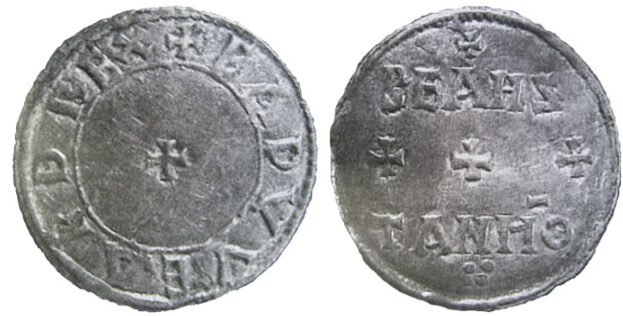
Modern historians generally regard Edward the Elder for his crucial role in defeating the Vikings in southern England and laying the foundations for a united English kingdom, significantly contributing to the creation of a south-centered English state. Image: Silver penny of Edward the Elder
How did Edward become king?
Edward became king after the death of his father, Alfred the Great, in 899, but he had to overcome a challenge from his cousin Æthelwold, who had a strong claim to the throne as the son of Alfred’s elder brother, Æthelred I.

Alfred the Great achieved a decisive victory against the Danish Vikings at the Battle of Edington in 878, which led to the retention of Anglo-Saxon control over Wessex and western Mercia, although the Vikings continued to rule Northumbria, East Anglia, and eastern Mercia. Image: Statue of Alfred the Great at Wantage, Oxfordshire
What was Edward the Elder’s major military accomplishment?
In 910, Edward led a combined West Saxon and Mercian army that dealt a decisive defeat to an invading Northumbrian Viking force, significantly weakening the Viking threat from the north.
How did Edward expand his control over Viking-held territory?
Edward, in collaboration with his sister Æthelflæd, Lady of the Mercians, began reclaiming Viking-held territory in southern England, gradually consolidating his power over these regions.
What happened after Æthelflæd’s death in 918?
After Æthelflæd’s death, her daughter Ælfwynn briefly ruled Mercia, but Edward removed her in December 918 and imposed direct rule over Mercia, consolidating his control over both Wessex and Mercia.
What was the state of Viking control in England by the end of Edward’s reign?
By the end of Edward’s reign, only Northumbria remained under Viking control, while Edward ruled Wessex, Mercia, and East Anglia.
What rebellion did Edward face in 924?
In 924, Edward faced a rebellion by the Mercians and the Welsh in Chester. After successfully quelling the revolt, he died shortly afterward on July 17, 924, at Farndon in Cheshire.
Who succeeded Edward the Elder after his death?
Edward was succeeded by his eldest son, Æthelstan, who became king. His younger sons, Edmund I and Eadred, later also became kings of England.

King Æthelstan (reign: 924–927)
How was Edward regarded by medieval chroniclers?
Medieval chroniclers admired Edward the Elder, with William of Malmesbury noting that while Edward was “less scholarly” than his father Alfred, he was “incomparably more glorious in the power of his rule.”
Why was Edward the Elder neglected by modern historians for a long time?
Edward was largely ignored by modern historians until the 1990s, partly due to the scarcity of surviving primary sources from his reign.