Walls of Troy in Greek Mythology
The Walls of Troy stand as one of the most iconic and enduring symbols in Greek mythology. They represent not only the physical fortifications of an ancient city but also the complex interplay between gods and mortals, fate and free will, hubris and downfall.
Constructed with divine assistance and embodying themes of strength, pride, and eventual tragedy, the walls serve as a central element in the mythological narratives surrounding the city of Troy, particularly in the events leading up to and during the Trojan War.
The Divine Construction of the Walls

Depiction of Apollo and Poseidon constructing the Walls of Troy
The origins of the Walls of Troy are deeply rooted in the interactions between gods and humans. According to myth, the gods Poseidon, the ruler of the sea, and Apollo, the god of the sun, music, and prophecy, were compelled to serve King Laomedon of Troy as punishment from Zeus. This unusual situation arose after the gods attempted to overthrow Zeus, and as retribution, they were sentenced to a year of mortal servitude. During this time, they were tasked with fortifying the city of Troy, which was then a burgeoning settlement requiring strong defenses against potential invaders.
To aid in this monumental task, Poseidon and Apollo enlisted the help of Aeacus, a mortal king renowned for his wisdom and piety. Aeacus was one of the three sons of Zeus and was highly favored among the gods. His participation in the construction added a layer of divine favor and human craftsmanship to the walls. Together, they built walls of extraordinary strength and resilience, imbued with magical properties that made them nearly impregnable.

The Sun God Apollo playing his favorite musical instrument, the lyre
Each god contributed their unique abilities: Poseidon shaped the earth and stone, Apollo infused the structure with harmony and balance, and Aeacus provided human ingenuity and dedication.

Aeacus called upon to assist Poseidon and Apollo in constructing the walls of Troy, marking him as a figure with divine favor and an active role in significant mythological events. Image: Poseidon is an Olympian god and the god of the sea, storms, oceans and horses
King Laomedon’s Betrayal
Upon completion of the walls, Poseidon and Apollo approached King Laomedon to receive their promised compensation.
However, Laomedon reneged on his agreement, refusing to reward the gods for their labor. This act of hubris—excessive pride and defiance against the divine—had severe consequences.
Enraged by the king’s dishonesty, Poseidon and Apollo retaliated by sending calamities upon Troy. Poseidon unleashed a sea monster to terrorize the Trojan coast, while Apollo inflicted the city with a devastating plague. These afflictions not only punished Laomedon but also foreshadowed the eventual downfall of Troy.
Laomedon’s betrayal is a critical turning point in the mythological narrative, illustrating the themes of divine justice and the repercussions of breaking oaths. It sets in motion a cycle of events that would ultimately lead to the Trojan War. The king’s failure to honor his word sowed seeds of enmity between the gods and Troy, marking the city for future retribution.
The Walls During the Trojan War
Fast forward to the era depicted in Homer‘s Iliad, the Walls of Troy play a pivotal role in the decade-long conflict known as the Trojan War.
The war began when Paris, a prince of Troy and son of King Priam (Laomedon’s son), abducted Helen, the wife of Menelaus, king of Sparta. This act led to a coalition of Greek forces, led by Agamemnon, setting sail to retrieve Helen and avenge the insult.
Throughout the war, the walls stood as a formidable barrier, protecting the Trojans from the onslaught of the Greek armies. The fortifications were so robust that direct assaults proved futile.
Heroes like Achilles, Ajax, Hector, and Diomedes displayed extraordinary valor on the battlefield but were unable to breach the city’s defenses. The walls symbolized the strength and resilience of Troy, bolstered by the divine craftsmanship of Poseidon, Apollo, and Aeacus.

Achilles versus Hector
The Greeks recognized that conventional warfare would not grant them victory. This realization led to the conception of the Trojan Horse, a stratagem devised by Odysseus. The Greeks constructed a large wooden horse, hiding a select force of soldiers within it, and presented it to the Trojans as a supposed offering of peace. Believing the war was over and interpreting the horse as a sacred gift, the Trojans brought it within their impregnable walls.
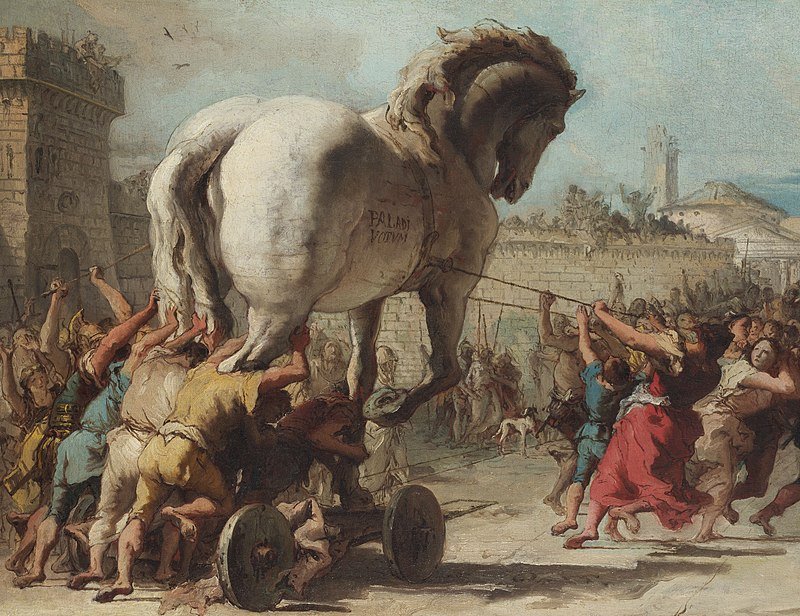
Detail from The Procession of the Trojan Horse in Troy by Italian painter Domenico Tiepolo (1773)
The Fall of Troy
The entry of the Trojan Horse into the city marked the beginning of Troy’s downfall. Under the cover of night, the Greek soldiers emerged from the horse, opened the gates for the rest of their forces, and initiated a devastating attack. The once invincible walls that had withstood a decade of siege were rendered useless from within. The city’s defenses, which relied heavily on keeping external threats at bay, were compromised by the Trojans’ own actions.
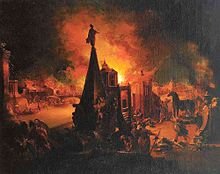
The Burning of Troy (1759-62), oil painting by Johann Georg Trautmann
The fall of Troy serves as a culmination of various mythological themes. It highlights the limitations of physical strength and fortifications when faced with cunning and deceit.
The narrative underscores the consequences of hubris, as the Trojans’ pride and failure to heed warnings led to their undoing. Additionally, the gods’ earlier curse on the city, stemming from Laomedon’s betrayal, is fulfilled, emphasizing the inescapability of divine retribution.
Symbolism of the Walls
The Walls of Troy are rich in symbolic meaning within Greek mythology. They represent not only the physical strength and architectural prowess of the city but also the broader themes of human ambition, pride, and the tenuous relationship between mortals and gods.
- Divine and Mortal Collaboration: The construction of the walls by both gods and a mortal reflects the potential for harmony and cooperation between the divine and human realms. It suggests that when mortals align themselves with the will of the gods, great feats can be achieved.
- Hubris and Nemesis: Laomedon’s betrayal introduces the concept of hubris—excessive pride or defiance against the gods—and its inevitable punishment, nemesis. The walls, initially a symbol of divine favor, become a testament to the consequences of offending the gods.
- Inevitability of Fate: Despite the strength of the walls, Troy was destined to fall. This theme resonates with the Greek belief in fate and the limitations of human efforts against predetermined outcomes. The walls, though formidable, could not alter the course set by the gods.
- Illusion of Security: The reliance on the walls for protection highlights the illusion of security that physical defenses can provide. Troy’s downfall from within illustrates that true security requires wisdom and humility, not just strong barriers.
Aeacus’s Legacy and Connection to the Walls
Aeacus’s involvement in building the walls extends his influence beyond his own kingdom of Aegina. His participation not only reinforces his status as a paragon of virtue but also connects his lineage to the fate of Troy. His descendants, including Peleus and Achilles, play crucial roles in the Trojan War. Achilles, the greatest of the Greek warriors, is both a source of hope and tragedy for the Greeks.
The duality of Aeacus’s legacy is evident: while he contributed to the strength of Troy’s defenses, his grandson would become instrumental in the city’s siege. This intertwining of fates exemplifies the intricate relationships and recurring motifs within Greek mythology, where the actions of one generation impact the next in profound ways.
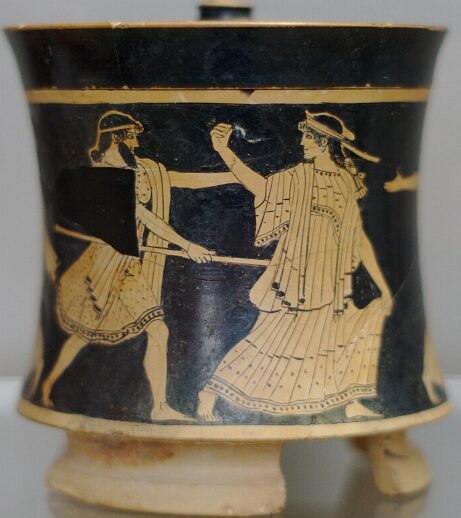
Aegina and Zeus’s union resulted in the birth of Aeacus, who would later become one of the most revered kings in Greek mythology. Image: Jupiter and Aegina
The Walls in Literary and Artistic Depictions
The Walls of Troy have been depicted in various literary and artistic works throughout history. In Homer’s Iliad, the walls are ever-present, looming over the battlefield and serving as a backdrop to the heroics and tragedies unfolding before them. The epic does not delve into the construction of the walls but emphasizes their strength and the protection they afford the Trojans.
Later authors and poets expanded on the myths surrounding the walls. The Roman poet Ovid, in his Metamorphoses, touches upon the divine construction and Laomedon’s deceit. These stories served as moral lessons on the importance of piety, honor, and the perils of arrogance.
In art, the walls have been portrayed in vase paintings, sculptures, and frescoes. Scenes often depict the Trojan Horse entering the city or the gods assisting in the construction. These visual representations reinforced the narratives and allowed the myths to be disseminated widely, preserving their significance across generations.
The Walls as a Metaphor

Beyond their literal existence in mythology, the Walls of Troy function as a metaphor for various aspects of human experience:
- Defense Mechanisms: Just as the walls protected Troy, individuals and societies build defenses—emotional, psychological, or physical—to safeguard against perceived threats. The story warns of overreliance on these defenses without addressing underlying vulnerabilities.
- Isolation and Openness: The walls symbolize the balance between isolation and engagement with the outside world. Troy’s eventual acceptance of the Trojan Horse reflects the dangers of naively lowering one’s defenses without discernment.
- The Limits of Human Achievement: Despite human efforts to create enduring legacies and fortifications, the walls’ ultimate failure underscores the transient nature of such endeavors in the face of time and divine will.
Conclusion
The Walls of Troy occupy a central place in Greek mythology, embodying themes that resonate with fundamental human concerns. Constructed through a unique collaboration between gods and a mortal, they symbolize the heights of what can be achieved when divine favor and human effort align. However, the subsequent betrayal by King Laomedon introduces a cautionary tale about the consequences of hubris and the fragile nature of human achievements.
During the Trojan War, the walls stand as both a physical and symbolic barrier, representing the strength and pride of Troy. Their eventual breach not through force but through cunning reflects the complexities of warfare and the limitations of relying solely on physical defenses. The story illustrates that true strength lies not just in walls and weapons but in wisdom, honor, and respect for the divine.
Aeacus’s role in the walls’ construction and his lineage’s involvement in the war highlight the interconnectedness of characters and events within Greek mythology. The walls serve as a nexus where the fates of gods and mortals intertwine, leading to outcomes that fulfill ancient prophecies and divine judgments.
Frequently Asked Questions

Aeacus was a distinguished figure in Greek mythology celebrated for his profound wisdom and unwavering piety. These virtues earned him respect among mortals and garnered favor from the gods, highlighting his unique relationship between the divine and human realms.
What significant role did Aeacus play in the construction of Troy?
Aeacus assisted the gods Poseidon and Apollo in constructing the walls of Troy. They sought his help due to his renowned expertise and virtuous character. His participation was a testament to his esteemed status among the gods and his involvement in significant mythological events.
Why were Poseidon and Apollo building the walls of Troy, and how did Aeacus become involved?
Poseidon and Apollo were sentenced by Zeus to serve King Laomedon of Troy as punishment for a transgression. Tasked with fortifying the city, they enlisted Aeacus’s assistance because of his exceptional abilities and character.
What does Aeacus’s collaboration with Poseidon and Apollo symbolize?
It symbolizes the intersection of the mortal and divine worlds. His ability to work alongside gods underscores his exceptional nature and the trust the deities placed in him, highlighting his unique role bridging humans and gods.
How did the walls of Troy, which Aeacus helped build, impact later mythological events?
The walls were imbued with divine strength and became central in the tales of heroism and tragedy during the Trojan War. When King Laomedon failed to reward the gods for their work, it led to divine retribution and ultimately the city’s downfall.

Aeacus was the father of Peleus and Telamon. Peleus fathered Achilles, a central hero in Homer’s Iliad, while Telamon fathered Ajax the Great, another formidable warrior in the Trojan War. Their exploits were central to Greek mythological traditions. Image: Aeacus and Telamon
In what way did Aeacus’s actions lead to the downfall of Troy?
Although Aeacus helped build the walls, King Laomedon’s failure to reward Poseidon and Apollo led to their anger. This act of hubris resulted in divine retribution against Troy, leading to its eventual downfall during the Trojan War.

Led by Odysseus, Greek soldiers laid waste to the city of Troy





