Ovid’s Metamorphoses
Ovid’s Metamorphoses is a monumental work of Latin literature that has captivated readers for over two millennia. Written around 8 CE by the Roman poet Publius Ovidius Naso, commonly known as Ovid, the poem is widely regarded as his magnum opus.
Spanning 15 books and nearly 12,000 lines, the Metamorphoses intricately weaves together over 250 myths from Greek and Roman mythology into a cohesive narrative. The work chronicles the history of the world from its creation to the deification of Julius Caesar, all unified by the central theme of transformation.

The title page of a 1556 edition by Joannes Gryphius, later adorned, in UC Santa Cruz’s collection.
Structure and Content
The Metamorphoses is structured as a continuous narrative, yet it is composed of individual myths that are artfully connected.
Each of the 15 books contains a series of stories that flow into one another, often through clever transitions that maintain the theme of metamorphosis.
- Books I–II: The poem begins with the creation of the world out of chaos. It proceeds to recount early myths such as the ages of man, the flood, the story of Deucalion and Pyrrha, and tales involving gods like Apollo, Jupiter, and Mercury.
- Books III–VI: These books delve into myths surrounding Thebes and its royal family, including the stories of Cadmus, Actaeon, and Pentheus. They also feature the tragic tale of Narcissus and Echo, the story of Perseus and Andromeda, and the weaving contest between Arachne and Minerva (Athena in Greek mythology).
- Books VII–IX: Ovid narrates the adventures of Jason and the Argonauts, focusing on Medea’s sorcery. He includes the story of Cephalus and Procris, the Calydonian Boar Hunt, and the tragic fate of Hercules.
- Books X–XI: These books are rich with romantic and tragic tales, such as those of Orpheus and Eurydice, Pygmalion, and the musician’s songs that recount stories like that of Venus (Aphrodite in Greek mythology) and Adonis.
- Books XII–XV: The final books transition into more historical and Roman myths, including the Trojan War, the founding of Rome, and the deification of Julius Caesar, concluding with a prophecy about Augustus Caesar.
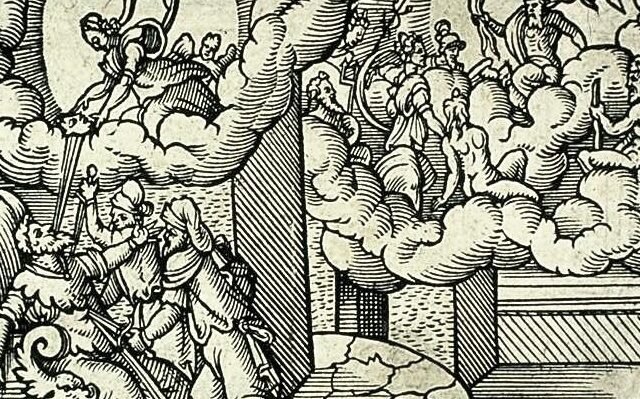
Virgil Solis created a woodcut that illustrates the apotheosis of Julius Caesar, the poem’s final event (XV.745–850).
Themes and Motifs
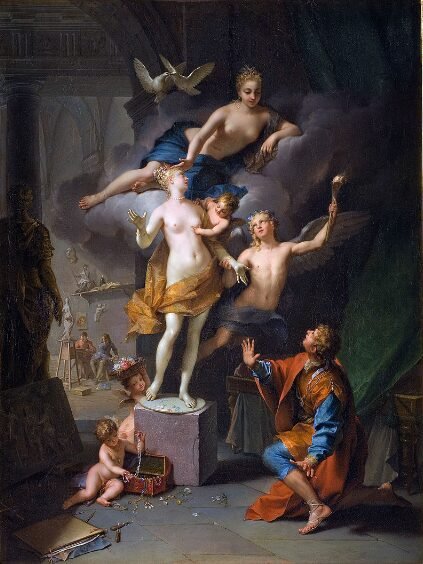
A depiction of the story of Pygmalion, Pygmalion adoring his statue by French painter Jean Raoux (1717)
The central theme of the Metamorphoses is transformation. Each myth involves some change, whether physical, emotional, or spiritual. These transformations often result from interactions between gods and mortals, serving as a narrative device to explore various human experiences.
- Love and Desire: Many stories revolve around love—both its joys and its destructive power. The unrequited love of Apollo for Daphne, the obsessive love of Pygmalion for his statue, and the doomed love of Orpheus and Eurydice illustrate the complexities of this emotion.
- Power and Revenge: The gods often use their power to punish mortals who offend them, as seen in the stories of Arachne and Niobe. These tales highlight the precarious position of humans in relation to the divine.
- Hubris and Punishment: A recurring motif is the downfall of mortals who exhibit excessive pride. Characters like Icarus, who flies too close to the sun, serve as cautionary examples of the consequences of hubris.
- Identity and Change: The transformations often symbolize deeper changes in identity or status. For instance, the metamorphosis of Narcissus into a flower reflects his self-absorption, while Actaeon’s transformation into a stag represents his unintended transgression against Diana.
Literary Style and Innovations

Roman poet Ovid by German painter Anton von Werner
Ovid’s Metamorphoses is celebrated for its sophisticated literary style. His use of dactylic hexameter aligns the poem with epic traditions, yet his approach diverges significantly from his predecessors.
- Narrative Techniques: Ovid employs a seamless narrative flow, with stories interconnected through thematic links or character transitions. This technique creates a tapestry-like effect, allowing the reader to journey through a vast array of myths without abrupt interruptions.
- Characterization: Unlike earlier epics that focus on heroic figures, Ovid gives voice to a wide range of characters, including women and lesser-known figures. He delves into their psychological states, exploring their motivations and emotions.
- Use of Irony and Wit: Ovid often infuses his narratives with irony, challenging traditional interpretations of myths. His playful tone and clever wordplay add layers of meaning, inviting readers to engage critically with the stories.
- Metaphor and Imagery: The vivid descriptions and imaginative metaphors bring the myths to life. Ovid’s portrayal of transformations is particularly striking, as he describes the physical and emotional aspects of change in detail.
Genre and Classification
While the Metamorphoses shares elements with epic poetry, it resists simple genre classification. Traditional epics, like Homer‘s Iliad and Odyssey or Virgil‘s Aeneid, center on heroic exploits and follow a linear narrative focused on a central protagonist. Ovid’s work, however, lacks a singular hero and encompasses a wide array of themes and tones.
- Epic Elements: The grand scale, use of epic meter, and inclusion of divine beings align the Metamorphoses with epic conventions.
- Elegy and Tragedy: The poem incorporates elements of elegy, expressing sorrow and lamentation, as seen in tragic love stories.
- Comedy and Satire: Ovid also includes humorous and satirical episodes, poking fun at gods and mortals alike.
This blending of genres allows Ovid to explore the full spectrum of human experience, making the work accessible to diverse audiences.
Influences and Sources
Ovid drew inspiration from a variety of sources, including earlier Greek and Roman poets and the genre of metamorphosis poetry popular in Hellenistic literature.
- Greek Mythology: Many of the myths originate from Greek sources, which Ovid adapts and reinterprets for a Roman audience.
- Hellenistic Poetry: Works like Nicander’s Heteroeumena influenced Ovid’s thematic focus on transformation.
- Roman Context: Ovid incorporates Roman myths and historical figures, especially in the later books, bridging the gap between myth and history.
Hellenistic Kingdoms: What were they and what were some of their notable achievements?
Influence on Western Literature and Art
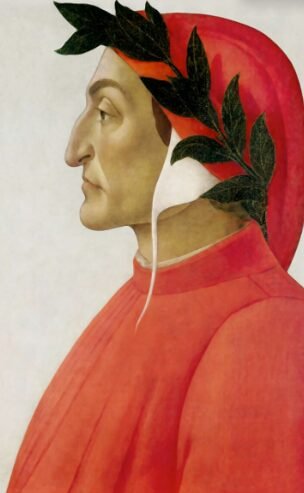
Over two millennia, Ovid’s Metamorphoses has been retold and reimagined, influencing countless artists, writers, and thinkers. Image: Posthumous portrait of Dante Alighieri in tempera by Italian painter Sandro Botticelli, 1495
The Metamorphoses has had a profound impact on Western culture, influencing writers, artists, and musicians throughout the centuries.
- Middle Ages and Renaissance: The poem served as a primary source of classical mythology. Writers like Dante Alighieri drew upon its stories for The Divine Comedy. Giovanni Boccaccio’s The Decameron echoes Ovidian themes, and Geoffrey Chaucer incorporated tales from the Metamorphoses into The Canterbury Tales.
- William Shakespeare: Shakespeare found inspiration in Ovid’s work for several plays. A Midsummer Night’s Dream features themes of transformation and love reminiscent of Ovidian myths. Romeo and Juliet parallels tragic love stories, and The Tempest includes elements of magic and metamorphosis.
- Visual Arts: Renaissance artists like Sandro Botticelli, Titian, and Gian Lorenzo Bernini depicted scenes from the Metamorphoses in their artworks. These pieces often capture the dramatic moment of transformation, emphasizing the fluidity between the human and the divine.
- Music: Composers have adapted Ovid’s stories into operas and symphonic works. For example, Benjamin Britten’s Six Metamorphoses after Ovid is a set of solo oboe pieces inspired by the poem.
Themes Explored in the Metamorphoses
Beyond transformation, Ovid explores several interrelated themes:
- The Power of the Gods: The capriciousness of the gods and their direct involvement in human affairs is a constant thread. Divine retribution and favor shape the fates of mortals.
- Fate and Destiny: The inevitability of fate is a common motif. Characters often struggle against their destinies, only to succumb to predetermined outcomes.
- Nature and the Natural World: Ovid personifies natural elements, attributing human qualities to animals, plants, and celestial bodies. The transformations often blur the lines between human and nature.
- Art and Creation: The act of creation is a significant theme, both in the literal sense and metaphorically. The story of Pygmalion, who sculpts a woman out of ivory, reflects on the artist’s relationship with their creation.
Examples of Specific Myths

Italian sculptor Bernini’s 1622–1625 marble “Apollo and Daphne” at Rome’s Galleria Borghese depicts Daphne’s transformation—fingers as laurel branches, toes rooting into the ground.
- Daphne and Apollo: Apollo, struck by Cupid’s arrow, becomes infatuated with the nymph Daphne. Fleeing his advances, Daphne prays for escape and is transformed into a laurel tree. Apollo honors her by adopting the laurel as his sacred tree.
- Arachne: A talented weaver, Arachne boasts that she is superior to the goddess Minerva (Athena). In a weaving contest, Arachne’s tapestry depicts the gods’ misdeeds, angering Minerva, who destroys the work and transforms Arachne into a spider.
- Pygmalion: Disenchanted with the flaws of mortal women, Pygmalion creates a statue of his ideal woman. He falls in love with his creation, and Venus grants life to the statue, allowing Pygmalion to marry her.
- Narcissus and Echo: Narcissus, a beautiful youth, rejects the nymph Echo. Cursed to fall in love with his own reflection, he wastes away, and upon his death, a flower bearing his name grows in his place.
- Orpheus and Eurydice: Orpheus travels to the underworld to retrieve his wife, Eurydice. Granted permission to bring her back on the condition that he does not look back, he fails at the last moment, losing her forever.

In the tale of Arachne, Ovid explores themes of pride and the dangers of challenging the gods. Arachne is transformed into a spider after a weaving contest with Minerva, highlighting the consequences of hubris. Image: Minerva and Arachne, by French painter René-Antoine Houasse, 1706.
Ovid’s Exile and Its Impact

Anonymous 18th-century engraving of Roman Poet Ovid
In 8 CE, the same year he completed the Metamorphoses, Ovid was exiled from Rome to Tomis on the Black Sea by Emperor Augustus. He cited “a poem and a mistake” as the cause, which scholars believe refers to his work Ars Amatoria and possibly involvement in a scandal.
- Influence on His Work: The exile added a personal dimension of loss and transformation to his writing. While the Metamorphoses was likely completed before his banishment, the themes of change and displacement resonate with his personal experiences.
- Later Works: In exile, Ovid wrote Tristia and Epistulae ex Ponto, which express his sorrow and longing for Rome.
Translations and Adaptations
The Metamorphoses has been translated into numerous languages, each version bringing new interpretations.
- William Caxton’s Translation (1480): The first English translation, it made the work accessible to non-Latin readers.
- George Sandys’ Translation (1632): Known for its poetic quality, it influenced English literature significantly.
- Modern Translations: Translators like Rolfe Humphries, Allen Mandelbaum, and Charles Martin have produced versions that aim to capture Ovid’s style and appeal to contemporary readers.
- Adaptations: The Metamorphoses has been adapted into plays, novels, and films. Mary Zimmerman’s Metamorphoses, a play that premiered in 1996, brings Ovid’s stories to the stage with modern relevance.
Legacy and Continuing Relevance
- Resurgence in the 20th Century: Scholars and artists revisited the Metamorphoses to explore themes of identity, change, and human relationships with nature, aligning with contemporary concerns.
- Modern Media: The stories continue to inspire writers and filmmakers. Elements of Ovid’s myths appear in novels, such as Margaret Atwood’s The Penelopiad, and in movies that reinterpret classical myths.
- Cultural Significance: The Metamorphoses remains a foundational text in understanding Western literature and mythology. Its themes are universal, addressing the human condition in ways that transcend time and culture.
Conclusion
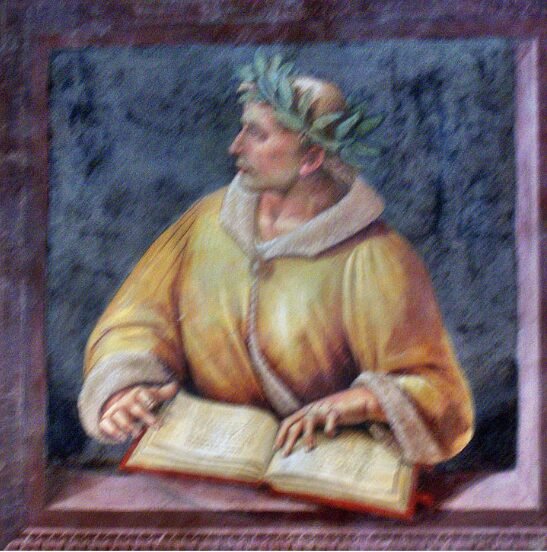
The Metamorphoses remains a vital source of inspiration, reflecting the enduring power of myth to illuminate the human condition and continually shaping literature, art, and culture. Image: Ovid by Italian Renaissance Luca Signorelli
Ovid’s Metamorphoses is more than a collection of myths; it is a profound exploration of change in all its forms. Through his innovative narrative structure and masterful storytelling, Ovid delves into the complexities of human emotions and experiences. The poem’s refusal to conform to a single genre allows it to capture the full spectrum of life’s joys and sorrows.
The enduring impact of the Metamorphoses is evident in its influence on countless artists and thinkers. From the Middle Ages to the present day, its stories have been retold and reimagined, each generation finding new meaning in its timeless themes. The work challenges readers to reflect on transformation—not only in myth but within themselves and their societies.
Ovid’s legacy is one of artistic brilliance and profound insight into the human psyche. The Metamorphoses stands as a testament to the power of literature to transcend its origins, continually inspiring and enlightening those who encounter it. As we navigate a world that is constantly changing, the themes Ovid explored remain as relevant as ever, reminding us of the eternal nature of transformation in the human experience.
Frequently Asked Questions
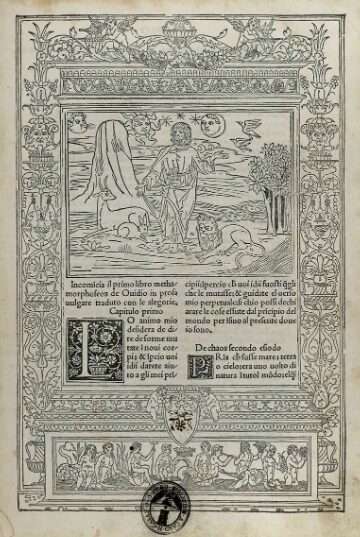
The Metamorphoses, written by the Roman poet Ovid around 8 CE, stands as a monumental achievement in Latin literature and is widely regarded as his magnum opus. This expansive narrative poem intricately weaves together over 250 myths into a cohesive tapestry that chronicles the history of the world—from its creation to the deification of Julius Caesar. Image: Page from the edition of Ovid’s Metamorphoses published by Lucantonio Giunti in Venice, 1497
What is the Metamorphoses, and why is it considered Ovid’s magnum opus?
The Metamorphoses is an expansive narrative poem written by the Roman poet Ovid around 8 CE. It is considered his magnum opus because it stands as a monumental achievement in Latin literature, intricately weaving together over 250 myths into a cohesive work that chronicles the history of the world—from its creation to the deification of Julius Caesar. The poem comprises 15 books and nearly 12,000 lines, all unified by the central theme of transformation.
In what ways does the Metamorphoses resist straightforward genre classification?
While the poem shares characteristics with epic poetry, such as its grand scope and use of dactylic hexameter, it resists straightforward genre classification because it fluctuates in themes and tones. Unlike traditional epics that focus on heroic exploits and central protagonists, Ovid’s work ranges from the tragic to the comedic, the romantic to the grotesque. This versatility reflects his innovative storytelling approach and his willingness to deviate from conventional narratives, incorporating elements of elegy, tragedy, and comedy.
How does the theme of transformation unify the myths in the Metamorphoses?
The unifying theme of transformation is central to the Metamorphoses. Each myth involves some form of change—physical, emotional, or spiritual. These metamorphoses often result from divine intervention, punishment, or reward, highlighting the volatile relationship between gods and mortals in Roman mythology. Ovid uses these transformations to explore deeper themes such as love, power, revenge, and the consequences of hubris.
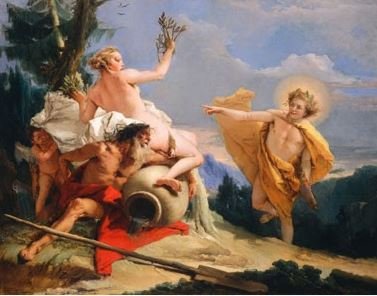
In the story of Daphne and Apollo, he delves into the torment of unrequited love and the desperation of escape, culminating in Daphne’s transformation into a laurel tree to preserve her chastity. Image: Apollo and Daphne by Italian painter Tiepolo, c. 1744–45 (Louvre, Paris)
What distinguishes Ovid’s writing style in the Metamorphoses from earlier epic poems?
Ovid’s style is notable for its elegance, wit, and use of vivid imagery and metaphor. He often employs irony and humor, subverting traditional narratives and offering fresh perspectives on familiar stories. This contrasts with earlier epic poems, which tended to be more solemn and focused on heroic ideals. Ovid’s approach brings immediacy and relatability to the myths, setting the Metamorphoses apart from its predecessors.
How did the Metamorphoses influence writers during the Middle Ages and the Renaissance?
Answer: The Metamorphoses served as a crucial source of classical mythology during the Middle Ages and the Renaissance, influencing many writers:
Dante Alighieri drew upon its stories for his own epic narratives.
Giovanni Boccaccio, in works like The Decameron, echoed Ovid’s themes of love and transformation.
Geoffrey Chaucer incorporated Ovidian tales into The Canterbury Tales, weaving them into his storytelling.
In what ways did William Shakespeare find inspiration in the Metamorphoses?
William Shakespeare was notably inspired by the Metamorphoses, incorporating elements from Ovid’s myths into several of his plays:
“A Midsummer Night’s Dream” features themes of transformation and love influenced by Ovidian stories.
“Romeo and Juliet” echoes tragic themes found in Ovid’s tales.
“The Tempest” includes magical elements and transformations reminiscent of the Metamorphoses.
Shakespeare’s engagement with Ovid’s work highlights the enduring relevance and adaptability of these ancient stories.
How has the Metamorphoses influenced the visual arts and music?
The Metamorphoses has profoundly influenced the visual arts and music:
During the Renaissance, artists like Titian, Botticelli, and Bernini created masterpieces depicting scenes from Ovid’s tales, often capturing dramatic moments of transformation.
In music, composers adapted stories from the poem into operas and symphonies, demonstrating its versatility and enduring appeal.
Why was there a renewed interest in Ovid’s work in the late 20th century?
In the late 20th century, scholars and artists revisited the Metamorphoses to explore its themes in the context of contemporary issues such as identity, change, and humanity’s relationship with nature. This resurgence underscored the timeless nature of Ovid’s insights and the universal resonance of his themes, making the work relevant to modern audiences.
What challenges do translators face when translating the Metamorphoses, and why are translations important?
Translators of the Metamorphoses face the challenge of preserving the poetic qualities of the original Latin while making the text understandable to modern readers. They must capture Ovid’s elegance, wit, and vivid imagery without losing the nuances of the original language. Translations are important because they make the work accessible to a broader audience beyond the Latin-reading elite, ensuring that the Metamorphoses continues to influence and inspire new generations.
How did Ovid’s exile potentially influence the themes in the Metamorphoses?
Ovid’s exile from Rome, for what he termed “a poem and a mistake,” added a layer of personal tragedy to his work. While the exact reasons for his banishment remain a subject of scholarly debate, this personal misfortune may have influenced the themes of loss and transformation in the Metamorphoses, reflecting his own experiences of change and displacement.
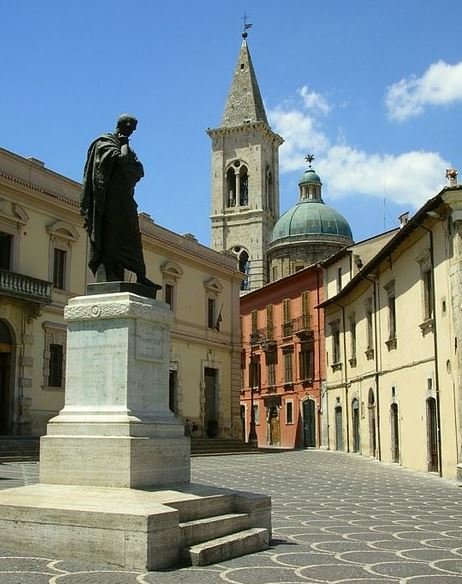
The Metamorphoses is a cornerstone of Western literature that transcends its time and origin. Ovid’s innovative narrative structure and exploration of universal themes have ensured the poem’s lasting impact. Image: Statue of Ovid by Ettore Ferrari in the Piazza XX Settembre, Sulmona, Italy





