What was the Turning point of the American Civil War?
The American Civil War (1861–1865) remains one of the most pivotal conflicts in United States history, shaping the nation’s future by determining the fate of slavery and preserving the Union. Throughout the war, several battles and military developments significantly influenced the trajectory of the conflict.
Although historians debate which specific event served as the ultimate turning point, certain battles and strategic shifts are frequently cited as crucial moments that changed the war’s course. Among these, the Union victories at the Battle of Gettysburg and the Siege of Vicksburg in July 1863 stand out as the most commonly recognized turning points. However, several other battles and events played significant roles in reshaping the war’s momentum in favor of the Union.
This analysis examines these key moments and their impact on the outcome of the war.
The Confederate Victory at Bull Run (July 1861)

Frank Vizetelly’s Depiction of the Bull Run Retreat
The First Battle of Bull Run, fought on July 21, 1861, marked the first major land battle of the war. The Union army, confident in a quick victory, sought to strike a decisive blow against the Confederacy. However, the battle ended in a disastrous defeat for the Union, as Confederate forces, under General P.G.T. Beauregard and General Joseph E. Johnston, repelled the Union advance and forced a chaotic retreat toward Washington, D.C.
The unexpected Confederate victory dispelled any Northern illusions of a short war and forced President Abraham Lincoln to reassess military strategy. In response, Lincoln increased the Union army’s size and enacted the Confiscation Act of 1861, signaling the war’s gradual shift toward ending slavery. Although a tactical victory for the Confederacy, Bull Run ultimately strengthened Northern resolve and led to more aggressive Union war efforts.
Confederate Invasion of Kentucky (September 1861)
Kentucky’s strategic location made it a crucial border state in the war. Initially, Kentucky declared neutrality, but Confederate General Leonidas Polk’s decision to occupy the state in September 1861 changed the situation. His actions alienated many Kentuckians and pushed the state’s government to request Union assistance. This decision ensured that Kentucky remained under Union control for the rest of the war.
The loss of Kentucky was a significant blow to the Confederacy, depriving it of an advantageous staging ground for invasions into the North and weakening its control over crucial transportation routes. The Confederacy’s failure to maintain Kentucky ultimately allowed the Union to strengthen its position in the Western Theater, setting the stage for later victories.
The Union Capture of Forts Henry and Donelson (February 1862)
In early 1862, Union General Ulysses S. Grant launched a campaign to secure control over key rivers in the Western Theater. The capture of Fort Henry on February 6 and Fort Donelson on February 16 gave the Union strategic control over the Tennessee and Cumberland Rivers. These victories marked the first major Union successes and forced the Confederates to abandon Kentucky and much of Tennessee. Grant’s demand for “unconditional surrender” at Fort Donelson earned him national recognition and set the stage for future Union offensives. This turning point allowed the Union to penetrate deeper into Confederate territory and gain momentum in the Western Theater.
The Death of Albert Sidney Johnston (April 1862)
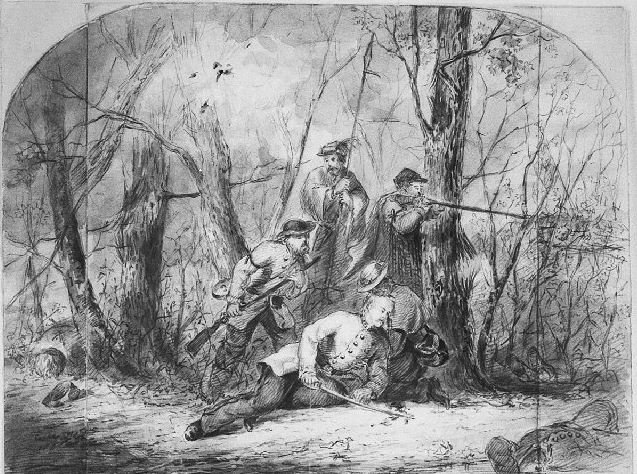
An illustration of the death of Albert Sidney Johnston by German artist Henry Mosler.
General Albert Sidney Johnston, one of the Confederacy’s most skilled commanders, was mortally wounded at the Battle of Shiloh in April 1862. His death deprived the South of a capable leader in the Western Theater, leading to weaker Confederate command decisions in subsequent battles. The Union victory at Shiloh further demonstrated that the war would be long and bloody. Without Johnston’s leadership, the Confederacy struggled to mount effective resistance in the Western Theater, making it easier for Union forces to advance toward the Mississippi River.
The Union Capture of New Orleans (April 1862)
In April 1862, Union naval forces under Admiral David Farragut captured New Orleans, the Confederacy’s largest city and most vital port. This victory was a significant blow to the South, as it cut off one of its primary trade routes and limited its ability to supply its armies. The fall of New Orleans also advanced the Union’s Anaconda Plan, which aimed to strangle the Confederacy by controlling the Mississippi River. The loss of the city weakened Confederate morale and further isolated Southern forces in the West.
The Union Victory at Antietam (September 1862)
The Battle of Antietam, fought on September 17, 1862, was the bloodiest single day in American history. Though technically a tactical draw, it marked a strategic victory for the Union as General Robert E. Lee’s first invasion of the North was repelled. President Lincoln used the victory to issue the Emancipation Proclamation, which redefined the war as a fight against slavery and discouraged foreign intervention on behalf of the Confederacy. The proclamation also allowed for the recruitment of African American soldiers, bolstering Union forces. While not the decisive turning point of the war, Antietam significantly shifted the war’s political and diplomatic landscape.

The Death of Stonewall Jackson (May 1863)
Following the Confederate victory at Chancellorsville in May 1863, General Thomas “Stonewall” Jackson was accidentally shot by his own men. His subsequent death was a major loss for the Confederacy, as Jackson was one of its most brilliant and aggressive commanders. Without Jackson’s leadership, Lee’s Army of Northern Virginia was weakened going into the Battle of Gettysburg. Many historians argue that Jackson’s absence contributed to Confederate failures at Gettysburg, particularly in seizing key terrain on the first day of battle.
The Battle of Gettysburg and the Siege of Vicksburg (July 1863)
The simultaneous Union victories at Gettysburg (July 1–3) and Vicksburg (July 4) are widely regarded as the war’s primary turning points. At Gettysburg, Union forces under General George Meade decisively defeated Lee’s second invasion of the North, inflicting heavy casualties and forcing a Confederate retreat. This battle marked the last time Lee would launch a major offensive into Union territory.
Meanwhile, Grant’s successful siege of Vicksburg gave the Union full control of the Mississippi River, effectively splitting the Confederacy in two and severing vital supply lines. These twin victories significantly weakened the South’s ability to sustain the war effort and shifted momentum firmly in favor of the Union.

An illustration depicting the Battle of Gettysburg.
The Union Victory in the Chattanooga Campaign (November 1863)
The Chattanooga Campaign, culminating in Union victories at Lookout Mountain and Missionary Ridge, secured Union control over Tennessee and opened the door for General Sherman’s Atlanta Campaign. This campaign demonstrated Grant’s ability to coordinate large-scale offensives and set the stage for his promotion to general-in-chief of the Union army in 1864. Chattanooga’s capture was a critical stepping stone in the Union’s path to victory.

Grant’s Appointment as General-in-Chief (March 1864)
In March 1864, Lincoln appointed Ulysses S. Grant as the Union’s top general. Grant implemented a coordinated strategy to attack the Confederacy from multiple directions, applying relentless pressure on Southern forces. His Overland Campaign in Virginia forced Lee into a war of attrition, exploiting the Union’s superior manpower and resources. Grant’s leadership ensured that the Union maintained the initiative for the remainder of the war.
The Union Capture of Atlanta (September 1864)
General William T. Sherman’s capture of Atlanta was a significant psychological and strategic victory. The fall of Atlanta boosted Northern morale and secured Lincoln’s reelection in November 1864. It also devastated Confederate supply lines and marked the beginning of Sherman’s March to the Sea, which further crippled the South’s ability to continue fighting.
Each major event, from the first battle at Bull Run to Lincoln’s reelection, played a role in shaping the war’s outcome.
Lincoln’s Reelection (November 1864)
Lincoln’s victory in the 1864 presidential election ensured that the Union would continue pursuing an aggressive war strategy. Had Lincoln lost, the Democrats, led by George B. McClellan, might have sought a negotiated settlement, potentially allowing the Confederacy to survive. Lincoln’s reelection reaffirmed Northern commitment to total victory and the abolition of slavery.
Questions and Answers
What was the significance of the Battle of Gettysburg in the Civil War?
The Union victory at Gettysburg, fought July 1–3, 1863, halted Robert E. Lee’s second invasion of the North and inflicted massive Confederate casualties, marking a decisive turning point in the war.
How did the Siege of Vicksburg contribute to the Union’s success?
The Union’s capture of Vicksburg on July 4, 1863, split the Confederacy in two, securing control of the Mississippi River and crippling the South’s ability to transport troops and supplies.

A depiction of the Siege of Vicksburg by US illustrator Thure de Thulstrup.
Why was the First Battle of Bull Run important?
The Confederate victory at Bull Run in July 1861 shattered Northern hopes for a quick war, forcing the Union to adopt a more strategic and prolonged military approach.
How did the Emancipation Proclamation influence the war?
Issued after the Union’s victory at Antietam in September 1862, it redefined the war as a fight against slavery, discouraging European nations from supporting the Confederacy.
What impact did the capture of Atlanta have on the war?
Sherman’s capture of Atlanta in September 1864 devastated Confederate infrastructure and morale while boosting Northern support for Lincoln’s reelection.
Why was Grant’s appointment as Union general-in-chief significant?
In March 1864, Grant implemented a relentless strategy of coordinated offensives that pressured the Confederacy on multiple fronts, leading to its eventual collapse.
How did Lincoln’s reelection in 1864 affect the war’s outcome?
Lincoln’s victory ensured continued Northern commitment to total victory, eliminating any Confederate hope of negotiating a favorable peace settlement.
What was the effect of the Confederate invasion of Kentucky?
The Confederates’ violation of Kentucky’s neutrality in September 1861 backfired, pushing the state firmly into the Union camp and securing a key strategic advantage.





