Ottoman Greece: History and Major Facts
The period known as Ottoman Greece spans from the mid-15th century to the early 19th century, marking nearly 400 years of rule by the Ottoman Empire over much of the Greek world. This era, referred to by Greeks as Tourkokratia (Greek: Τουρκοκρατία, meaning “Turkish rule”), witnessed significant transformations in Greek society, economy, and culture, while also sowing the seeds for the eventual Greek War of Independence.
READ MORE: History and Major Facts about the City of Constantinople
Historical Background and Ottoman Conquest
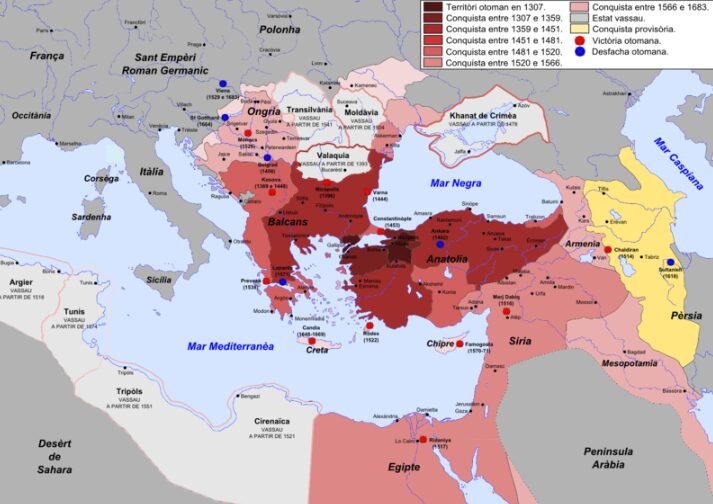
Image: A map showing the territorial expansion of the Ottoman Empire between 1307 and 1683.
The Fall of the Byzantine Empire
Before Ottoman rule, Greece was part of the Eastern Roman Empire (commonly known as the Byzantine Empire). The Byzantine Empire had been a dominant force in the eastern Mediterranean for over 1,100 years, preserving much of the classical Roman and Greek heritage.
However, by the time the Ottomans appeared on the scene, the empire was already a shadow of its former self. Its decline began in earnest after the Fourth Crusade, when Latin crusaders sacked Constantinople in 1204. This event severely weakened the empire, leaving it vulnerable to external threats.

The Byzantine Empire in 1453, before the fall of Constantinople.
The final blow came with the Ottoman Empire’s rapid expansion across the Balkans. After their victories over the Serbs in the north, such as at the Battle of Maritsa in 1371 and the Battle of Kosovo in 1389, the Ottomans set their sights on Constantinople.
In 1453, Sultan Mehmed II led the successful siege of the city, ending over a millennium of Byzantine rule. This event is regarded as one of the most significant in world history and marked the beginning of a new era of Ottoman dominance in the region.

Ottoman Sultan Mehmed II
Ottoman Expansion into Greece
With Constantinople under their control, the Ottomans quickly expanded into the rest of Greece. Athens fell to the Ottomans in 1456, and the Peloponnese, the southern part of the Greek mainland, was captured by 1460. By the early 16th century, most of mainland Greece and the Aegean Islands had come under Ottoman control.
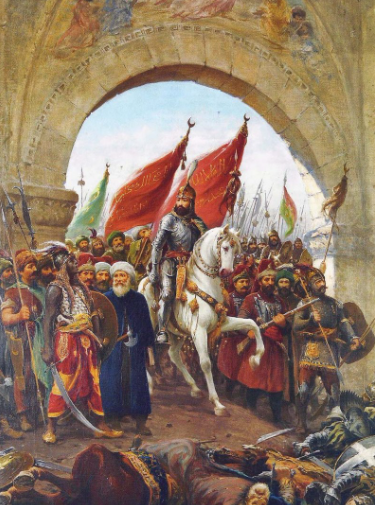
Image: Mehmed II entry to Constantinople
The Venetian Republic, which had established maritime colonies throughout the eastern Mediterranean, continued to resist Ottoman expansion. Cities like Nafplio, Monemvasia, Parga, and the Ionian Islands remained under Venetian rule for longer periods. The mountains of Greece, particularly in regions like the Mani Peninsula, also proved difficult for the Ottomans to control. These areas became refuges for those fleeing Ottoman rule and centers of resistance.
Exemptions from Ottoman Rule
While much of Greece fell under Ottoman control, certain regions remained outside direct Ottoman administration. The Ionian Islands, for instance, were ruled by the Republic of Venice for much of this period. Even though the Ottomans briefly occupied parts of the Ionian Islands, like Kefalonia, from 1479 to 1481 and from 1485 to 1500, Venice maintained its hold on the islands for most of the time. The Ionian Islands played an important role in the development of modern Greek identity and statehood. In 1800, the Republic of the Seven Islands was established, marking one of the earliest expressions of Greek autonomy.
Social Structure and Economy Under Ottoman Rule
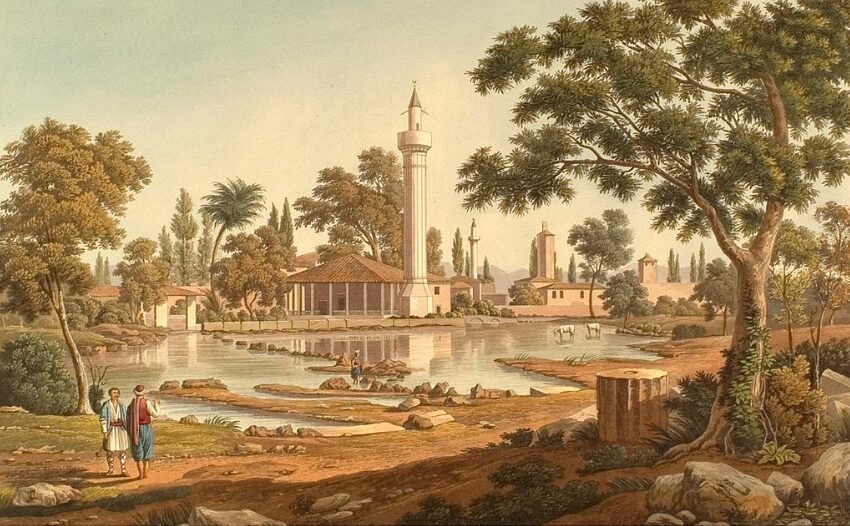
Image: “The Hyperian Fountain at Pherae”, by Irish painter and traveler Edward Dodwell, 1821.
The Millet System
One of the defining features of Ottoman governance was the millet system, which organized the empire’s diverse populations according to religious affiliations. Each religious community, or millet, was allowed a degree of autonomy, particularly in matters of personal law, education, and religious practice. The Greek Orthodox Church, through the Ecumenical Patriarchate in Constantinople, became the official representative of Orthodox Christians in the empire, regardless of their ethnic background.
Although the millet system granted Greeks religious and cultural freedoms, it did not equate to modern concepts of multiculturalism or equality. The Greek Orthodox Church was powerful and influential, but the empire’s administration often operated through local elites, who were sometimes corrupt and exploitative. Greeks were subject to heavy taxation, and many lived under the authority of prokritoi or kocabaşis, who were Greek tax collectors and bureaucrats working for the Ottoman administration. These officials were notorious for corruption and nepotism, often alienating the local population.
Commerce and Greek Shipping
Despite their political subjugation, Greeks retained significant influence in commerce and trade during Ottoman rule. The Ottomans, whose empire spanned vast territories, depended on maritime trade routes, and Greek merchants and shipowners played a crucial role in facilitating this commerce. The consolidation of Ottoman control in the eastern Mediterranean during the 15th and 16th centuries made the region safer for maritime trade, and Greek shipping flourished.
Greek merchants became key figures in the Mediterranean trade networks, acting as intermediaries between Europe and the Ottoman Empire. Greek ships transported goods across the empire and beyond, and Greek merchants often established prosperous trading communities in major cities such as Smyrna (Izmir), Constantinople, and Alexandria.
This success in trade not only allowed the Greek merchant class to accumulate wealth, but it also fostered connections with Western Europe. Greek merchants were exposed to European Enlightenment ideas, which played a role in shaping Greek intellectual and political thought in the years leading up to the Greek War of Independence.
Challenges and Piracy
Greek shipping and commerce faced significant challenges, particularly after the Ottoman defeat at the Battle of Lepanto in 1571. This naval battle, fought between the Holy League (a coalition of Catholic maritime states, including Spain and Venice) and the Ottoman Empire, was a significant setback for Ottoman maritime dominance. In the aftermath of the battle, Greek ships became frequent targets for Catholic pirates, especially from Spain and Malta. These attacks disrupted Greek commerce and made the seas more dangerous for Greek merchants.
Cultural and Religious Life Under Ottoman Rule
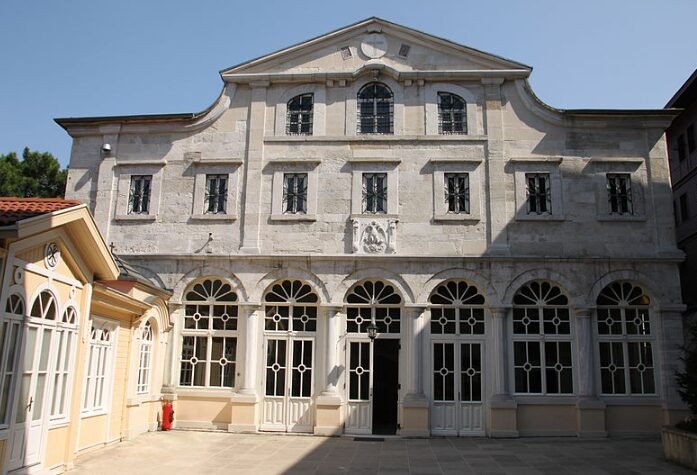
The Patriarchal Cathedral Church of St. George in Istanbul has been the seat of the Ecumenical Patriarchate of Constantinople since 1600 and serves as a spiritual center for Orthodox Christians worldwide. Image: Saint George’s Cathedral, Istanbul, Turkey
The Role of the Greek Orthodox Church
One of the key institutions that shaped life in Ottoman Greece was the Greek Orthodox Church. Under Ottoman rule, the church gained considerable authority over the Greek population, becoming not only a religious institution but also a political and social leader. The Ecumenical Patriarch in Constantinople, appointed by the Sultan, was granted significant powers, overseeing the spiritual and temporal affairs of Orthodox Christians throughout the empire.
The church helped preserve Greek language, culture, and identity during the centuries of Ottoman rule. Greek Orthodox monasteries and schools became centers of education, where Greek history, literature, and religious teachings were passed down to future generations. The church also acted as an intermediary between the Greek population and the Ottoman authorities, helping to maintain a degree of stability and continuity in Greek society.
The Rise of the Phanariots
Another influential group that emerged during this period were the Phanariots, a class of wealthy Greek elites based in the Phanar district of Constantinople. The Phanariots became prominent in Ottoman politics and diplomacy, serving as advisors and bureaucrats in the Ottoman administration. They often held high-ranking positions as diplomats, governors, and even rulers of autonomous regions like the Danubian Principalities (modern-day Romania and Moldova).
The Phanariots were not only powerful politically but also culturally influential. They played a key role in the spread of Enlightenment ideas among the Greek intellectual elite, contributing to the development of a national consciousness that would eventually fuel the Greek War of Independence.
Impact of Ottoman Rule on Greek Society
Social and Economic Changes
Ottoman rule had a profound impact on Greek society, particularly in terms of social structure. The traditional Byzantine aristocracy, which had once dominated Greek political and social life, was largely destroyed by the Ottoman conquest. In its place, a new class of bureaucrats, tax collectors, and local elites, such as the prokritoi, emerged as the dominant social group in Greek society.
These local elites were often resented by the wider population for their corruption and exploitation. Greek peasants, who made up the majority of the population, were subject to heavy taxation and often lived in poverty. The economic hardships imposed by Ottoman rule contributed to widespread discontent, particularly in rural areas.
Despite these challenges, certain regions of Greece, particularly the islands, experienced economic growth during the Ottoman period. The flourishing of Greek shipping and trade, particularly in the 18th century, created a wealthy merchant class that played an important role in the development of modern Greek society.
Education and National Consciousness
One of the most significant legacies of Ottoman rule in Greece was the preservation of Greek language, culture, and identity through education. Although formal schooling was limited, the Greek Orthodox Church played a crucial role in maintaining Greek cultural traditions. Monasteries and churches often functioned as informal schools, where priests and monks taught Greek history, literature, and religious studies to young Greeks.
By the late 18th century, the rise of the Greek merchant class and the influence of Enlightenment ideas from Western Europe led to the development of a more formal education system. Greek intellectuals, many of whom were educated in European universities, began to advocate for a revival of Greek culture and the establishment of a modern Greek state. Figures like Adamantios Korais, a prominent intellectual and supporter of Greek independence, were instrumental in promoting these ideas.
This period saw the emergence of a Greek national consciousness that transcended regional and class divisions. The idea of Hellenism, or the revival of ancient Greek ideals, became a powerful motivating force for many Greeks, particularly among the educated elite.
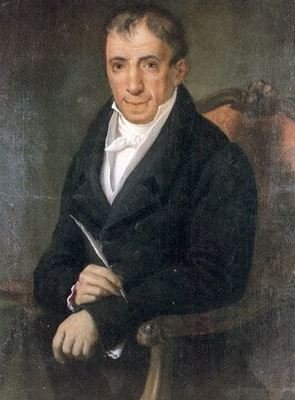
Image: Adamantios Korais
Resistance and the Path to Independence
Early Resistance and Rebellion
Throughout the centuries of Ottoman rule, there were numerous instances of Greek resistance, particularly in regions that were difficult for the Ottomans to control, such as the mountains of central and southern Greece. Bands of guerrilla fighters, known as klephts, conducted raids on Ottoman authorities and tax collectors. These fighters became folk heroes, symbolizing Greek resistance and defiance against foreign rule.
In addition to local resistance, there were several larger revolts against Ottoman rule, often supported by foreign powers. One of the most notable was the Orlov Revolt in 1770, during which Russian forces, led by Count Orlov, attempted to incite a rebellion among the Greeks. Although the revolt ultimately failed, it demonstrated the growing dissatisfaction with Ottoman rule and the increasing willingness of foreign powers to intervene in Greek affairs.
The Greek War of Independence
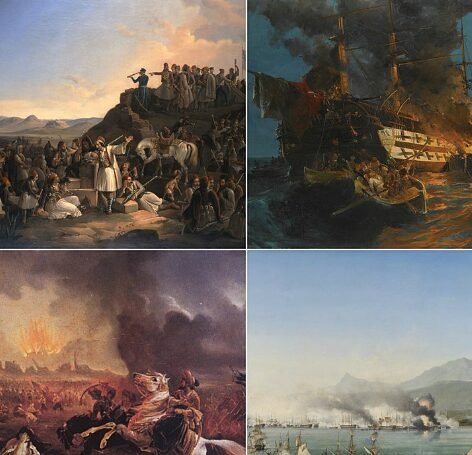
The Greek War of Independence (1821–1829) was a successful revolution against the Ottoman Empire. With aid from Britain, France, and Russia, Greece achieved independence, now celebrated annually on 25 March as Greek Independence Day.
The Greek War of Independence, which began in 1821, was the culmination of centuries of discontent and growing national consciousness. Inspired by the success of the American and French revolutions, Greek patriots launched a series of uprisings across the Greek mainland and islands, calling for independence from Ottoman rule.
The war was a brutal and protracted conflict, marked by atrocities committed by both sides. However, the Greek cause gained international support, particularly from European intellectuals and politicians who were sympathetic to the ideals of Greek independence. The so-called Philhellenes, or “lovers of Greece,” included figures like Lord Byron, who became a symbol of the international effort to support the Greek struggle.
After nearly a decade of fighting, the Greeks achieved independence in 1830, with the establishment of the modern Greek state. The first independent Greek state was officially recognized by the Great Powers (Britain, France, and Russia) through the Treaty of Constantinople.
Frequently Asked Questions
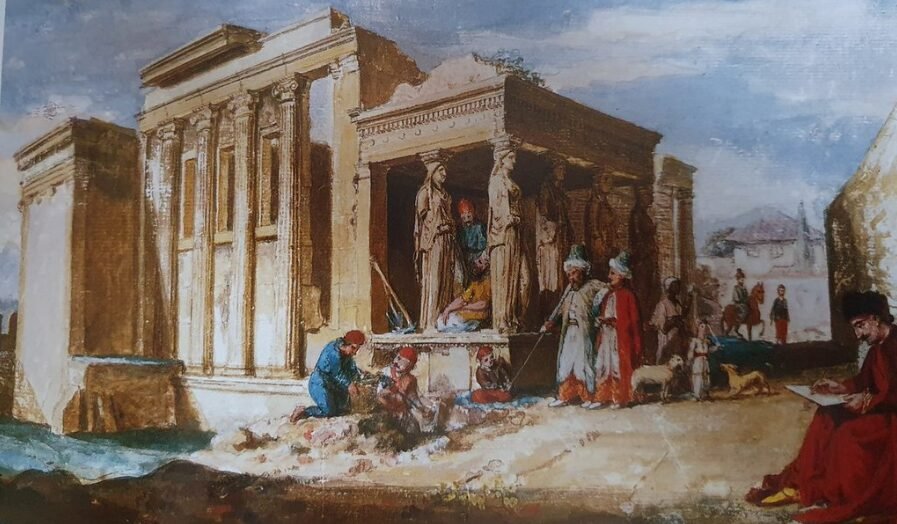
The painting Erechtheum by James “Athenian” Stuart at the Victoria and Albert Museum shows workmen excavating the base of the prostasis beneath the Caryatids, supervised by Ottomans and Dizdar Ağa, while Stuart sketches the monument in the foreground.
What is the period of Ottoman rule in Greece called, and when did it last?
The period of Ottoman rule in Greece is called Tourkokratia (Greek: Τουρκοκρατία, “Turkish rule” or “Turkocracy”). It lasted from the mid-15th century until the Greek War of Independence in 1821.
Which regions of present-day Greece were not fully integrated into the Ottoman Empire?
The Ionian Islands, some Venetian-controlled territories, and the Mani Peninsula in the Peloponnese were not fully integrated into the Ottoman Empire, though the Mani Peninsula was under Ottoman suzerainty.
What was the state of the Eastern Roman Empire before Ottoman rule in Greece?
The Eastern Roman Empire, the remnant of the Roman Empire, had governed much of the Greek-speaking world for over 1,100 years but was severely weakened by the 1204 sack of Constantinople by Latin Crusaders.
What events led to the Ottoman advance into Greece?
The Ottomans advanced into Greece following victories over the Serbs to the north, including the Battle of Maritsa in 1371 and the Battle of Kosovo in 1389.
When did the Ottomans capture Constantinople, and why was this significant for Greece?
The Ottomans captured Constantinople in 1453, a pivotal moment as it marked the end of the Byzantine Empire and allowed the Ottomans to advance south into Greece.
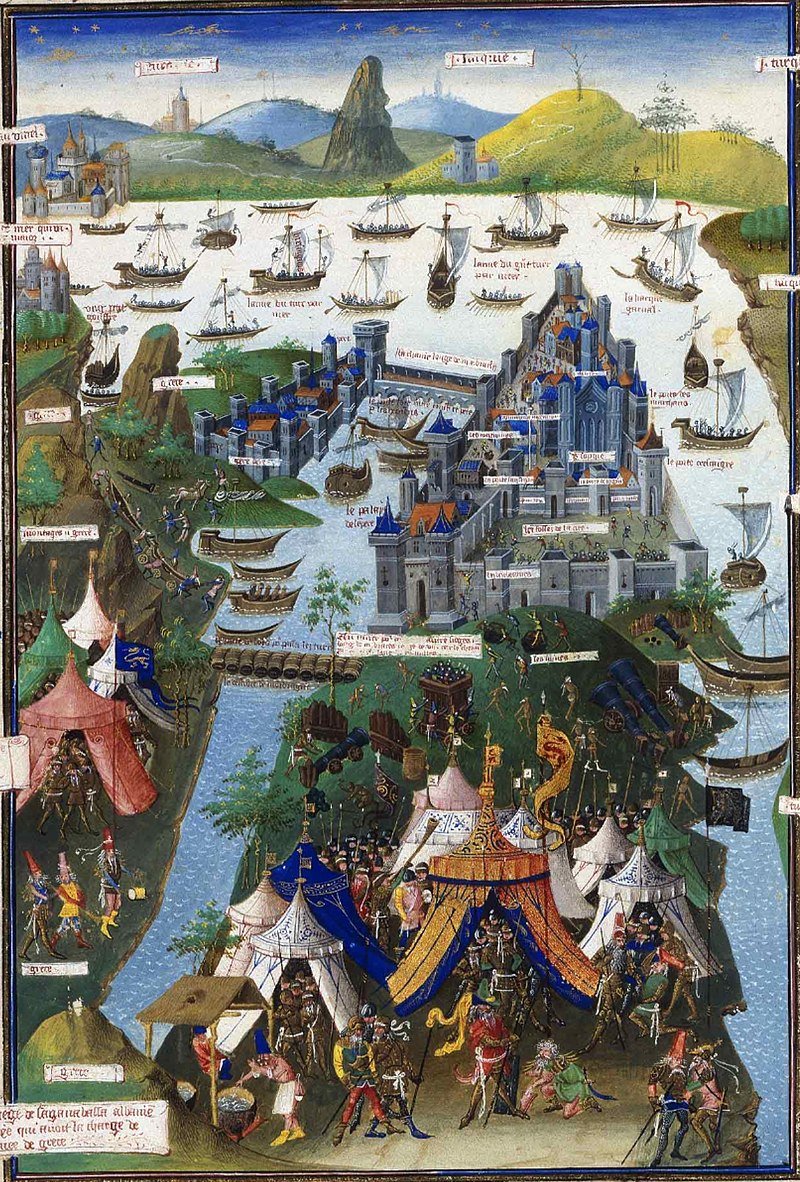
Siege of Constantinople in 1453
Which major Greek cities and regions did the Ottomans capture during their expansion into Greece?
The Ottomans captured Athens in 1456 and the Peloponnese by 1460. They also took control of most of mainland Greece and the Aegean Islands by the early 16th century.
What role did the mountains of Greece play during Ottoman rule?
The mountains of Greece remained largely untouched by Ottoman control and served as refuges for those resisting Ottoman rule, including individuals engaging in guerrilla warfare.
When were the Cyclades islands annexed by the Ottomans, and what was their prior status?
The Cyclades islands were officially annexed by the Ottomans in 1579, though they had been under vassal status since the 1530s.
Which islands were exempt from long-term Ottoman rule, and what significant event took place there?
The Ionian Islands were mostly exempt from long-term Ottoman rule, except for brief periods on Kefalonia. Modern Greek statehood began in these islands with the establishment of the Republic of the Seven Islands in 1800.
What was the Ottoman millet system, and how did it affect Greek society?
The millet system organized subjects based on religion. Greeks were granted some privileges but suffered from local administrative corruption. Despite this, they remained influential in commerce, especially in shipping.
How did Greek shipowners benefit under Ottoman rule, and what challenges did they face after the Battle of Lepanto?
Greek shipowners became key players in Ottoman maritime trade and made significant profits. However, after the Ottoman defeat at the Battle of Lepanto in 1571, Greek ships faced attacks from Catholic pirates, particularly from Spain and Malta.
How did Ottoman rule impact the Greek aristocracy and societal elites?
The Byzantine land-owning aristocracy, once dominant, was largely destroyed under Ottoman rule. A new class of prokritoi (bureaucrats and tax collectors) rose to prominence, though they were often criticized for corruption.
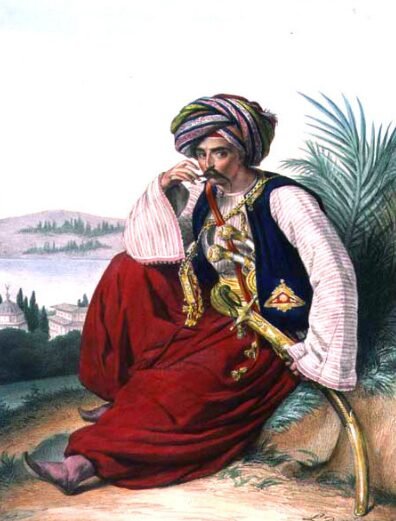
Image: A Muslim Greek Mamluk portrayed by French painter Louis Dupré (oil on canvas, 1825)
Who were the Phanariots, and what role did they play during Ottoman rule?
The Phanariots were a wealthy Greek class that gained prominence in Constantinople as businessmen and diplomats. They played a significant role in the empire’s administration and diplomacy.
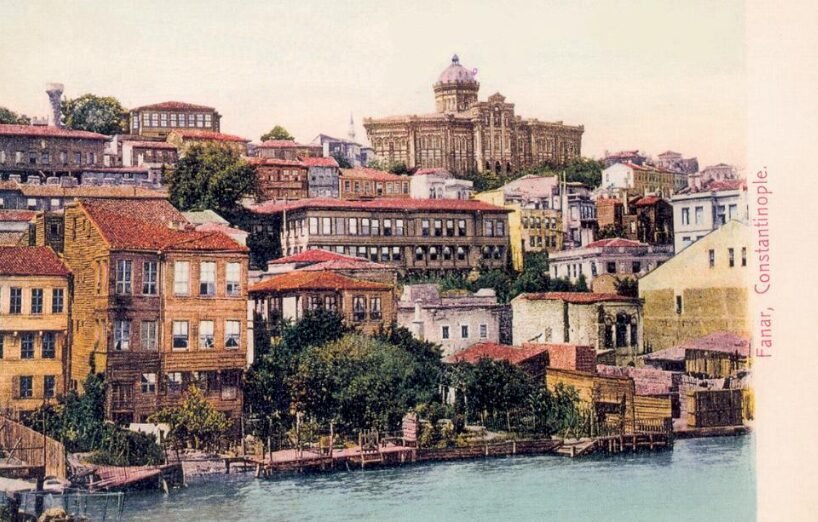
Image: View of the Phanarion quarter, the historical center of Constantinople’s Greek community during Ottoman times. The domed red building is the Phanar Greek Orthodox College, a Fener landmark.
How did the Greek Orthodox Church fare under Ottoman rule?
The Greek Orthodox Church flourished under Ottoman protection. The Ecumenical Patriarch gained religious control over all Orthodox Christians in the empire, regardless of their language or ethnicity.

Firefight between Greeks and Turks at Rizomylos, during the Battle of Velestino as part of the Greco-Turkish War (1897)





