Ancient Egyptian City of Memphis
Memphis, known in Ancient Egyptian as Men-nefer and later as Inebu-hedj (meaning “White Walls”), was one of the most significant cities in ancient Egypt. Located strategically at the mouth of the Nile Delta, it served as a political, cultural, and religious center for much of Egypt’s early history. The ruins of this once-great metropolis now lie near Mit Rahina, in the modern Giza Governorate. Recognized as a UNESCO World Heritage Site, Memphis remains an invaluable historical treasure.
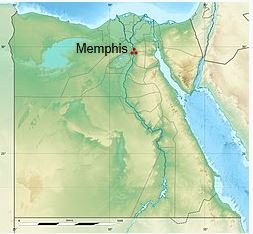
A map of Egypt highlighting the location (in red) of Memphis.
The Founding of Memphis
According to Egyptian tradition and the accounts of Manetho, a historian from the Ptolemaic era, Memphis was founded by King Menes, the ruler who is credited with uniting Upper and Lower Egypt around 3100 BCE. Ancient sources claim that Menes established the city by diverting the course of the Nile to create a stable foundation for his new capital. This central location allowed Memphis to serve as the political and administrative heart of the early Egyptian state.
Significance as a Capital
Memphis was the capital of Egypt during the Early Dynastic Period (c. 3100–2686 BCE) and the Old Kingdom (c. 2686–2181 BCE). Even after losing its status as the capital to Thebes and later Alexandria, it remained a vital religious and commercial hub. The city’s strategic position enabled it to flourish as a center for trade, governance, and culture.
The God Ptah and Religious Importance
Memphis was the religious heart of ancient Egypt, particularly due to its association with Ptah, the creator god and patron of craftsmen. The city’s most important temple, Hut-ka-Ptah (“Enclosure of the ka of Ptah”), was one of the grandest religious centers in the ancient world. The Greeks later derived the name “Aigyptos” (which became “Egypt” in English) from this temple’s name.
Memphis was more than just a capital; it was a symbol of Egypt’s unity, religious devotion, and economic prosperity.
The Memphite Triad, consisting of Ptah, his consort Sekhmet, and their son Nefertem, was widely venerated. The temple complex included elaborate sanctuaries and sacred avenues lined with sphinxes, underscoring the city’s religious prominence.
Economic and Cultural Influence
Memphis thrived as an economic powerhouse, boasting a dense network of workshops, factories, and warehouses. The city’s port, Peru-nefer, was one of the busiest in Egypt, facilitating the transport of goods, including grain, textiles, and luxury items like gold and incense. Craftsmen and artisans flourished under the patronage of the pharaohs, producing exquisite works of art, jewelry, and religious statues.
Memphis During Different Eras
Old Kingdom (c. 2686–2181 BCE)
Memphis reached its peak during the Old Kingdom, particularly under the Fourth and Sixth Dynasties, when the construction of the Great Pyramids at Giza symbolized the city’s grandeur. The royal court resided in Memphis, and significant administrative and religious developments took place.
Middle Kingdom (c. 2055–1650 BCE)
While the capital shifted to Thebes during the Middle Kingdom, Memphis remained a vital administrative and commercial center. The city’s temples received continued patronage, and high priests of Ptah wielded considerable influence.
New Kingdom (c. 1550–1070 BCE)
During the New Kingdom, Memphis regained prominence as the home of royal palaces and military headquarters. The pharaohs Thutmose III, Amenhotep II, and Ramesses II expanded the city’s infrastructure, constructing grand temples and statues. The city also became a hub for education, with noble families sending their sons to train in government and military affairs.
Ancient Egyptian Kings of the New Kingdom and their Accomplishments
Decline and Foreign Rule
Under the Twenty-fifth and Twenty-sixth Dynasties, Memphis played a crucial role in Egypt’s struggle against foreign invaders, including the Assyrians and Persians. Though the Persians captured the city, it remained a spiritual center, with continued reverence for Ptah and Apis, the sacred bull.
Memphis lost its political dominance when Alexander the Great conquered Egypt in 332 BCE and later established Alexandria as the new capital. However, Memphis remained significant for religious ceremonies and the coronation of Ptolemaic rulers. During the Roman era, the city’s prominence further declined as Alexandria flourished.
By the time of the Arab conquest of Egypt (641 CE), Memphis had largely fallen into ruins. Many of its stones were repurposed for building the new city of Fustat, the predecessor of modern Cairo. Islamic chroniclers like Abd-ul-Latif described Memphis as a city of immense ruins, still reflecting its former glory.
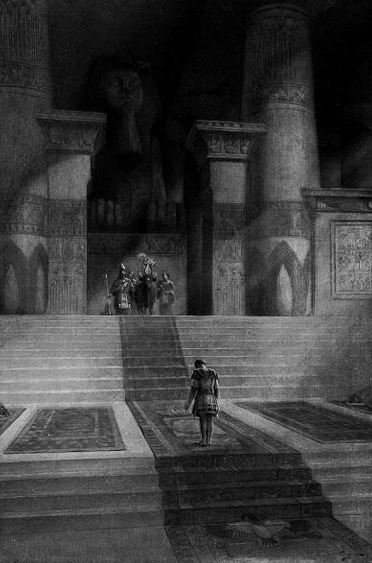
An artwork by French artist Andre Castaigne, titled “Alexander at the Temple of Apis in Memphis”
The Memphite Necropolis
One of the most significant aspects of Memphis was its extensive necropolis, which included:
- Saqqara: Home to the famous Step Pyramid of Djoser, designed by Imhotep, which is considered the earliest colossal stone building.
- Giza: Featuring the Great Pyramids and Sphinx, these monumental structures symbolized Egypt’s architectural and engineering prowess.
- Abusir and Dahshur: Containing additional pyramids and elite tombs, further highlighting Memphis’ role as a center of royal and elite burials.
READ MORE: 9 Wondrous Facts about the Great Pyramid of Giza
Archaeological Discoveries
The rediscovery of Memphis began in the 19th century, with early excavations by Giovanni Caviglia, Auguste Mariette, and Flinders Petrie. These excavations unearthed numerous artifacts, including colossal statues of Ramesses II, the Alabaster Sphinx, and remnants of temples dedicated to Ptah, Hathor, and Amun.
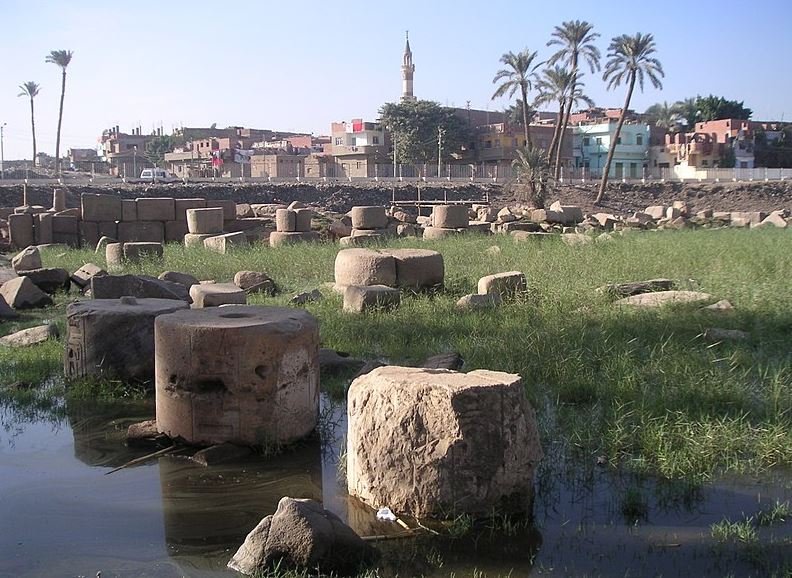
The remains of the hypostyle hall and pylon of Ramses II, at present day Mit Rahina.
READ MORE: 10 Most Revered Gods and Goddesses in Ancient Egypt
Memphis Today: A Heritage Site
Today, Memphis is preserved as an open-air museum, showcasing remnants of its grandeur. The museum houses:
- The Colossus of Ramesses II, a 10-meter-long limestone statue.
- The Alabaster Sphinx, one of the largest sphinxes carved from a single block of stone.
- Various statues, reliefs, and inscriptions that offer glimpses into its illustrious past.
Frequently Asked Questions
Who founded Memphis, and why was it important?
According to Manetho, Memphis was founded by King Menes, the unifier of Upper and Lower Egypt. It served as Egypt’s capital during the Early Dynastic Period and Old Kingdom, later remaining a key religious, commercial, and strategic center.
What role did the god Ptah play in Memphis?
Ptah, the patron god of craftsmen and creation, was the chief deity of Memphis. His temple, Hut-ka-Ptah, was one of the city’s most important religious centers and influenced the Greek name for Egypt, Aegyptos.
Why did Memphis decline?
Memphis lost its economic and political significance due to the rise of Alexandria under the Ptolemies and the spread of Christianity, which diminished its religious importance. By the Middle Ages, it was largely abandoned, with Cairo emerging as the dominant city.
What was the significance of the Memphite necropolis?
Memphis’ vast necropolis, including Saqqara, housed royal pyramids, tombs, and funerary temples, making it one of the most significant burial sites in ancient Egypt.
What is the connection between Memphis and the Rosetta Stone?
The Decree of Memphis, issued by Ptolemy V in 196 BC, was inscribed in three scripts, including Greek and hieroglyphs. A similar decree, the Rosetta Stone, was key to deciphering Egyptian hieroglyphs.
What remains of Memphis today?
Few structures survive, but notable ruins include the colossal statues of Ramesses II, the alabaster Sphinx, and remnants of the Great Temple of Ptah. The site functions as an open-air museum.
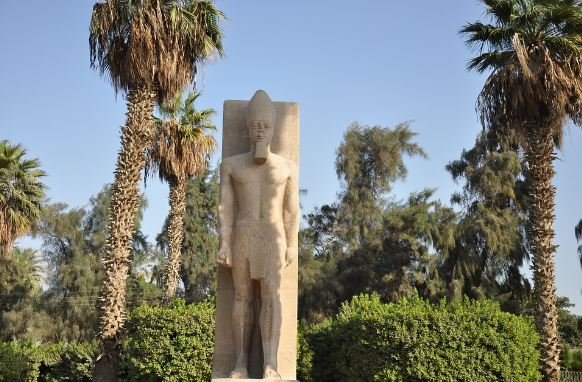
Rameses II’s statue in Memphis.
How is Memphis recognized today?
Memphis and its necropolis, including the pyramids of Giza and Saqqara, are designated as a UNESCO World Heritage Site, preserving their historical and cultural significance.
READ MORE: 10 Major Events in Ancient Egyptian History





