Seth-Peribsen: Pharaoh of the Second Dynasty of Egypt

Seth-Peribsen, also known as Peribsen or Ash-Peribsen, was a pharaoh of Egypt’s Second Dynasty (c. 2890–2686 BCE). His reign’s duration and chronological position are uncertain. Image: Inscription on a porphyry vase shows Peribsen’s serekh, featuring the Seth-animal topped with a sun-disk.
Seth-Peribsen, also known as Ash-Peribsen or simply Peribsen, was a pharaoh of Egypt’s Second Dynasty (circa 2890–2686 BCE). Despite uncertainties surrounding his reign, including its duration and succession, Peribsen remains a figure of fascination due to his unconventional choice of patron deity.
Unlike most pharaohs, who associated with Horus, Peribsen’s royal insignia bore the Seth-animal, signifying allegiance to the god Seth. This deviation from tradition has led to extensive debate among Egyptologists.
Peribsen’s tomb was discovered at Abydos in 1898, and subsequent excavations revealed a well-preserved structure with traces of later restorations. His reign, marked by religious and administrative reforms, is seen as a period of cultural development and political intrigue.
READ MORE: 10 Major Events in Ancient Egyptian History
Attestations of Peribsen
Artifacts bearing Peribsen’s name, such as jar seals and inscriptions on vessels of alabaster, sandstone, and porphyry, were primarily found in his Abydos tomb. These items, along with a clay seal discovered at Beit Khallaf’s mastaba K1, attest to his rule. Two large granite stelae found at his burial site are notable for their rough, unfinished appearance, possibly reflecting deliberate choices.
A cylinder seal of unknown origin portrays Peribsen’s name within a cartouche—a format introduced after his reign—accompanied by the epithet Merj-netjeru (“Beloved of the Gods”). This seal likely represents a posthumous commemoration. Another seal without the cartouche includes the title Nisut-Bity (“King of Upper and Lower Egypt”), further confirming his royal status.
Peribsen’s choice of Seth as a patron deity, coupled with his administrative and cultural contributions, challenges conventional narratives about this period.
Notably absent from New Kingdom king lists, such as the Abydos and Saqqara King Lists, Peribsen’s name may have been excluded due to later political or religious biases. However, Fourth Dynasty inscriptions referencing priests maintaining his funerary cult indicate that he was regarded as a legitimate ruler. Egyptologists suggest that his name’s omission might result from a loss of historical continuity or misrepresentation in later periods.
The Unique Name of Peribsen
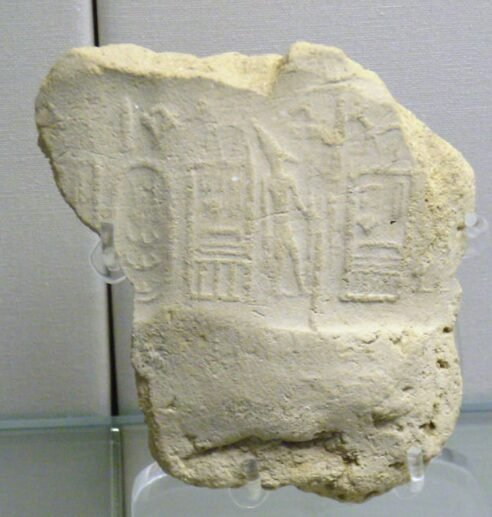
He broke tradition by associating with Seth, the god of chaos, instead of Horus as his royal patron deity. This choice remains a subject of debate among Egyptologists. Image: Seal impression of Pharaoh Peribsen
The most striking feature of Peribsen’s royal name is the replacement of the Horus falcon atop the serekh with the Seth-animal. While other rulers, such as the 13th Dynasty’s Seth Meribre and the 19th Dynasty’s Seti I, associated with Seth, Peribsen stands out as the only pharaoh to exclusively honor Seth in his serekh.
Scholars have debated Peribsen’s choice of Seth as his patron deity. Older theories posited that Egypt was divided during his reign, with Peribsen ruling Upper Egypt. Alternatively, some hypothesized that he attempted to establish a monotheistic cult centered on Seth, akin to Akhenaten’s later Atenism. However, contemporary research suggests that Peribsen oversaw a unified Egypt and that his reforms were part of broader cultural and administrative changes.
Seal impressions from his reign reveal advancements in grammar, including the first complete sentences in Egyptian inscriptions. These findings underscore the era’s intellectual progress and challenge notions of a fractured or regressive state.
Religious Theories
Theories from the mid-20th century painted Peribsen as a heretic who sought to overthrow Horus worship in favor of Seth. They cited the defacement of Seth imagery on Peribsen’s stelae and his exclusion from king lists as evidence of religious conflict. According to these interpretations, Egypt was divided into two factions, with Peribsen leading a Sethian Upper Egypt.
Modern research has largely refuted these ideas. Archaeological evidence shows no systematic effort to erase Peribsen’s legacy, as priests continued his funerary cult well into the Fourth Dynasty. Seal impressions from his reign depict various deities, including Ash, Min, and Bastet, demonstrating the persistence of polytheistic worship. Scholars now view Peribsen’s Seth-aligned serekh as a symbolic gesture, perhaps reflecting regional traditions or a desire to unify divergent religious practices.
The Conflict between Horus and Seth over the Throne of Ancient Egypt
Political Theories and the Division of Egypt
Some scholars argue that Egypt was divided during Peribsen’s reign, with separate rulers governing Upper and Lower Egypt. Proponents of this theory point to the absence of Peribsen’s name in Lower Egyptian records and the scarcity of artifacts bearing his name in the region. His association with Seth, a deity linked to Upper Egypt, further supports this view.
Scholars suggest Peribsen’s choice of Seth was political propaganda or symbolic of unifying the dual aspects of Seth and Horus, as seen in his successor Khasekhemwy’s dual-god symbolism.
Contrary to the divided-realm theory, others suggest that Peribsen ruled a unified Egypt and introduced significant administrative reforms. Titles from his reign indicate a restructuring of bureaucratic roles, likely aimed at curbing the power of high officials. Peribsen also founded new administrative centers and cities, reflecting a stable and prosperous state.
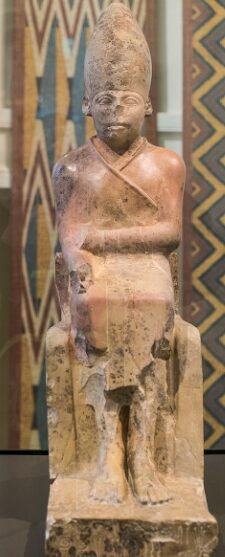
Statue of Khasekhemwy, Ashmolean Museum, Oxford, England
Identity and Succession
Some Egyptologists believe that Peribsen and another Second Dynasty ruler, Sekhemib-Perenmaat, were the same individual. Clay seals bearing Sekhemib’s name were found at the entrance of Peribsen’s tomb, suggesting a possible connection. However, no inscriptions link the two names directly, and the debate remains unresolved.
Inscriptions from the Fourth Dynasty priest Shery link Peribsen to another shadowy figure, Senedj. This has led to speculation that Peribsen’s name was substituted with Senedj in later king lists. Other theories propose that Peribsen was identical to the Ramesside cartouche name Wadjenes, based on linguistic similarities.
Cultural and Religious Contributions
Peribsen’s reign witnessed significant progress in writing and administration. His inscriptions include the earliest known complete sentences in Egyptian history, reflecting advancements in grammar and record-keeping. Administrative titles were also revised, indicating efforts to streamline governance.
Early theories suggested Peribsen promoted Seth as a sole deity, but contemporary evidence shows he worshipped multiple gods, indicating cultural and religious reforms rather than monotheism.
Despite aligning with Seth, Peribsen’s reign was marked by polytheistic worship. Numerous inscriptions reference deities such as Horus, Min, and Bastet. The appearance of the sun disc alongside Seth’s symbol in some inscriptions may signify the emergence of a sun cult, which would later gain prominence in Egyptian religion.
Peribsen’s Tomb
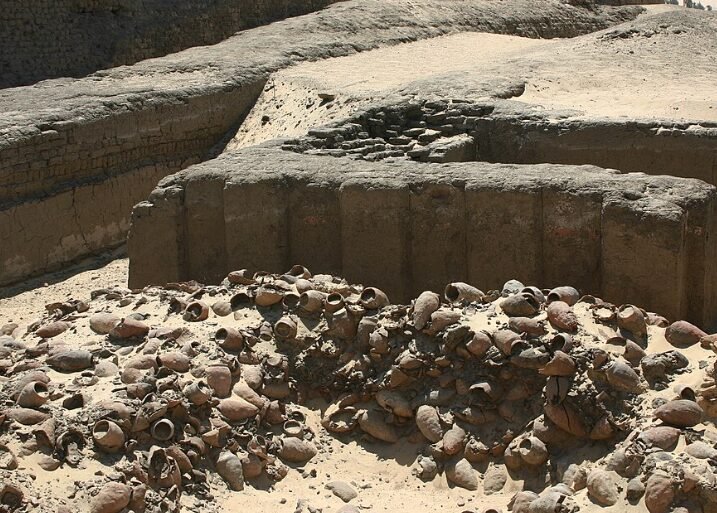
Artifacts such as jar seals, inscriptions on stone vessels, and two tomb stelae from his burial site in Abydos bear his name. Image: Peribsen’s funerary enclosure at Abydos, with the Great Enclosure of King Khasekhemwy visible in the background.
Peribsen was buried in Tomb P at Abydos, a modest structure compared to other royal tombs. The tomb comprises a central burial chamber surrounded by storage rooms and an antechamber. Excavations have revealed signs of hasty construction, suggesting it was completed quickly.
Artifacts recovered from the tomb include stone vessels, copper tools, and jewelry, as well as inscriptions bearing Peribsen’s name. Two granite stelae once marked the tomb’s entrance, though they were later defaced. The tomb also yielded the first complete written sentence in Egyptian history, a tribute to Peribsen as a unifier of the two lands.
Peribsen’s tomb, discovered at Abydos, shows evidence of rushed construction and later restorations. Artifacts include stone vessels, beads, and copper tools, indicating significant craftsmanship and wealth.
A royal funerary enclosure near Peribsen’s tomb, known as the “Middle Fort,” reflects his status. The enclosure housed chapels and other cult structures, underscoring the continued veneration of Peribsen after his death.
Frequently Asked Questions

Seth-Peribsen was a pharaoh of Egypt’s Second Dynasty (c. 2890–2686 BC), notable for aligning his royal patron deity with Seth rather than the traditional Horus. Image: Stone vase of Seth-Peribsen with the inscription tribute of the people of Sethroë
Why is Peribsen’s name significant?
His use of the Seth-animal atop his serekh was unprecedented, breaking from the convention of the Horus falcon. This has sparked debate over its political and religious implications.
What evidence supports Peribsen’s reign?
Artifacts such as seals, stelae, and inscriptions have been found in his tomb at Abydos and elsewhere, confirming his historical existence.
Why is Peribsen absent from later king lists?
He is omitted from New Kingdom king lists, likely due to political shifts or name distortion over time, not deliberate erasure.
Was Egypt divided during Peribsen’s reign?
Some scholars propose Egypt was peacefully divided between Upper and Lower Egypt due to administrative challenges, with Peribsen ruling Upper Egypt. Others argue the realm remained unified.
What were Peribsen’s achievements?
He implemented administrative reforms, founded new cities, and established cult centers, reflecting advancements in governance and culture.
What is the significance of his tomb?
Located in Abydos, his tomb was relatively small and hastily built but included the first recorded complete Egyptian sentence, evidencing early linguistic development.
What archaeological discoveries support his legacy?
His tomb yielded artifacts linking him to other Second Dynasty rulers, indicating dynastic continuity. Restoration efforts in later periods confirm his enduring recognition.





