Author: World History Edu
Pharaoh Hotepsekhemwy was the founder of Egypt’s Second Dynasty, a period marked by transition and consolidation following the challenges of the First Dynasty‘s decline. His reign represents a crucial point...
The European Upper Paleolithic period (approximately 40,000 to 10,000 years ago) marked a pivotal time in human prehistory, characterized by significant cultural, technological, and artistic developments. Among the most remarkable...
The Hittites were an ancient Indo-European civilization that emerged in Anatolia (modern-day Turkey) during the early second millennium BCE. As one of the earliest major powers of the Bronze Age...
Born into a lineage of conquerors and statesmen, Ottoman Sultan Murad III inherited an empire at its zenith but faced pressures that tested his political skill and moral character. Throughout...
Inca food and agriculture are central to understanding the success and sophistication of the Inca Empire, which thrived in the Andean region of South America before the Spanish conquest in...
Origin Story The Uraeus, a prominent symbol in ancient Egyptian culture, traces its origins back to the early dynastic periods of Egypt, around the third millennium BCE. Its genesis is...
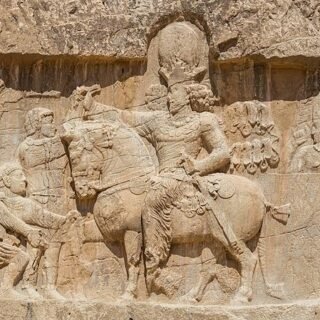
The Battle of Edessa in AD 260 was a pivotal conflict between the Roman Empire, led by Emperor Valerian, and the Sasanian Empire, under King Shapur I. This confrontation occurred...
Ra, one of ancient Egypt’s most revered deities, is intricately associated with symbols that embody life, power, and the eternal cycle of rebirth. His primary symbols include the Wadjet sun...
The Archaic period of ancient Greece, spanning roughly from the early 8th century BCE to the onset of the Classical era around 480 BCE, represents a foundational epoch in Greek...
Ancient Greece was not a monolithic entity but a tapestry of diverse tribes, each contributing uniquely to the cultural, political, and social landscape of the Hellenic world. According to the...
The succession of leadership after the death of Prophet Muhammad in 632 CE is a cornerstone event in Islamic history. This pivotal moment not only determined the immediate leadership of...
Ardashir I (180–242 AD), also known as “Ardashir the Unifier,” was the founder of the Sasanian Empire, which became one of the most powerful dynasties in Persian history. Born in...
Philip I, known as Philip the Arab (c. 204–249), ruled the Roman Empire from 244 to 249. Initially Praetorian prefect, he ascended after Gordian III’s death, negotiating peace with the...
The crossing of the Hellespont in 480 BC was a monumental moment in ancient history, marking the start of the Second Persian Invasion of Greece. Under the command of King...
Bubastis, known in ancient Egyptian as “Pr-Bȝst.t” (Per-Bast), meaning “House of Bast,” was a major city in ancient Egypt. Renowned as a religious and administrative hub, Bubastis played a critical...