Bubastis in Ancient Egypt
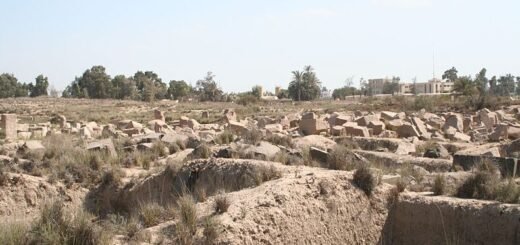
Bubastis, known in Bohairic Coptic as Poubasti and in Greek as Boubastis or Boubastos, was an ancient Egyptian city of great religious and historical significance. It was referred to as Pi-Beseth in the Bible (Ezekiel 30:17) and was the capital of its own nome in the Delta region of Lower Egypt. Renowned for its worship of the feline goddess Bastet, Bubastis housed numerous cat mummies, solidifying its status as an essential religious center. The city’s ruins now lie in the modern Egyptian city of Zagazig.

Ruins of Bubastis
READ MORE: 10 Most Famous Egyptian Goddesses
“House of Bast”
The name of Bubastis in Egyptian was Pr-Bȝst.t, conventionally pronounced Per-Bast, meaning “House of Bast.” The original pronunciation is reconstructed as /ˈpaɾu-buˈʀistit/. Over time, phonetic shifts led to variations in different languages. In Bohairic Coptic, the name was written as Ⲡⲟⲩⲃⲁⲥϯ, Ⲡⲟⲩⲁⲥϯ, or Ⲃⲟⲩⲁⲥϯ.
History
According to the historian Manetho, a natural disaster occurred near Bubastis during the reign of Hotepsekhemwy, the first king of the Second Dynasty. A chasm reportedly opened in the earth, leading to significant loss of life.
During the Middle Kingdom, Bubastis contained a 16,000-square-meter mudbrick palace, attributed to Amenemhat III. A limestone lintel from the site features a depiction of the pharaoh celebrating his Heb Sed Festival, a ritual reaffirming royal power.
A red granite architrave at Bubastis is linked to Sekhemre Khutawy Khabaw, a ruler of this chaotic period. His name also appears on a monument found at Tanis.
Bubastis reached its peak in influence and grandeur during the 22nd Dynasty, founded by Shoshenq I in 943 BC. The city became a royal residence, maintaining prominence through the 23rd Dynasty. However, it began to decline after the 525 BC Persian conquest by Cambyses II, marking the fall of the Saite 26th Dynasty.
Though Bubastis declined after the Persian conquest, it continued to hold relevance into the Roman and Christian eras.
During this period, the city thrived under the rule of the Bubastite kings, with Eusebius listing either three or nine rulers from this dynasty. Bubastis was strategically located near lands allotted by Psamtik I to his Ionian and Carian mercenaries. It was also the starting point of the Canal of the Pharaohs, initiated by Necho II but left incomplete.
Persian Rule and Decline
Following the Persian conquest, Bubastis suffered heavily. The city’s walls were dismantled, marking the beginning of its decline. Despite its diminished status, it continued to hold religious and administrative importance, appearing in ecclesiastical records under Augustamnica Secunda. Coins from the reign of Roman Emperor Hadrian have been found, suggesting continued habitation into Roman times.
Description by Herodotus
Greek historian Herodotus, writing after the Persian conquest, described Bubastis as a unique and aesthetically pleasing city. The Temple of Bastet was located centrally and surrounded by canals. These canals were 100 feet wide, lined with trees, and did not merge. The propylaea (monumental gates) were 60 feet high and adorned with elaborate sculptures. The temple itself, square in shape, had walls decorated with relief carvings and was surrounded by a sacred grove of trees. The city had a 400-foot-wide road leading to the Temple of Hermes, lined with towering trees.

Herodotus (c. 484 BC – c. 425 BC)
Religion and Worship of Bastet
Bubastis was the principal center for the worship of Bastet, a feline goddess often depicted with the head of a cat or lioness. Bastet was associated with protection, fertility, and music, and she was frequently depicted alongside Ptah in inscriptions. The city became the most significant repository for mummified cats, a practice deeply rooted in Egyptian religious customs.

A depiction of Bastet
The Oracle and Temple of Bastet
The oracle of Bastet was one of the most influential oracles in Egypt, particularly after the influx of Greek settlers, who associated Bastet with ancient Greek goddess Artemis. This association led to increased pilgrimage and cultural exchanges between Egyptians and foreigners.
READ MORE: What kinds of pets did the ancient Egyptians have?
The Festival of Bubastis
Bubastis hosted one of the most extravagant festivals in Egypt. Herodotus provided a vivid account of the Feast of Bastet, emphasizing its grandeur:
- Pilgrims traveled on boats, playing flutes, cymbals, and tambourines.
- Women performed dances and joyful gestures.
- Upon arrival, pilgrims engaged in mocking games and festivities.
- The festival involved excessive wine consumption, surpassing all other celebrations in the Egyptian calendar.
- Attendance reached approximately 650,000 participants.
Christian Bishopric
With the spread of Christianity, Bubastis became a bishopric within the 4th and 5th centuries. Three bishops from Bubastis are historically recorded:
- Harpocration (325 AD) – Ordained by Melitius of Lycopolis.
- Hermon (circa 362 AD) – Contemporary of Athanasius of Alexandria.
- Iulianus (449 AD) – Attended the Second Council of Ephesus.
Excavations and Discoveries
In December 1964, archaeologist Shafik Farid unearthed the tomb of Vizier Iuty in Bubastis’ Cemetery of the Nobles, dating to the late New Kingdom.
Since 2008, the German-Egyptian Tell Basta Project has been conducting excavations. Notably, in March 2004, archaeologists discovered a well-preserved copy of the Decree of Canopus, an important Ptolemaic-era inscription.
READ MORE: 12 Greatest Ancient Egyptian Cities
Frequently Asked Questions about the Ancient Egyptian City of Bubastis
What was the original Egyptian name of Bubastis?
The Egyptian name was Per-Bast (Pr-Bȝst.t), meaning “House of Bast,” referring to the city’s association with the goddess Bastet.
Which dynasty elevated Bubastis to a royal residence?
The 22nd Dynasty, under Shoshenq I, made Bubastis a royal residence, marking its peak as a political and religious center.
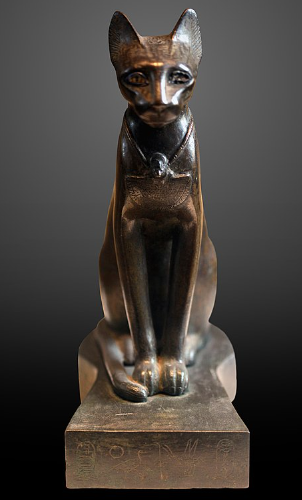
Cat statue of the Egyptian goddess Bastet in the Louvre, Paris
How did Bubastis decline?
The city declined after the Persian conquest in 525 BC, when its walls were dismantled. It never fully recovered and gradually lost importance.
What did Herodotus say about Bubastis?
Herodotus described its temple as the most pleasant to behold, surrounded by canals, adorned with sculptures, and featuring a grand road leading to the Temple of Hermes.

Egypt’s map, with the location of Bubastis highlighted in red.
What was the significance of the Festival of Bastet?
It was one of the most joyous festivals in Egypt, attracting up to 700,000 pilgrims who celebrated with music, dancing, and wine.
What major archaeological discoveries have been made in Bubastis?
Findings include the tomb of the vizier Iuty (New Kingdom), a well-preserved copy of the Decree of Canopus (2004), and ongoing excavations by the Tell Basta Project.