Hedjet: White Crown of Upper Egypt
The Hedjet, or White Crown of Upper Egypt, is one of the most enduring and significant symbols of ancient Egyptian kingship. It represented the authority of pharaohs over Upper Egypt,...
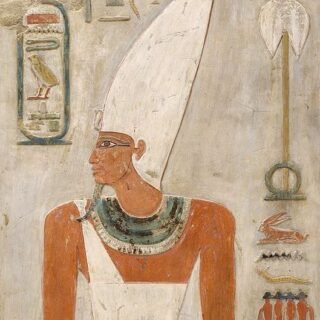
The Hedjet, or White Crown of Upper Egypt, is one of the most enduring and significant symbols of ancient Egyptian kingship. It represented the authority of pharaohs over Upper Egypt,...

The Atef crown is one of the most distinctive and symbolic headdresses in ancient Egyptian culture, closely associated with the god Osiris. Representing a blend of royal authority and divine...

Pharaoh Shepseskaf, the last ruler of Egypt’s Fourth Dynasty during the Old Kingdom, reigned during a time of transition. His rule marked the end of a lineage known for its...

Ptolemy XII Neos Dionysus, commonly known by his epithet Auletes (“the Flautist”), was a pivotal ruler of the Ptolemaic Kingdom of Egypt. His reign, spanning from 80 to 58 BC...
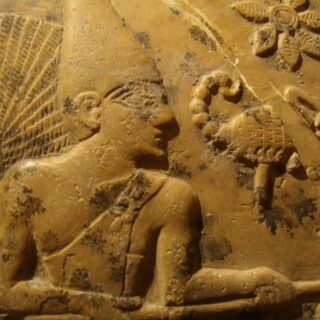
Naqada III represents the culminating phase of the Naqada culture, a significant period in ancient Egyptian prehistory spanning approximately 3200 to 3000 BCE. This era is pivotal as it marks...

The Narmer Palette stands as one of the most significant archaeological finds in ancient Egyptian history. Dating back to approximately the 31st century BCE, this artifact transcends its initial classification...

Nekhen, also known as Hierakonpolis, stands as one of ancient Egypt’s most significant archaeological and historical sites. Renowned for its early temples and as the center of the cult of...

The Two Ladies, a title referring to the goddesses Wadjet and Nekhbet, were among the most revered deities in ancient Egyptian religion. These powerful goddesses symbolized the duality and unity...

Nekhbet, one of ancient Egypt’s most revered deities, served as the patron goddess of Upper Egypt. Often depicted as a majestic vulture, she symbolized protection, sovereignty, and the divine authority...

Ptolemy VIII Euergetes II Tryphon was a complex ruler whose reign was characterized by ambition, strategic alliances, and brutal power struggles. As the younger son of Ptolemy V, his journey...
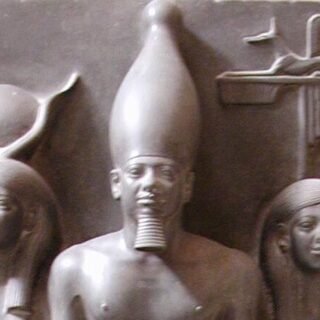
Pharaoh Menkaure, also known as Menkaura, stands as one of ancient Egypt’s most notable rulers from the Fourth Dynasty during the Old Kingdom. His reign lasted approximately between 2550 BC...
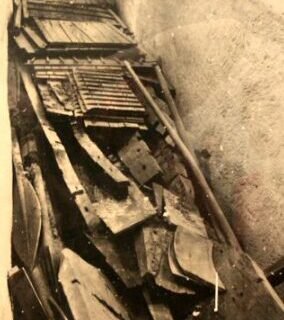
Khufu’s ship, also known as the solar barque, is one of the most remarkable artifacts of ancient Egyptian civilization. Its discovery in 1954 revealed not only the craftsmanship of Old...

Pharaoh Djedefre, also known as Radjedef or Rāḍedef, was a ruler of Egypt’s Fourth Dynasty during the Old Kingdom period, a time marked by significant cultural, architectural, and religious development....

Khufu, also known by his Hellenized name Cheops, was an eminent pharaoh of ancient Egypt’s Fourth Dynasty during the Old Kingdom period, approximately around 2566 BC. As the successor to...
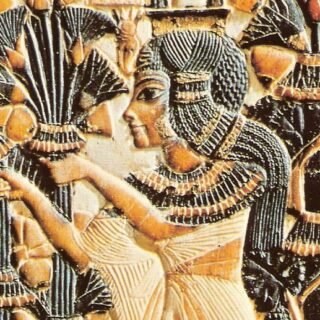
The role of the Great Royal Wife in Ancient Egypt was one of immense prestige and influence. Holding the esteemed title of “Great Royal Wife” or “Chief King’s Wife” (ḥmt...





