Horus Name: Origin Story and Meaning
The Horus name stands as the earliest known royal title of ancient Egyptian pharaohs, integral to the complex system of royal titulary. This title forms one of the “great five...

The Horus name stands as the earliest known royal title of ancient Egyptian pharaohs, integral to the complex system of royal titulary. This title forms one of the “great five...
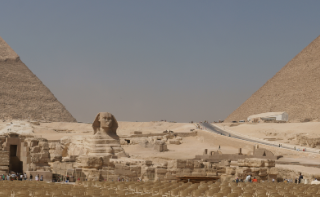
The Fourth Dynasty of ancient Egypt (c. 2613–2494 BCE) represents a golden age in the Old Kingdom, marked by profound architectural achievements, centralized governance, and religious developments. This period is...

Pharaoh Userkaf, the founder of Egypt’s Fifth Dynasty, reigned during the 25th century BC in the Old Kingdom period. His rule marked a transitional era in Egyptian history, characterized by...

Khedebneithirbinet I was a queen of ancient Egypt during the 26th Dynasty, also known as the Saite Dynasty (c. 664–525 BCE). Her name, meaning “Neith Kills the Evil Eye,” reflects a devotion...
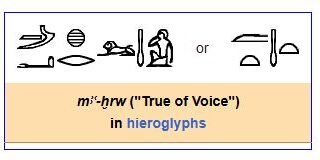
“Maa Kheru” (Ancient Egyptian: mꜣꜥ ḫrw) is a profound phrase in ancient Egyptian culture, embodying the concepts of righteousness, justification, and rightful acclaim. Translated as “true of voice,” “justified,” or...

Lower Egypt, known as Miṣr as-Suflā in Arabic and Tsakhet in Coptic, represents the northernmost region of ancient Egypt. Encompassing the fertile Nile Delta between Upper Egypt and the Mediterranean...

Sais, known in ancient Egyptian as Sꜣw and in Greek as Σάϊς, was a prominent city located in the Western Nile Delta on the Canopic branch of the Nile River....
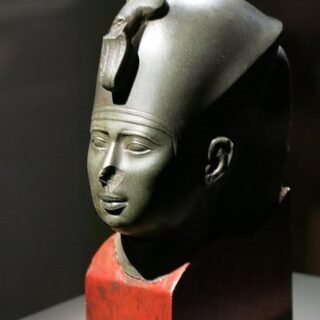
Pharaoh Psamtik II, the third ruler of Egypt’s Saite 26th Dynasty, reigned from 595 to 589 BC. His tenure was marked by significant military campaigns, strategic governance, and notable contributions...

Pharaoh Necho II, who reigned from 610 to 595 BC, was a significant figure in the late period of ancient Egypt’s history. As a ruler of the 26th Dynasty, his tenure...
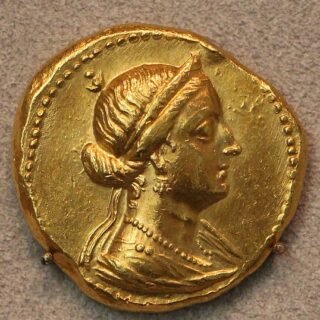
Arsinoe III Philopator was born around 246/245 BC into the prominent Ptolemaic dynasty, a lineage of Macedonian Greek rulers who controlled Egypt following the conquests of Alexander the Great. She...
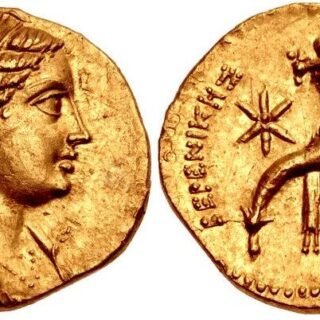
Berenice II Euergetis, born around 267/266 BCE, was the daughter of Magas, ruler of Cyrenaica, and Apama, a Seleucid princess. Her lineage connected her to two powerful dynasties—the Seleucids and...

The Ptolemaic Kingdom, also known as the Ptolemaic Empire, stands as one of the most remarkable Hellenistic states in ancient history. Spanning nearly three centuries from 305 BC to 30...

The Pschent, also known as the Double Crown, is one of the most iconic symbols of ancient Egyptian royalty. Representing the unification of Upper and Lower Egypt, it combined the...

The Deshret, or “Red Crown,” was a powerful symbol of Lower Egypt, representing the authority of the pharaohs over the fertile Nile Delta. Deeply embedded in the political, religious, and...
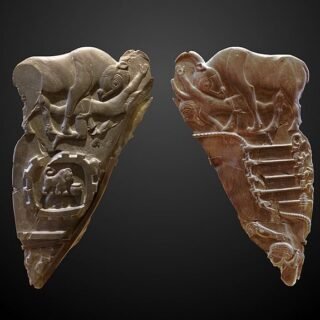
Ancient Egypt, with its illustrious history and profound cultural achievements, has left behind a treasure trove of artifacts that continue to captivate historians, archaeologists, and enthusiasts alike. Among these artifacts,...





