The Marduk Prophecy
The Marduk Prophecy is an ancient Mesopotamian text, written in Akkadian cuneiform, that narrates the travels of the statue of the god Marduk from Babylon and its eventual return. It is part of a...

The Marduk Prophecy is an ancient Mesopotamian text, written in Akkadian cuneiform, that narrates the travels of the statue of the god Marduk from Babylon and its eventual return. It is part of a...

Enūma Eliš, meaning “When on High,” is an ancient Babylonian creation myth that outlines the origins of the cosmos, the rise of the god Marduk, and the creation of humanity....

Babylon emerged within the fertile plains of southern Mesopotamia, a region defined by the life-giving waters of the Euphrates and Tigris Rivers. The earliest mention of this city dates back...
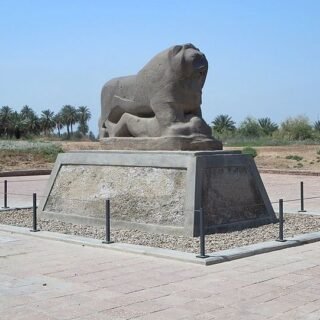
The Lion of Babylon, a striking ancient stone sculpture, stands as a testament to Mesopotamian artistry and symbolism. Carved from black basalt, a durable volcanic rock, the statue dates back...

The Ishtar Gate was constructed during the reign of King Nebuchadnezzar II around 569 BCE, at the height of the Neo-Babylonian Empire. Babylon, located in modern-day Hillah, Iraq, was the...
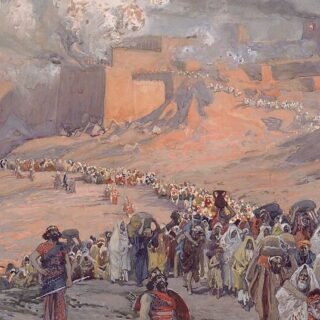
The Babylonian Captivity, spanning 597–539 BCE, stands as a transformative period in Jewish history. This era witnessed the forced deportation of Judeans from the Kingdom of Judah to Babylon by...
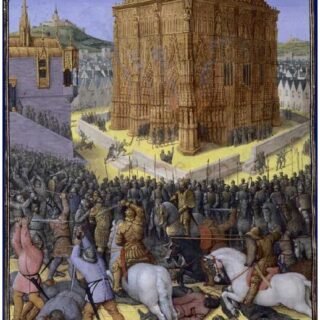
The Siege of Jerusalem by Nebuchadnezzar II in 587 BC was a critical turning point in Jewish history. This event marked the culmination of a prolonged struggle between the Kingdom...
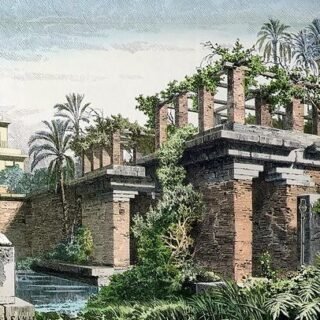
The Hanging Gardens of Babylon stand as one of the most enigmatic and celebrated landmarks of the ancient world. Renowned as one of the Seven Wonders of the Ancient World,...
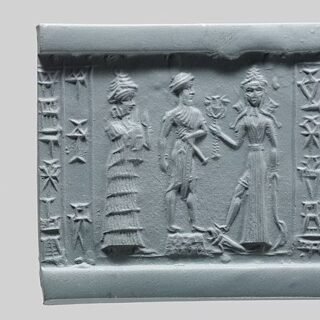
The Old Babylonian Empire, also known as the First Babylonian Empire, stands as one of the most influential states in ancient Mesopotamian history. Spanning approximately from 1894 to 1595 BC,...

Nabonidus, the last king of the Neo-Babylonian Empire, ruled from 556 BCE until Babylon’s fall to the Achaemenid Empire under Cyrus the Great in 539 BCE. His reign is notable for its distinct approach to religion,...
The Babylonian creation myth is primarily found in the “Enuma Elish,” an ancient Babylonian epic that describes the creation of the universe and the establishment of Marduk, the patron god...

Marduk was the chief deity of the city of Babylon and eventually became one of the most important deities in the Mesopotamian pantheon. As the national god of the Babylonians,...
Marduk’s conflict with Tiamat is one of the most central and defining myths in ancient Mesopotamian religion. It is narrated in the Babylonian epic “Enuma Elish,” also known as the...





