Category: Ancient History
Eratosthenes of Cyrene stands as one of the most illustrious figures of ancient Greece, renowned for his diverse contributions to mathematics, geography, astronomy, philosophy, and literature. Born in 276 BC...
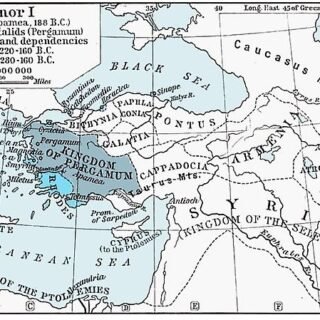
The Roman–Seleucid War, fought between 192 and 188 BC, was a pivotal conflict that reshaped the political landscape of the Hellenistic world and cemented the Roman Republic‘s dominance in the...
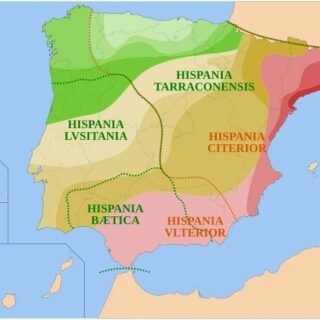
The Roman conquest of the Iberian Peninsula, a process spanning over two centuries, was a pivotal event in the history of ancient Rome. It transitioned the peninsula from a region...
The Ptolemaic Kingdom, also known as the Ptolemaic Empire, stands as one of the most remarkable Hellenistic states in ancient history. Spanning nearly three centuries from 305 BC to 30...
The Pschent, also known as the Double Crown, is one of the most iconic symbols of ancient Egyptian royalty. Representing the unification of Upper and Lower Egypt, it combined the...
The Deshret, or “Red Crown,” was a powerful symbol of Lower Egypt, representing the authority of the pharaohs over the fertile Nile Delta. Deeply embedded in the political, religious, and...
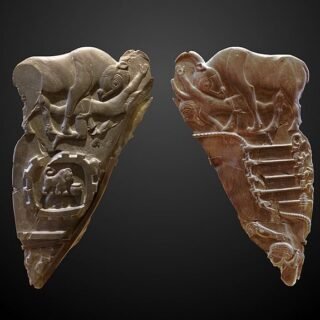
Ancient Egypt, with its illustrious history and profound cultural achievements, has left behind a treasure trove of artifacts that continue to captivate historians, archaeologists, and enthusiasts alike. Among these artifacts,...
The nymphaeum (plural: nymphaea) was a significant architectural feature in ancient Greece and Rome, dedicated initially to the worship of nymphs, especially those associated with springs and other water sources....
Coventina is a fascinating deity who reflects the blending of Roman and native British religious traditions during the Roman occupation of Britain. Worshiped primarily as a goddess of wells and...
Aphrodite, one of the most celebrated deities of ancient Greece, is commonly recognized as the goddess of love, beauty, and sensuality. However, her role extends far beyond these domains. One...
The Trojan War, as recounted in Homer’s Iliad and other ancient sources, was not merely a human conflict. It also served as a battleground for the Olympian gods, whose interventions...
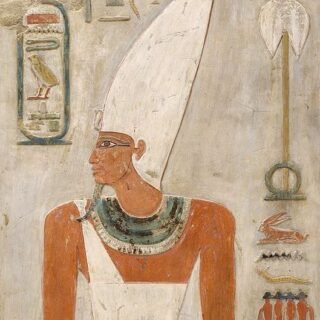
The Hedjet, or White Crown of Upper Egypt, is one of the most enduring and significant symbols of ancient Egyptian kingship. It represented the authority of pharaohs over Upper Egypt,...
The Atef crown is one of the most distinctive and symbolic headdresses in ancient Egyptian culture, closely associated with the god Osiris. Representing a blend of royal authority and divine...
Pharaoh Shepseskaf, the last ruler of Egypt’s Fourth Dynasty during the Old Kingdom, reigned during a time of transition. His rule marked the end of a lineage known for its...
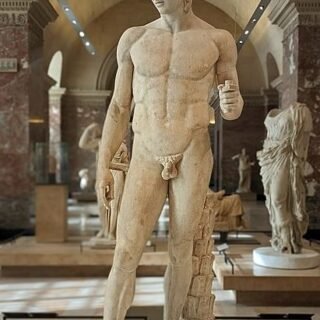
The Ares Borghese is a remarkable Roman marble statue from the imperial era, dating back to the 1st or 2nd century AD. Standing at an imposing height of 2.11 meters...