Daniel Liénard de Beaujeu
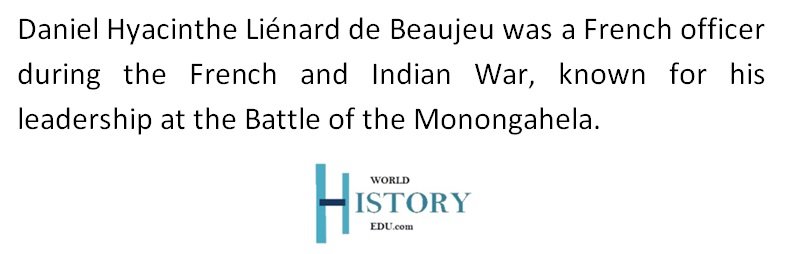
Daniel Hyacinthe Liénard de Beaujeu (9 or 19 August 1711 – 9 July 1755) was a French military officer whose career spanned significant conflicts in North America, including King George’s War and the French and Indian War. Known for his adaptability and leadership, Beaujeu is most remembered for his role in the Battle of the Monongahela, where he orchestrated a critical victory over British forces led by General Edward Braddock.

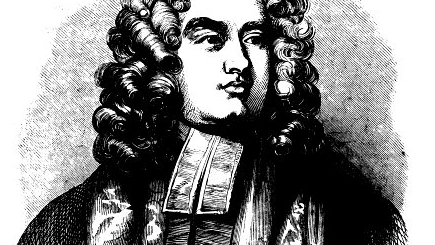
Daniel Hyacinthe Liénard de Beaujeu (1711–1755) was a French officer who played a pivotal role in the Battle of the Monongahela during the French and Indian War. Image: A 1750s portrait of Beaujeu.
Early Life and Family Background
Beaujeu was born in Montreal, New France (present-day Canada), to Louis Liénard de Beaujeu and Denise-Thérèse Migeon. He grew up in a prominent family with deep ties to the French colonial administration.
On March 4, 1737, he married Michelle-Elisabeth Foucault, and the couple had nine children. His upbringing in New France exposed him to the complexities of life in a colonial frontier, including interactions with Indigenous communities and the challenges of navigating vast, untamed territories.
Military Career and Early Service
Beaujeu’s military career began in the early 1730s when he joined the French colonial forces in New France. His service during King George’s War (1744–1748) included participation in the Battle of Grand Pré (1747), where he gained valuable experience in frontier combat. This conflict, part of the larger War of Austrian Succession, set the stage for heightened tensions between Britain and France over control of North America.
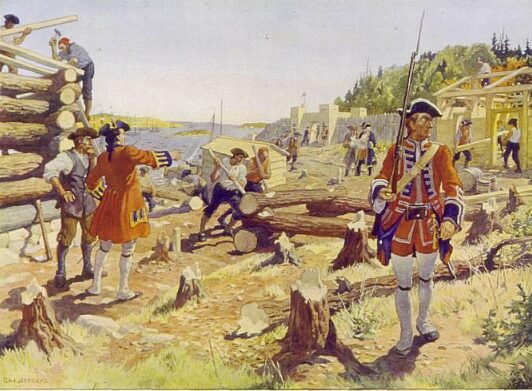
A depiction of King George’s War
Role in the French and Indian War
The French and Indian War (1754–1763), the North American theater of the global Seven Years’ War, saw Beaujeu rise to prominence. The conflict centered on control of the Ohio Country, a strategically vital region. The French established Fort Duquesne at the confluence of the Allegheny and Monongahela Rivers (modern-day Pittsburgh), asserting their claim over the territory. This move prompted British attempts to challenge French control.
Although not officially the commander of Fort Duquesne, Beaujeu was sent to relieve Claude-Pierre Pecaudy de Contrecœur, the fort’s current leader. Before formally assuming command, Beaujeu took the initiative to organize a defensive strategy against the approaching British forces under General Edward Braddock. Braddock’s expedition aimed to capture Fort Duquesne and establish British dominance in the Ohio Country.
The Battle of the Monongahela
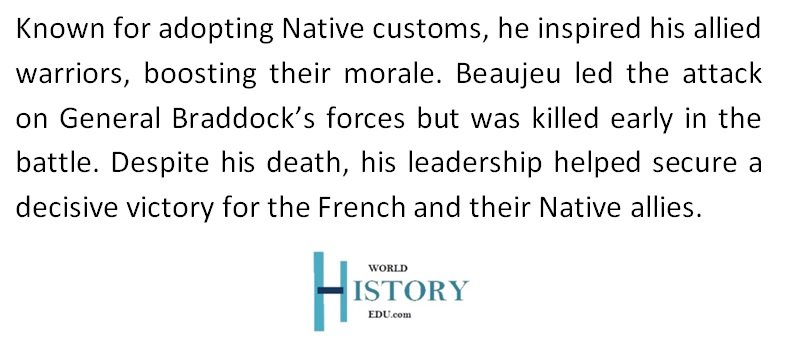
Beaujeu’s defining moment came during the Battle of the Monongahela on July 9, 1755. He led a mixed force of 800 troops, including French regulars, Canadian militia, and a significant contingent of Native warriors. Recognizing the importance of morale and cultural cohesion, Beaujeu adopted Native customs, including wearing war paint and traditional regalia. This gesture resonated with his Indigenous allies, strengthening their commitment to the battle.
The British forces, numbering approximately 1,300 and led by General Braddock, were advancing toward Fort Duquesne with confidence. Beaujeu planned to ambush the British column as it forded the Monongahela River. However, the British moved faster than anticipated, disrupting the French ambush.
Undeterred, Beaujeu led his forces into battle, but he was killed in the opening moments of the engagement. Despite his death, Captain Dumas assumed command and rallied the troops to continue the fight.
The dense forest and guerrilla tactics of the French and Native forces overwhelmed the British, whose traditional European formations proved ineffective in the chaotic terrain. The ambush resulted in a decisive French victory, with heavy British casualties, including General Braddock, who was mortally wounded. The defeat forced the British to retreat and temporarily secured French control of the Ohio Country.
Legacy and Significance
Although Beaujeu did not survive the Battle of the Monongahela, his leadership and strategic vision were instrumental in the French victory. His ability to unify a diverse force of regulars, militia, and Native warriors demonstrated his adaptability and cultural sensitivity, qualities essential for success in frontier warfare.
The battle underscored the limitations of traditional European military tactics in North America and highlighted the importance of Native alliances. Beaujeu’s adoption of Indigenous practices, such as war paint, symbolized his respect for his allies and his commitment to leveraging their strengths.
Beaujeu’s contributions were recognized posthumously. He was buried near the walls of Fort Duquesne, a fitting tribute to a man who played a pivotal role in defending French interests in North America. His efforts delayed British dominance in the region, shaping the course of the French and Indian War.
Conclusion
Daniel Hyacinthe Liénard de Beaujeu exemplified the qualities of a skilled leader capable of navigating the complexities of colonial frontier warfare. His strategic foresight and ability to inspire a diverse coalition left a lasting impact on the history of North America. The Battle of the Monongahela remains a testament to his leadership, marking a moment of triumph for the French and their Native allies in the struggle for the Ohio Country.
Frequently Asked Questions
Who were Beaujeu’s parents?
Beaujeu was the son of Louis Liénard de Beaujeu and Denise-Thérèse Migeon.
Who was Beaujeu’s wife, and how many children did they have?
He married Michelle-Elisabeth Foucault, and together they had nine children.
What role did Beaujeu play at the Battle of the Monongahela?
Beaujeu organized and led a force of French regulars, Canadian militia, and Native allies against British General Edward Braddock’s army during the battle.

Image: A drawing depicting the Battle of the Monongahela
Why was Beaujeu’s leadership significant despite not officially commanding Fort Duquesne?
His tactical leadership and ability to unite diverse forces helped secure a decisive French victory over the British.
What innovative strategy did Beaujeu use during the battle?
Beaujeu adopted Native customs, such as wearing war paint, to inspire and motivate his allied warriors.
What happened to Beaujeu during the Battle of the Monongahela?
He was killed early in the battle, but his leadership set the stage for a French victory.
What was the outcome of the Battle of the Monongahela for the British forces?
The British were forced to retreat after suffering heavy losses, marking a significant defeat.
Where was Beaujeu buried?
Beaujeu was buried near the walls of Fort Duquesne, in present-day Pittsburgh, Pennsylvania.