The First French Republic
The First French Republic, officially known as the République française, was established on 21 September 1792 amidst the upheavals of the French Revolution. This monumental period in French history marked...

The First French Republic, officially known as the République française, was established on 21 September 1792 amidst the upheavals of the French Revolution. This monumental period in French history marked...

Frederick Theodore Albert Delius (1862–1934), born Fritz Theodor Albert Delius, was an English composer celebrated for his distinctive musical style. Despite his upbringing in a prosperous mercantile family in Bradford,...
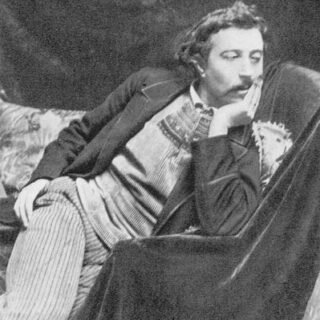
Paul Gauguin (1848–1903) was a French artist whose groundbreaking works transformed modern art. Known for his bold use of color, innovative techniques, and cultural exploration, Gauguin left a profound legacy...

Sanakht, also referred to as Hor-Sanakht, was a pharaoh during Egypt’s Third Dynasty of the Old Kingdom. His reign, position within the dynasty, and identity have been subjects of significant...
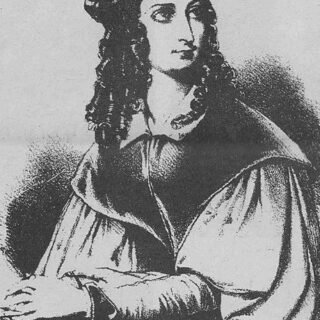
Flora Tristan (1803–1844) was a pioneering French-Peruvian writer and activist who played a vital role in shaping early feminist theory and socialist discourse. Her ideas on the intersection of gender...

The Tomb of the Unknown Soldier, located at Arlington National Cemetery in Arlington County, Virginia, serves as a burial site and monument dedicated to unidentified U.S. servicemen who lost their...

Sekhemkhet, also known as Sechemchet, was a pharaoh of the 3rd Dynasty during Egypt’s Old Kingdom, reigning from approximately 2648 BC to 2640 BC. His rule, while brief, left an...

Andreas Gryphius (1616–1664) was a pivotal figure in German Baroque literature. His works, marked by philosophical depth, emotional resonance, and intricate linguistic style, addressed themes of suffering, the frailty of...

The Arc de Triomphe, one of Paris’ iconic landmarks, stands majestically at the western end of the Champs-Élysées. It is situated at the center of the Place Charles de Gaulle,...
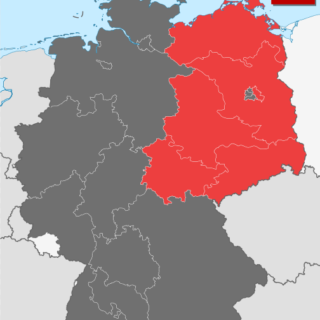
The Soviet Occupation Zone in Germany (Sowjetische Besatzungszone, SBZ) was a pivotal region in the aftermath of World War II. Established under the terms of the Potsdam Agreement on August...

Asherah is a significant figure in the pantheon of ancient Semitic religions, associated with fertility, motherhood, and creation. Her presence is documented across various cultures and regions, highlighting her role...
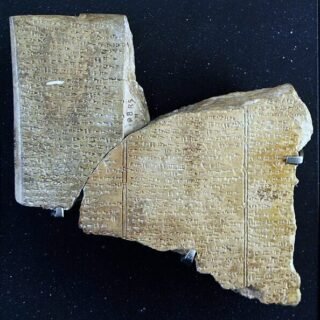
Mot, the Canaanite god of death and the underworld, held a central role in the mythology and religion of the ancient Near East. The name “Mot” (𐤌𐤕 in Phoenician, מות...
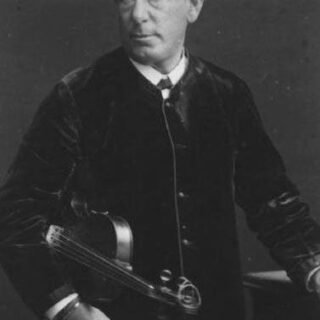
Ede Reményi, born Eduard Hoffmann on January 17, 1828, in Miskolc, Austrian Empire (modern-day Hungary), emerged as one of the 19th century’s most notable violinists and composers. While his exact...

The Reichsmark was the currency used in Germany from 1924 to 1948, playing a significant role in the economic landscape of the Weimar Republic, Nazi Germany, and post-war Germany. Its...

The Reichstag fire, occurring on February 27, 1933, was an arson attack on the Reichstag building in Berlin, Germany’s parliamentary hub. The incident unfolded just four weeks after Adolf Hitler...





