Opening of the mouth ceremony in ancient Egypt
The Opening of the Mouth ceremony was a key ancient Egyptian funerary ritual described in texts like the Pyramid Texts and practiced from the Old Kingdom to the Roman Period....
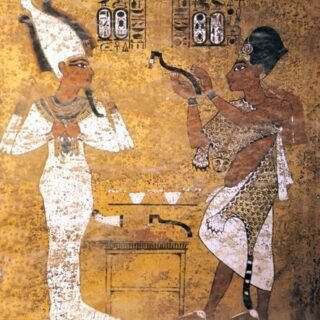
The Opening of the Mouth ceremony was a key ancient Egyptian funerary ritual described in texts like the Pyramid Texts and practiced from the Old Kingdom to the Roman Period....
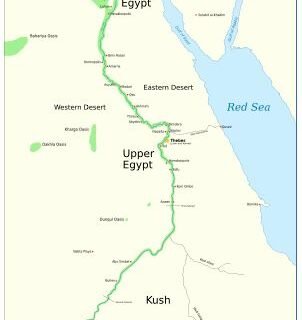
The First Intermediate Period (c. 2181–2055 BC) in ancient Egyptian history is often described as a “dark period” due to its political fragmentation and decline in centralized power. Spanning approximately...
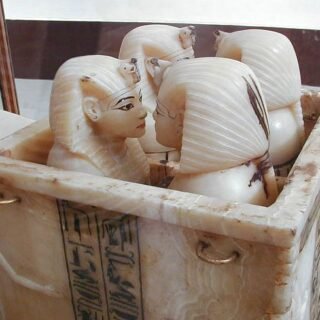
Canopic jars are essential artifacts from ancient Egyptian burial practices, symbolizing their spiritual beliefs and advanced mummification techniques. These containers were specifically designed to store and protect the internal organs...

The Kingdom of Aksum, also known as the Aksumite Empire, was one of the most influential civilizations of ancient Africa. Located in the highlands of modern-day Ethiopia and Eritrea, it...
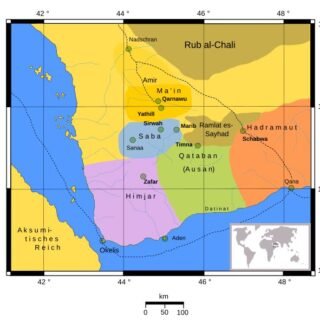
The Kingdom of Sheba, also known as Sabaʾ, was an influential South Arabian kingdom that thrived between 1000 BCE and 275 CE. Situated in the modern-day territory of Yemen, Sheba...
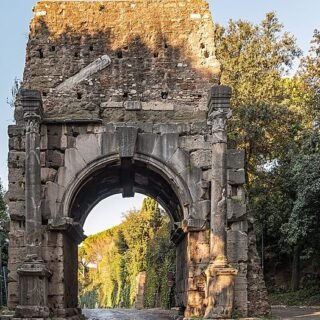
Triumphal arches were monumental structures erected in ancient Rome to commemorate significant military victories or to honor emperors and their achievements. They served as visual propaganda, reinforcing the power and...

Abraha, an Aksumite military leader who ruled the Kingdom of Himyar in the 6th century, is a figure of significant historical interest. Known for his military prowess and political maneuvering,...
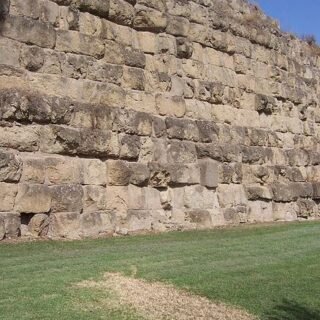
The Servian Wall (Latin: Murus Servii Tullii; Italian: Mura Serviane) is a significant relic of ancient Rome’s early defensive infrastructure. Constructed in the early 4th century BCE, it served as...

Heracleopolis Magna was a significant city in ancient Upper Egypt. It served as the capital of the 20th nome and was called nn nswt in Ancient Egyptian, meaning “Child of...
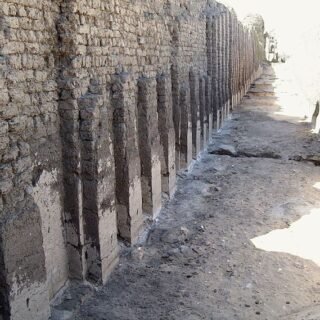
Shunet El Zebib is a remarkable mudbrick structure located in Abydos, Upper Egypt. This monumental edifice, dating to the Second Dynasty (circa 2700 BCE), was constructed by Pharaoh Khasekhemwy, the...
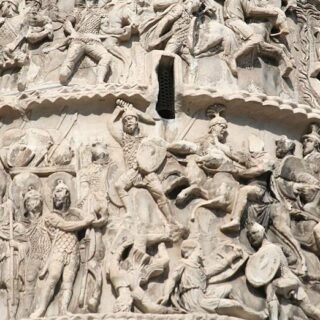
The Marcomannic Wars, fought between 166 and 180 AD, were a prolonged series of military conflicts between the Roman Empire and an alliance of Germanic tribes, notably the Marcomanni and...

Hakor, also known as Hagar, and by the Hellenized names Achoris or Hakoris, was a prominent pharaoh of Egypt’s 29th Dynasty. His more than a decade reign represented the zenith...

The Lateran Obelisk is a towering monument with a remarkable history spanning over three millennia. It stands as a testament to ancient engineering, religious significance, and the shifting powers of...

Roman emperor Gallienus ruled during the Crisis of the Third Century, marked by internal turmoil and external invasions, and managed to stabilize parts of the empire while facing numerous challenges,...
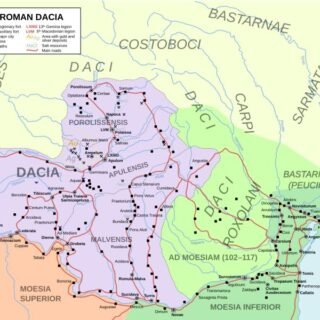
Roman Dacia was a province of the Roman Empire from 106 to 271–275 AD. It encompassed modern-day Oltenia, Transylvania, and Banat (spanning Romania, Hungary, and Serbia). The province was established following...





