Ancient Egyptian City of Abydos
Abydos, one of the oldest and most significant cities of ancient Egypt, flourished as a center of religious, political, and cultural activities for millennia. Situated in Upper Egypt, west of...
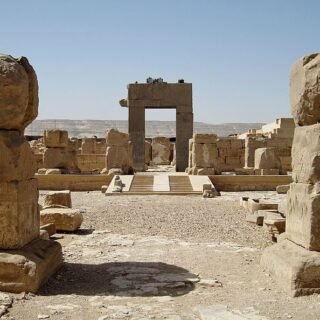
Abydos, one of the oldest and most significant cities of ancient Egypt, flourished as a center of religious, political, and cultural activities for millennia. Situated in Upper Egypt, west of...

The Temple of Edfu, dedicated to Horus, the falcon-headed god, embodies a profound connection to ancient Egyptian creation myths. According to inscriptions on its walls, the temple was established on...

Wilhelm II (Friedrich Wilhelm Viktor Albert) was the last German Emperor (Kaiser) and King of Prussia, reigning from 1888 until his abdication in 1918. Born on January 27, 1859, he...

Asuras are a significant class of beings in Indian religious traditions, including Hinduism and Buddhism. Frequently depicted as power-seeking entities, they are contrasted with the Devas, or benevolent gods, also...

The Arab Cold War (1950s–1970s) was a period of political and ideological rivalry among Arab states. It originated with the Egyptian Revolution of 1952, which overthrew King Farouk and abolished...
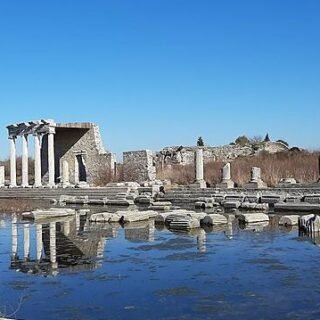
Miletus, an ancient Greek city on Anatolia’s western coast near the Maeander River, was a flourishing hub of culture, trade, and philosophy in Ionia. Renowned for its wealth and influence...
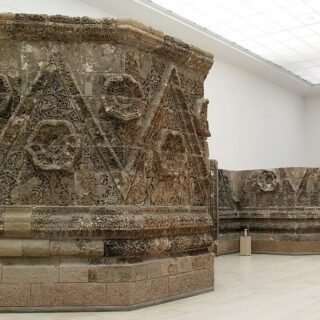
The Mshatta Facade originates from the 8th-century Umayyad palace of Qasr Mshatta, located approximately 30 kilometers south of Amman, Jordan. Constructed during the reign of Caliph Al-Walid II (743–744), the...
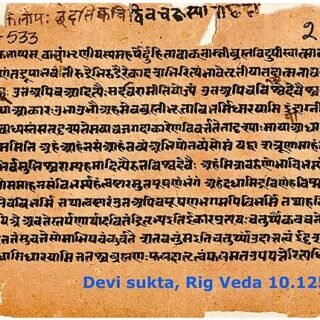
The Rigveda is the oldest known text of Vedic Sanskrit and one of the foundational scriptures of Hinduism. It dates back to the second millennium BCE, with its composition estimated...

Babylon emerged within the fertile plains of southern Mesopotamia, a region defined by the life-giving waters of the Euphrates and Tigris Rivers. The earliest mention of this city dates back...
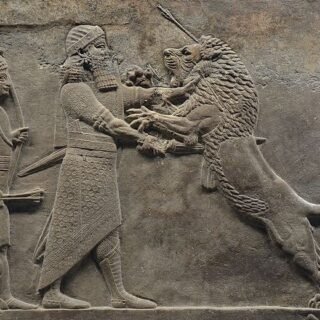
The Lion Hunt of Ashurbanipal is a series of Assyrian palace reliefs from the North Palace of Nineveh, created between 645–635 BCE during the reign of King Ashurbanipal (669–631 BCE)....

Nectanebo II, born in 358 BC, was the last native ruler of ancient Egypt and the third pharaoh of the Thirtieth Dynasty. His Egyptian name, Nḫt-Ḥr-Ḥbt, meaning “victorious is Horus...

The Lion of Judah has its roots in ancient Hebrew tradition and biblical texts. It originates from the blessing given by Jacob, also called Israel, to his son Judah in...

Pharaoh Pepi I Meryre was a significant ruler of Egypt’s Sixth Dynasty during the Old Kingdom, reigning for over 40 years in the late 24th and early 23rd centuries BC....

The 1958 Lebanon Crisis was a complex political crisis stemming from religious, political, and geopolitical tensions within Lebanon, compounded by the broader context of the Cold War. The crisis prompted...

The Dendera Light refers to a series of motifs found in the crypts of the Hathor Temple at Dendera, Egypt. These intricate carvings are rooted in ancient Egyptian mythology and...





