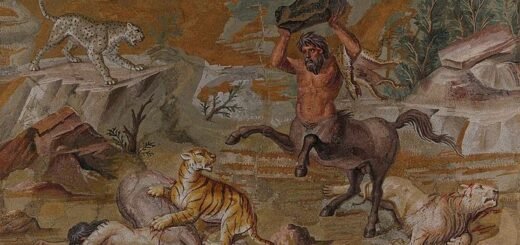
The Erinyes: Goddesses of Vengeance in Ancient Greek Religion and Mythology
The Erinyes, often known as the Furies in English or the Eumenides when referenced in a less fearsome context, are a trio of goddesses central to themes of vengeance, justice, and moral retribution in ancient Greek religion and mythology.
Revered as powerful enforcers of the cosmic order, the Erinyes are invoked primarily to avenge wrongs that disrupt the natural or divine laws, especially those committed within the family. By instilling fear and respect, they serve to maintain ethical behavior in mortal and divine realms alike, embodying consequences for transgressions through both relentless pursuit and divine justice.
Origins and Mythological Background
The mythological origins of the Erinyes are steeped in primordial violence, establishing them as ancient and terrifying figures in the Greek pantheon.
According to Hesiod’s Theogony, the Erinyes were born from the blood of Uranus, the primordial sky god, when he was castrated by his son Cronus, the Titan of time and harvest. The blood from Uranus fell upon the Earth (Gaia), producing not only the Erinyes but also the Giants and Meliae (ash tree nymphs). This creation myth positions the Erinyes as born of both celestial and terrestrial origins, symbolizing their role in enforcing moral laws that bridge the earthly and divine realms.
Alternative accounts provide different parentages, aligning the Erinyes with various divine figures associated with darkness and the underworld. Some traditions describe them as daughters of Nyx (Night), thereby linking them to other dark, foreboding forces within Greek mythology.
In Virgil’s Aeneid, they are described as daughters of Pluto (Hades) and Nox (Night). The Orphic tradition further connects them to the rulers of the underworld, making them offspring of Hades and Persephone.
These varying accounts underscore the Erinyes’ association with the chthonic (underworld) aspects of the divine, reinforcing their purpose as agents of vengeance tied to the most severe moral laws.
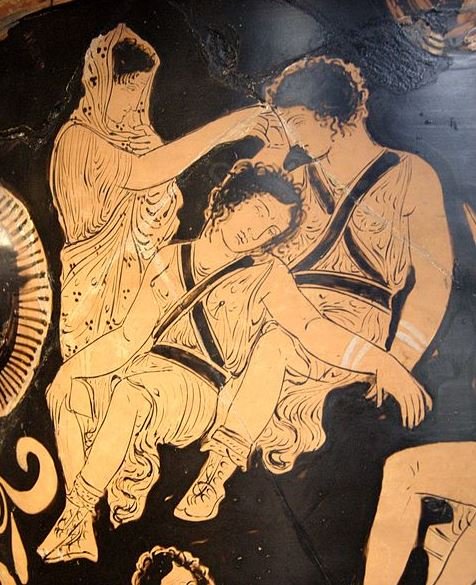
Image: Clytemnestra, wife of Agamemnon, tries to wake the Erinyes from their sleep.
Characteristics and Appearance
The Erinyes are often depicted as fearsome, even monstrous, figures in ancient Greek art and literature. Their appearance is typically described as frightful, with serpent hair, torches, whips, and a dark, intimidating presence.
The Erinyes are often represented with wings, which enables them to pursue their victims unrelentingly across both earth and the underworld.
As chthonic deities, they are rooted in a primal connection to the Earth, and their somber, terrifying aspect reflects their role as agents of retribution. They are also considered maiden goddesses, embodying both the unyielding rage of an avenger and the purity of incorruptible justice.
Functions and Responsibilities
The Erinyes are tasked with avenging crimes that upset the moral or familial order, particularly those related to familial betrayal, murder, and oath-breaking. They pursue wrongdoers, driving them to madness or punishing them through relentless torment.
In Homer’s Iliad, they are invoked as divine enforcers of oaths, swearing to take vengeance on anyone who has committed perjury. Walter Burkert, a notable scholar of ancient Greek religion, suggests that the Erinyes may represent the internalized sense of guilt or self-punishment that arises from breaking a moral vow, thus serving as psychological as well as supernatural enforcers of justice.
Their role is not simply to punish but to correct, seeking equilibrium within the moral and cosmic order. In this sense, the Erinyes embody an early Greek concept of justice that transcends mere retribution, aiming instead to restore a sense of harmony. They operate independently of the Olympian gods, acting on behalf of older, more ancient laws that govern the natural and ethical world.
The Three Erinyes
While early accounts leave the number of Erinyes indeterminate, later Roman writers such as Virgil codified them as three distinct entities: Alecto (“endless anger”), Megaera (“jealous rage”), and Tisiphone (“avenging murder”).
Each Erinys represents a specific aspect of vengeance, personifying a unique form of rage or punishment. Alecto’s anger is relentless, symbolizing unyielding retribution; Megaera’s jealousy drives revenge from a place of scorn or betrayal; and Tisiphone’s wrath targets murder, particularly familial slayings that disrupt the sanctity of kinship bonds.
These three figures are prominently featured in literature and are most famously depicted in Virgil’s Aeneid, where they enforce divine punishment, instilling madness and ruin in those who have committed grievous crimes. Dante Alighieri’s Divine Comedy also adopted this triad, incorporating them as figures who confront sinners at the gates of the city of Dis in Inferno, where they symbolize eternal punishment and the inexorable nature of divine justice.
Worship and Titles
The Erinyes were feared and respected deities, and their worship in ancient Greece reflects an attempt to appease their wrathful nature.
In Athens, the Erinyes were euphemistically referred to as the “Eumenides,” or “Kindly Ones,” a term used to avoid directly invoking their wrath. Through this ritualized, appeasing title, worshippers hoped to turn the vengeful goddesses into protectors rather than persecutors, softening their terrifying aspects to encourage benevolence.
Their worship was linked to maintaining justice and honoring the dead, as well as rites to purify oneself from wrongdoing. By offering sacrifices and prayers, individuals sought forgiveness or reconciliation with those who had been wronged, especially in cases where blood had been shed. Through this cultural practice, the Erinyes were also honored as guardians of moral order, suggesting that ancient Greeks viewed the act of appeasing them as a way to protect society from chaos and injustice.
In Arcadia, Demeter was venerated as “Erinys” in Thelpousa, reflecting the Erinyes’ influence on other deities who could adopt aspects of vengeance. In this iteration, Demeter, the goddess of agriculture and fertility, is linked to the Erinyes’ themes of grief and revenge in response to wrongdoing. This cross-association indicates that the Erinyes’ attributes could extend beyond their core identity, influencing other deities as they manifest wrath or vengeance.
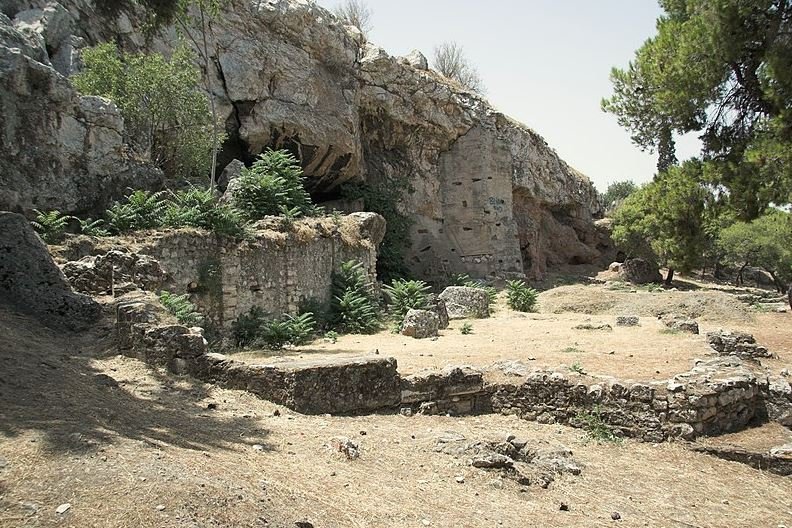
Image: A shrine of Erinyes at Athens, Greece.
The Erinyes in Greek Tragedy: Aeschylus’ Oresteia
One of the most detailed and influential depictions of the Erinyes is found in Aeschylus’s Oresteia trilogy, specifically in the final play, The Eumenides. The trilogy centers on the story of Orestes, who is pursued by the Erinyes after killing his mother, Clytemnestra, to avenge his father, Agamemnon’s murder. In The Eumenides, the Erinyes act as both judges and pursuers, confronting Orestes with the inescapable guilt of matricide.
Driven to madness by their relentless pursuit, Orestes eventually seeks refuge in Athens, where the goddess Athena intervenes, establishing a formal court to judge the case. The trial symbolizes the transition from the old forms of personal vengeance to a more structured legal system. Goddess Athena persuades the Erinyes to accept the new legal order by offering them an honored place as protectors of Athens. In this way, the play portrays the Erinyes not only as agents of revenge but also as figures who can be reconciled with the community, evolving into protectors of justice rather than pursuers of blood vengeance.
This portrayal highlights the ancient Greek tension between vengeance and justice, demonstrating how society’s shift from personal retribution to communal justice required reinterpreting the role of these primordial deities. Through the reconciliation of the Erinyes, Aeschylus envisions a civilization governed by law and reason, offering a vision of justice tempered by compassion and social harmony.
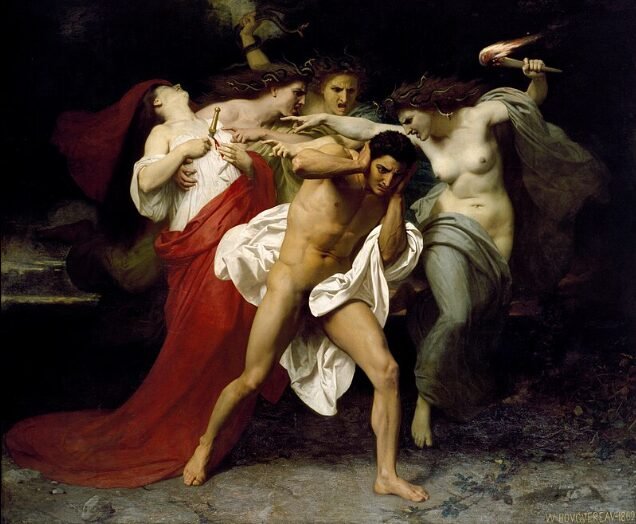
The Remorse of Orestes, painted by French academic painter William-Adolphe Bouguereau in 1862, depicts Orestes tormented by the Erinyes.
The Legacy and Cultural Influence of the Erinyes
The Erinyes’ role in Greek mythology as avenging deities has left a significant mark on Western literature, philosophy, and cultural concepts of justice and morality. Their presence in classical literature symbolizes the inevitability of retribution for transgressions and the idea that no crime, especially within the family, can escape punishment. This notion profoundly influenced ancient Greek law, which emphasized familial loyalty, moral duty, and the consequences of violating sacred oaths.
Their unrelenting pursuit of wrongdoers in myth and tragedy inspired later interpretations of moral justice, serving as an early representation of the psychological consequences of guilt and the inner torment experienced by those who commit serious offenses. This concept was adapted by writers such as Dante Alighieri, who used the Furies in The Divine Comedy to represent the inevitable, punishing consequences of sin, depicting them as guardians at the threshold of Hell.
In modern interpretations, the Erinyes are often explored as symbols of justice, conscience, and the darker forces within human psychology. As figures of myth, they embody the struggle between inner morality and outward actions, reflecting the consequences of ethical transgressions. Psychological interpretations often see them as personifications of guilt, embodying the inner conflict experienced by individuals who have violated their moral code. This portrayal aligns with ancient Greek depictions of the Erinyes as both external pursuers of justice and internal representations of conscience and guilt.
Conclusion
The Erinyes are powerful symbols of justice, vengeance, and the unbreakable moral order in Greek mythology. Emerging from a foundational act of cosmic violence, they embody the belief that actions, especially those disrupting natural or familial bonds, are bound to return upon the perpetrator. Through relentless pursuit and supernatural punishment, the Erinyes enforce moral accountability, representing an early understanding of justice that influences both ancient and modern concepts of law, morality, and conscience.
Whether feared as terrifying goddesses of vengeance or honored as protectors of justice, the Erinyes continue to capture the imagination as symbols of the consequences of human actions. Their legacy endures, reflecting timeless questions about justice, guilt, and the boundaries between vengeance and the ethical pursuit of reparation. By enforcing divine retribution, they stand as enduring figures in the mythological and literary landscapes, upholding the ancient Greek belief in the unyielding power of justice.
Who are the major Chthonic Deities in Greek Religion and Mythology?
Frequently Asked Questions

How are the Erinyes portrayed in Homer’s Iliad?
In the Iliad, the Erinyes are invoked in oaths as avengers against those who break promises, representing the destructive consequences of false oaths and moral transgressions.
What is the Roman counterpart of the Erinyes?
The Roman counterparts of the Erinyes are known as the Dirae. They are called Eumenides in the underworld, Furiae on Earth, and Dirae in heaven, according to the Roman writer Servius.
What is the origin story of the Erinyes according to Hesiod?
According to Hesiod’s Theogony, the Erinyes arose from the blood of Uranus, which fell onto Earth (Gaia) when Uranus was castrated by his son Cronus. This act also gave rise to the Giants and the Meliae.

Image: Sleeping Erinyes
Are there other versions of the Erinyes’ parentage?
Some accounts suggest they are daughters of Nyx (Night), while others say they are the offspring of Hades and Persephone, Pluto and Nox, or Earth and Phorcys.
What are the names of the three Erinyes and their associated traits?
The three Erinyes, as named in Virgil’s Aeneid, are Alecto (“endless anger”), Megaera (“jealous rage”), and Tisiphone (“vengeful destruction”), each representing different aspects of wrath and justice.
How are the Erinyes depicted in Dante’s Divine Comedy?
In Dante’s Inferno, the Erinyes appear at the gates of the city of Dis, symbolizing eternal punishment and reinforcing their role as agents of vengeance in the afterlife.
What role do the Erinyes play in Aeschylus’s Oresteia?
In The Eumenides, the Erinyes pursue Orestes for the crime of matricide, embodying the consequences of familial murder and representing unbreakable moral accountability.
Why were the Erinyes called “Eumenides” in Athens?
They were called “Eumenides” (the “Kindly Ones”) in Athens as a euphemistic title, likely intended to appease the goddesses and avoid invoking their wrath directly.
How are the Erinyes connected to Demeter in Arcadian mythology?
In Arcadia, Demeter was worshipped as an Erinys, showing her avenging aspect in response to anger and grief, which links her to the Erinyes’ role as deities of vengeance.
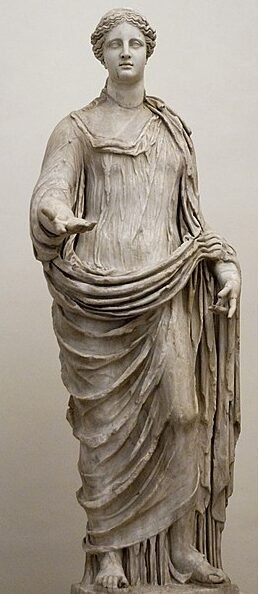
Image: A statue depicting Demeter.
What is the legacy of the Erinyes in Greek mythology and literature?
The Erinyes symbolize justice, vengeance, and the consequences of wrongdoing. They have influenced ancient concepts of moral retribution and punishment, emphasizing that crime, especially within families, cannot go unpunished.
How have modern interpretations portrayed the Erinyes?
In modern interpretations, the Erinyes are often seen as symbols of justice, revenge, guilt, and the psychological struggle between inner morality and external actions.
What broader cultural themes do the Erinyes represent?
The Erinyes represent Greek beliefs in moral order, divine punishment, and the inevitability of justice, acting as powerful enforcers of ancient laws and reinforcing cultural values around familial loyalty and ethical behavior.