The Toltec Civilization: Origins, Development and Major Accomplishments
The Toltecs were a Nahuatl-speaking tribe that dominated central Mexico from the 10th to the 12th century CE. Their name translates to meanings like “urbanite,” “cultured person,” or “reed person,” derived from their capital Tollan (modern-day Tula).
Who were the Toltecs?
The Toltec culture, centered in Tula, Hidalgo, was a prominent pre-Columbian Mesoamerican society. Flourishing during the Epiclassic (650-900 CE) and Early Post-Classic periods (950-1150 CE), the Toltecs were regarded by the Aztecs as intellectual predecessors and a pinnacle of civilization. The term Tōltēkatl (Nahuatl for “artisan”) underscores their contributions to art, architecture, and societal organization.

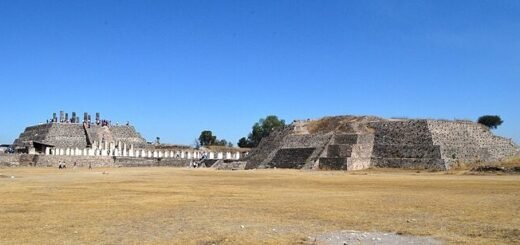
Tempo Tlahuizcalpantecuhtl at the Tula archaeological site.
Formation and Early Growth
The Toltec civilization emerged from a blend of cultures, particularly the Nonoalca people from the southern Gulf Coast and Chichimeca groups from northern Mesoamerica. Influenced by the Teotihuacan civilization, these groups established settlements in the Tula region, including Villagran and Chingu. The fall of Teotihuacan around 650 CE allowed new cultures, notably the Coyotlatelco, to dominate.
The Toltec culture was a pre-Columbian Mesoamerican society that ruled a state centered in Tula, Hidalgo, Mexico, during the Epiclassic and early Post-Classic periods (950–1150 CE).
Tula Chico, the initial Toltec settlement, was characterized by urban planning, ball courts, and pyramids. Following its destruction at the end of the Epiclassic period, Tula Grande rose nearby as the cultural and political hub of the Toltec.
Did you know…?
Around 900 CE, the Toltecs sacked and burned Teotihuacán, traditionally under the leadership of Mixcóatl (“Cloud Serpent”), marking a turning point in Mesoamerican history.
Political and Cultural Influence
During its zenith, Tula Grande was a sprawling urban center with a population of up to 60,000, covering 16 square kilometers. Its pyramids, ball courts, and Atlantean warrior statues symbolize Toltec artistic achievements. Centralized civic buildings, often using columnar designs, highlighted the city’s sophistication.
The Toltecs were considered the intellectual and cultural predecessor of the Aztecs.
The Toltec excelled in trade and diplomacy, with evidence suggesting strong regional and long-distance trade networks. Obsidian workshops at Tula produced tools and artifacts that underscored the city’s economic power. Shared styles of ceramics and figurines between Tula and distant regions reflect the extensive reach of its trade and cultural exchanges.
Debated Influence on Chichén Itzá
The architectural and iconographic similarities between Tula and the Maya city of Chichén Itzá have sparked debate. Hypotheses include:
- Military conquest of Chichén Itzá by the Toltec.
- Establishment of Tula as a colony by Chichén Itzá.
- Loose cultural exchanges between the two cities.
While direct evidence remains inconclusive, the shared Mixtec-Puebla art style and obsidian sources suggest significant interaction.
Archaeological Evidence and Material Culture
Archaeologists identify a Toltec horizon through stylistic markers like the Mixtec-Puebla art style and specific ceramic types (e.g., Tohil plumbate). However, scholars differ on whether Tula’s influence constituted an empire or merely a prominent regional power.
Excavations at Tula Grande uncovered large obsidian workshops, evidencing its role as a major distributor. This industry may have bolstered Tula’s economic and political dominance, filling the void left by Teotihuacan.
Tula Grande’s central plaza, colonnades, and sunken halls mirrored earlier architectural traditions, connecting the Toltecs to their ancestral cultures. These features were not just functional but also symbolic, reflecting both trade importance and political authority.
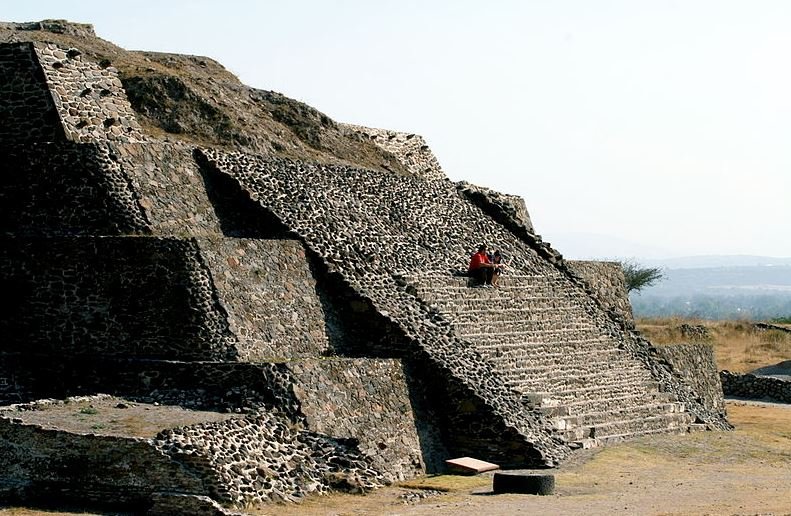
Pyramid C Tula Archaeological site.
Toltec Mythology and Aztec Reverence
The Aztecs glorified the Toltecs, portraying them as the pinnacle of civilization. The term Toltecayotl signified “culture” and “urbanity,” contrasting with Chichimecayotl (representing savagery). Aztec myths describe Toltecs as the creators of medicine, the calendar, and the Nahuatl language.
Aztec accounts often intertwine Quetzalcoatl, the feathered serpent deity, with Toltec rulers. The mythical Topiltzin Ce Acatl Quetzalcoatl epitomizes the blending of history and legend, complicating efforts to separate fact from fiction.
While Aztec oral and pictorial traditions celebrated the Toltecs as a vast empire, Tula’s archaeological record suggests otherwise. The modest scale of Tula’s construction and population contrasts with Aztec descriptions of Tollan (the Toltec capital) as an unparalleled metropolis.
Academic Debates and Shifting Perspectives
Modern scholars question the historicity of Aztec narratives. While some argue that a critical comparative method can extract historical truths, others dismiss these accounts as largely mythological constructs.
The once-dominant historicist school viewed the Toltecs as a powerful ethnic group. However, contemporary interpretations see the term “Toltec” as more symbolic, referring broadly to artisans or urbanized peoples.
Early scholars like Désiré Charnay theorized that Chichén Itzá was conquered by Toltec forces led by Kukulcan. However, this view has evolved, with many attributing cultural exchanges to broader regional interactions rather than direct conquest.
READ MORE: Structure of the Aztec Society
Contributions and Legacy
Despite debates over their empire’s scale, the Toltecs left an indelible mark on Mesoamerican history. Their advancements in architecture, art, and trade influenced subsequent cultures, including the Aztecs. The Atlantean figures, ball courts, and ceremonial centers of Tula Grande stand as enduring symbols of their achievements.
Tula’s economy relied on specialized obsidian workshops and trade networks. Shared ceramic styles and trade goods suggest interactions with regions like Soconusco and Chichén Itzá.
For the Aztecs, “Toltec” signified more than a specific ethnicity—it represented an idealized state of civilization. This perspective shaped their own identity and aspirations, embedding the Toltec legacy in Mesoamerican cultural memory.
Religious Practices and Major Deities of Pre-Columbian Civilizations
Frequently Asked Questions

A map showing the reach and impact of the Toltecs across Mesoamerica.
How did the Aztecs perceive the Toltecs?
The Aztecs idealized the Toltecs as the epitome of civilization, associating them with artistry, wisdom, and statecraft. They also mythologized the Toltecs in their oral and pictographic traditions, attributing cultural achievements like medicine, the calendar, and Nahuatl language to them.
What were the origins of Tula and the Toltec culture?
Tula likely emerged from the Coyotlatelco culture, blending Nonoalca people from the Gulf Coast and Chichimeca groups from northern Mesoamerica. Tula Chico evolved into a regional state before being replaced by Tula Grande, which became the center of Toltec power.
What was the capital of the Toltecs?
Tollan, meaning “Place of the Reeds,” was the Toltec capital and the cultural and political hub of their civilization. It featured monumental architecture, including columns of warriors, serpent motifs, and Chac Mool statues.
Who was Ce Acatl Topiltzin Quetzalcóatl, and what was his influence?
Ce Acatl Topiltzin Quetzalcóatl, a Toltec ruler and Mixcóatl’s son, introduced the Feathered Serpent cult and expanded Toltec influence. This included the spread of Toltec culture to Mayan cities like Chichén Itzá and Mayapán.
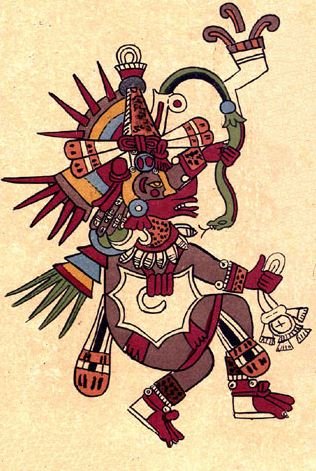
A depiction of Cē Ācatl Topiltzin in the form of the deity Quetzalcoatl.
What characterized Toltec culture and achievements?
The Toltecs were skilled builders and craftsmen known for monumental architecture, fine metalwork, Chac Mool statues, and artistic carvings of humans and animals. They also emphasized militarism with orders like the Coyote, Jaguar, and Eagle warriors.
How did the Toltecs influence the Maya?
Toltec cultural and religious practices, particularly the Quetzalcóatl cult and militaristic traditions, were adopted by Mayan cities in the Yucatán, including Chichén Itzá and Mayapán, reflecting the broad reach of Toltec influence.
What caused the fall of the Toltec civilization?
The Toltec hegemony ended in the 12th century due to invasions by nomadic Chichimec tribes, including the Aztecs, who destroyed Tollan around the mid-12th century.