What was the primary goal of the 2003 invasion of Iraq?
The 2003 invasion of Iraq, which marked the beginning of the Iraq War, was an intense and pivotal conflict. The invasion lasted from March 20 to May 1, 2003, and saw a coalition force led by the United States, with support from the United Kingdom, Australia, and Poland, invade the Republic of Iraq. This operation, dubbed “Operation Iraqi Freedom,” followed a period of growing international tension, as the U.S. and its allies sought to dismantle the regime of Saddam Hussein under the pretext of eliminating Iraq’s alleged weapons of mass destruction (WMDs), ending Hussein’s support for terrorism, and liberating the Iraqi people. However, the rationale for the invasion remains a topic of significant controversy.
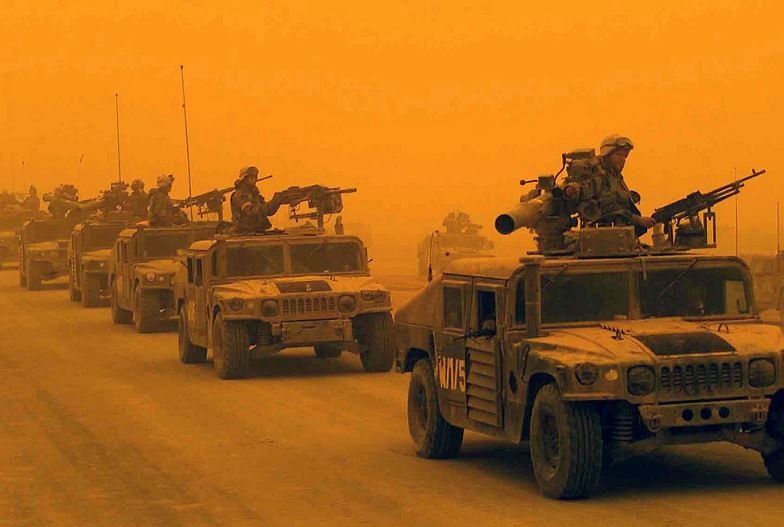
US Military Convoy in Northern Iraq
Prelude to the Invasion
The roots of the Iraq War trace back to the aftermath of the Gulf War in 1991, which ended with a cease-fire agreement between Iraq and the U.N.-led coalition. Despite this, Iraq remained under intense scrutiny, with the United Nations (U.N.) imposing economic sanctions and enforcing no-fly zones to limit Saddam Hussein’s power. Over the next decade, the U.S. and its allies maintained a policy of “containment” toward Iraq, using military and diplomatic measures to prevent Hussein from expanding his weapons programs and regional influence.
By the late 1990s, following Hussein’s expulsion of U.N. weapons inspectors and accusations of non-compliance with U.N. resolutions, the U.S. and the U.K. took a more aggressive stance toward Iraq. This culminated in the Iraq Liberation Act of 1998, which called for regime change in Iraq.
In 2001, with the election of George W. Bush, U.S. policy shifted further, with senior administration figures advocating for the removal of Hussein’s regime, especially following the September 11 terrorist attacks. The Bush administration and the U.K., under Prime Minister Tony Blair, began preparing the case for military action against Iraq, arguing that Hussein’s regime posed an immediate threat due to its suspected WMDs and links to terrorism.
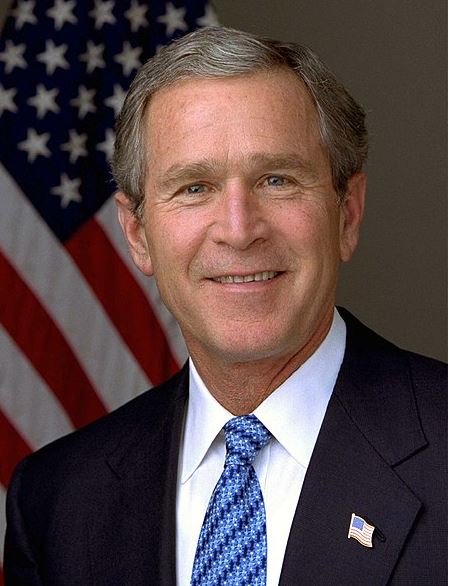
George W. Bush in 2003
The Build-Up to War
In 2002, after a series of diplomatic efforts, the U.S. and U.K. began pressing for a U.N. resolution authorizing military action against Iraq. Despite skepticism from key U.N. members like France and Russia, the Security Council passed Resolution 1441, which demanded that Iraq fully cooperate with weapons inspections. However, the inspections, led by Hans Blix and the U.N. Monitoring, Verification and Inspection Commission (UNMOVIC), failed to uncover any evidence of active WMD programs. Nonetheless, the U.S. and U.K. maintained their position, arguing that Iraq had failed to meet its disarmament obligations.
By early 2003, the Bush administration was resolute in its intention to invade Iraq, framing the conflict as part of the broader “War on Terror.” Despite significant global protests, including a massive anti-war rally in February 2003, the invasion went ahead. The U.S. presented intelligence suggesting that Iraq had ties to al-Qaeda and was pursuing WMDs, although many of these claims were later discredited.
The Invasion
The invasion officially began on March 20, 2003, with a series of intense airstrikes targeting Saddam Hussein and his leadership, followed by a large-scale ground assault by coalition forces. The invasion force included 160,000 troops, with the majority—about 130,000—coming from the United States. Smaller contingents of British, Australian, and Polish forces also participated.
The U.S. military strategy, aimed at quickly decapitating the Iraqi regime and dismantling its military infrastructure, relied heavily on superior airpower, precision-guided munitions, and rapid ground mobility. The main thrust of the invasion was launched from Kuwait, moving through southern Iraq and heading toward Baghdad, while special operations forces conducted operations in northern Iraq, including supporting Kurdish forces in their fight against Saddam’s troops.
Key Battles
The invasion proceeded rapidly, with coalition forces meeting limited resistance from the Iraqi military, which was undermined by the initial shock and awe airstrikes. The first major battle was the Battle of Nasiriyah on March 23, where U.S. forces clashed with Iraqi forces defending key infrastructure in southern Iraq. This was followed by further engagements in cities like Basra, Karbala, and Najaf, where coalition forces encountered pockets of resistance from both the regular Iraqi army and paramilitary groups like the Fedayeen Saddam.
As coalition forces moved northward, the battle for Baghdad loomed large. On April 5, U.S. forces executed the “Thunder Run,” a daring raid into the city, which tested the remaining strength of the Iraqi defenses. Despite significant losses, the coalition secured critical positions, including Baghdad International Airport, and prepared for the final assault on the city. On April 9, after several days of heavy fighting, U.S. forces captured Baghdad, and coalition troops toppled a statue of Saddam Hussein in Firdos Square, a symbolic moment marking the fall of the regime.
The Collapse of Saddam Hussein’s Regime
After the fall of Baghdad, Saddam Hussein and much of his government went into hiding. The coalition declared victory over the Iraqi military, but the war’s aftermath quickly proved more complicated. While the invasion phase had ended in a relatively short period, the subsequent occupation and efforts to rebuild Iraq presented enormous challenges. The Coalition Provisional Authority (CPA) was established to govern Iraq, but instability and violence soon erupted across the country. The power vacuum left by the removal of Saddam Hussein’s regime led to sectarian violence, insurgencies, and the rise of extremist groups, including al-Qaeda in Iraq, which would later evolve into the Islamic State (ISIS).
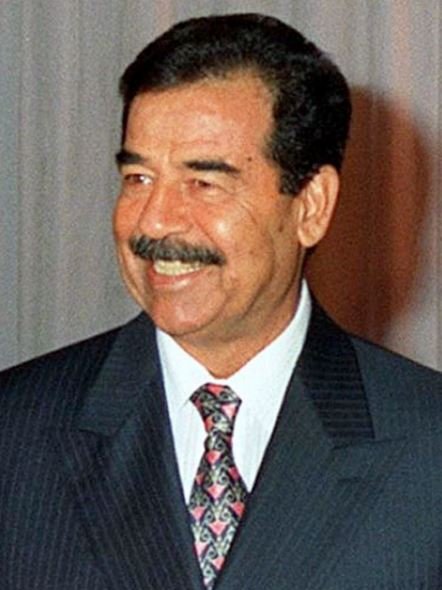
A 1998 photo of Saddam Hussein.
International Reactions
The invasion was met with widespread international criticism, particularly from countries like France, Germany, and Russia, which opposed the war due to the lack of concrete evidence supporting the claims of WMDs in Iraq. The U.N. Secretary-General at the time, Kofi Annan, later declared that the invasion was illegal under international law, a view shared by many legal experts and critics of the war. The lack of WMDs found in Iraq after the invasion further fueled the debate about the true motives behind the war.
The invasion of Iraq was met with strong opposition from some countries, especially France, Germany, and Russia, due to doubts about the evidence for WMDs.
Aftermath and Long-Term Consequences
In the years following the invasion, Iraq descended into a brutal insurgency. The U.S. military remained in Iraq for nearly a decade, struggling to stabilize the country and combat various insurgent groups. The conflict also strained U.S. relations with its allies and led to significant domestic and international opposition to the war. The Bush administration’s justifications for the war—particularly the claims about WMDs and ties between Iraq and al-Qaeda—were heavily scrutinized, with many calling it a case of flawed intelligence and misinformation.
The invasion also had profound implications for Iraq and the Middle East. The removal of Saddam Hussein’s brutal dictatorship left a power vacuum, which contributed to the rise of sectarian violence and the eventual emergence of ISIS. The legacy of the Iraq War continues to shape regional politics and U.S. foreign policy, with many lessons drawn about the dangers of military intervention without a clear post-conflict plan.

A map showing the invasion of Iraq from March 20–28, 2003.
Frequently Asked Questions
Which countries led the invasion of Iraq in 2003?
The invasion was led by the United States, with significant support from the United Kingdom, Australia, and Poland.
When did the invasion of Iraq begin and end?
The invasion began on March 20, 2003, and officially ended on May 1, 2003, when the U.S. declared the end of major combat operations.
What was the scale of the coalition forces?
Around 160,000 coalition troops were involved, with the majority (73%) being American forces. Other contributions included British, Australian, and Polish forces.
Why did the U.S. and U.K. decide to invade Iraq?
The stated reasons included Iraq’s alleged WMDs, its support for terrorism, and its violation of U.N. Security Council resolutions.
What was the role of the United Nations before the invasion?
The U.N. had conducted weapons inspections, which found no evidence of active WMD programs in Iraq, contradicting the U.S. and U.K.’s justification for war.
What were the key battles during the invasion?
Notable battles included the Battle of Nasiriyah, the Battle of Baghdad, and the capture of strategic cities like Basra, Kirkuk, and Tikrit.
What happened to Saddam Hussein after the invasion?
Saddam Hussein went into hiding after Baghdad fell. He was captured on December 13, 2003, by U.S. forces and later executed.
What was the “shock and awe” strategy?
It was a military strategy involving rapid, overwhelming airstrikes to incapacitate the Iraqi military and government, leading to quick coalition victories.
What was the aftermath of the invasion?
The invasion led to Iraq’s destabilization, with sectarian violence, insurgencies, and the rise of extremist groups like ISIS, contributing to long-term instability.
Why was the invasion considered controversial?
The lack of WMDs in Iraq and the flawed intelligence regarding Iraq’s ties to al-Qaeda led to accusations of misleading the public and international community.
How did the U.S. government justify the war?
The U.S. justified the invasion with the need to eliminate Iraq’s WMDs, its regime’s links to terrorism, and to uphold international peace and security.





