Yuya: Ancient Egyptian Courtier of the 18th Dynasty
Yuya was a prominent figure in ancient Egypt during the Eighteenth Dynasty, around 1390 BC. Renowned for his influence in the royal court and his familial ties to the ruling elite, Yuya’s life and legacy offer insights into the intricacies of ancient Egyptian society, politics, and religion.
Early Life and Background
Yuya originated from Akhmim, a town in Upper Egypt. He likely belonged to the local nobility and owned a significant estate. While some scholars suggest Yuya may have had foreign origins due to his unique name and facial features, his tomb and possessions exhibit traditional Egyptian characteristics, leaving his ancestry open to interpretation.
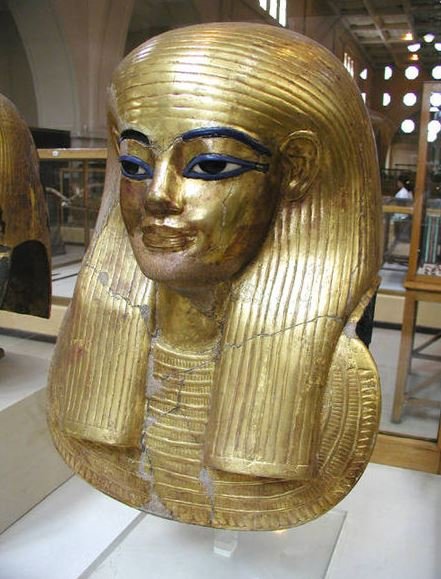
Image: The mummy mask of Yuya.
Marriage to Thuya
Yuya was married to Thuya, a noblewoman closely connected to the royal family. Thuya held prominent roles in the religious and administrative spheres, enhancing the couple’s status. Their union represented a strategic alliance that integrated Yuya into Egypt’s political and spiritual elite.
Children and Royal Connections
Yuya and Thuya had two confirmed children, Tiye and Anen, both of whom rose to prominence. Their daughter Tiye became the Great Royal Wife of Amenhotep III, one of Egypt’s most influential pharaohs. Tiye’s marriage solidified the family’s ties to the royal house, elevating their status. Their son, Anen, held high-ranking titles, including Chancellor of Lower Egypt and Second Prophet of Amun.
Some speculate that Yuya and Thuya were also the parents of Ay, a courtier who later became pharaoh, though this connection remains unproven. Both Yuya and Ay shared Akhmim as their hometown, adding some weight to this theory.
Career and Influence
Yuya held significant positions in the royal court of Amenhotep III. Among his titles were “King’s Lieutenant” and “Master of the Horse,” roles that underscored his expertise in managing Egypt’s chariotry and horses, vital elements of the military and transportation systems.
Yuya’s ascent to a prominent courtier role, marriage into the royal family, and his daughter’s status as a Great Royal Wife highlight his influence.
Additionally, Yuya was a prophet of Min, Akhmim’s chief deity, and supervised cattle associated with this god, reinforcing his influence in both administrative and religious domains.
Tomb and Burial
Yuya and Thuya were interred in tomb KV46 in the Valley of the Kings. Discovered in 1905, their burial was one of the most significant finds in Egyptian archaeology until the discovery of Tutankhamun’s tomb. Despite being looted in antiquity, the tomb retained many valuable artifacts and their remarkably preserved mummies.
The tomb’s contents included gilded coffins, a cartonnage mask, and various funerary goods that reflected their wealth and high status. Yuya’s rectangular sarcophagus, surrounded by nested coffins, demonstrated sophisticated burial practices. These artifacts reveal the opulence afforded to high-ranking non-royals during the New Kingdom.
The Mummy of Yuya
Yuya’s mummy was found in an extraordinary state of preservation, providing invaluable insights into his physical appearance and embalming practices. He was estimated to have died in his 50s or 60s. His wavy white hair, dark eyebrows, and unpierced ears offer a glimpse of his distinct features. Advanced embalming techniques, including resin-treated linen and packing beneath the skin, preserved a lifelike appearance.
Modern CT scans confirmed his age at death and revealed detailed embalming procedures, such as resin within the skull and mouth packing. Despite the care taken in preservation, the cause of Yuya’s death remains unknown.

Image: Front view of the mummy of Yuya.
Speculation on Foreign Origins
The question of Yuya’s ancestry has intrigued Egyptologists for decades. Some suggest he had Syrian or Mitannian roots, based on his unique name and facial features. His role as “Master of the Horse” ties him to the introduction of horses and chariotry in Egypt, innovations often associated with northern regions. However, no definitive evidence supports this theory, and his tomb artifacts remain distinctly Egyptian.
If Yuya had foreign origins, he likely assimilated into Egyptian society, reaching the heights of power through his marriage and service to the pharaoh. Alternatively, he could have been a native Egyptian who rose to prominence through his skills and connections.
Yuya’s Legacy
Yuya’s life exemplifies the integration of political, religious, and familial roles in ancient Egypt’s elite society. Through his marriage to Thuya, he became intertwined with the royal family, and his children’s achievements solidified his family’s influence. His preserved tomb and mummies offer rare glimpses into the wealth, status, and burial practices of high-ranking non-royals.
Frequently Asked Questions
What roles and titles did Yuya hold in his career?
Yuya served as “King’s Lieutenant” and “Master of the Horse,” roles reflecting his influence in Amenhotep III’s court. In Akhmim, he was a prophet of Min and managed cattle associated with the deity.
Who were Yuya’s children, and what positions did they hold?
Yuya and Thuya had a daughter, Tiye, who became Amenhotep III’s Great Royal Wife, and a son, Anen, who held titles such as Chancellor of Lower Egypt and Second Prophet of Amun.

Image: Mummy mask of Thuya.
What is the significance of Yuya and Thuya’s tomb?
Their tomb (KV46) in the Valley of the Kings, discovered in 1905, contained remarkably preserved mummies and funerary goods, offering insights into elite burial practices despite being looted.
What evidence suggests Yuya might have had foreign origins?
His unusual name and non-Egyptian facial features, along with his expertise as “Master of the Horse,” suggest possible Syrian or Mitannian ancestry. However, his tomb’s artifacts were traditionally Egyptian.
Was Yuya related to Ay, the later pharaoh?
Some scholars speculate Yuya may have been Ay’s father due to their shared origin in Akhmim, but no conclusive evidence confirms this relationship.
What do modern studies of Yuya’s mummy reveal?
CT scans estimate Yuya’s age at death to be 50–60 years. His embalming included resin-treated linen packs and packing under the skin to preserve lifelike features. The cause of death remains unknown.
Why is Yuya and Thuya’s tomb considered significant?
It was one of the most intact tombs discovered before Tutankhamun’s, showcasing the wealth and status of non-royal elites in ancient Egypt and providing valuable archaeological and historical insights.





